Red and White Spots on Skin: Causes & How to Treat Them

Several factors can lead to noticeable white, red or mixed-colour spots on the skin. For example, mild irritation and sun exposure, fungal infections and pigment changes. Some causes are harmless and settle on their own. However, others need proper treatment to clear up or to stop them from spreading.
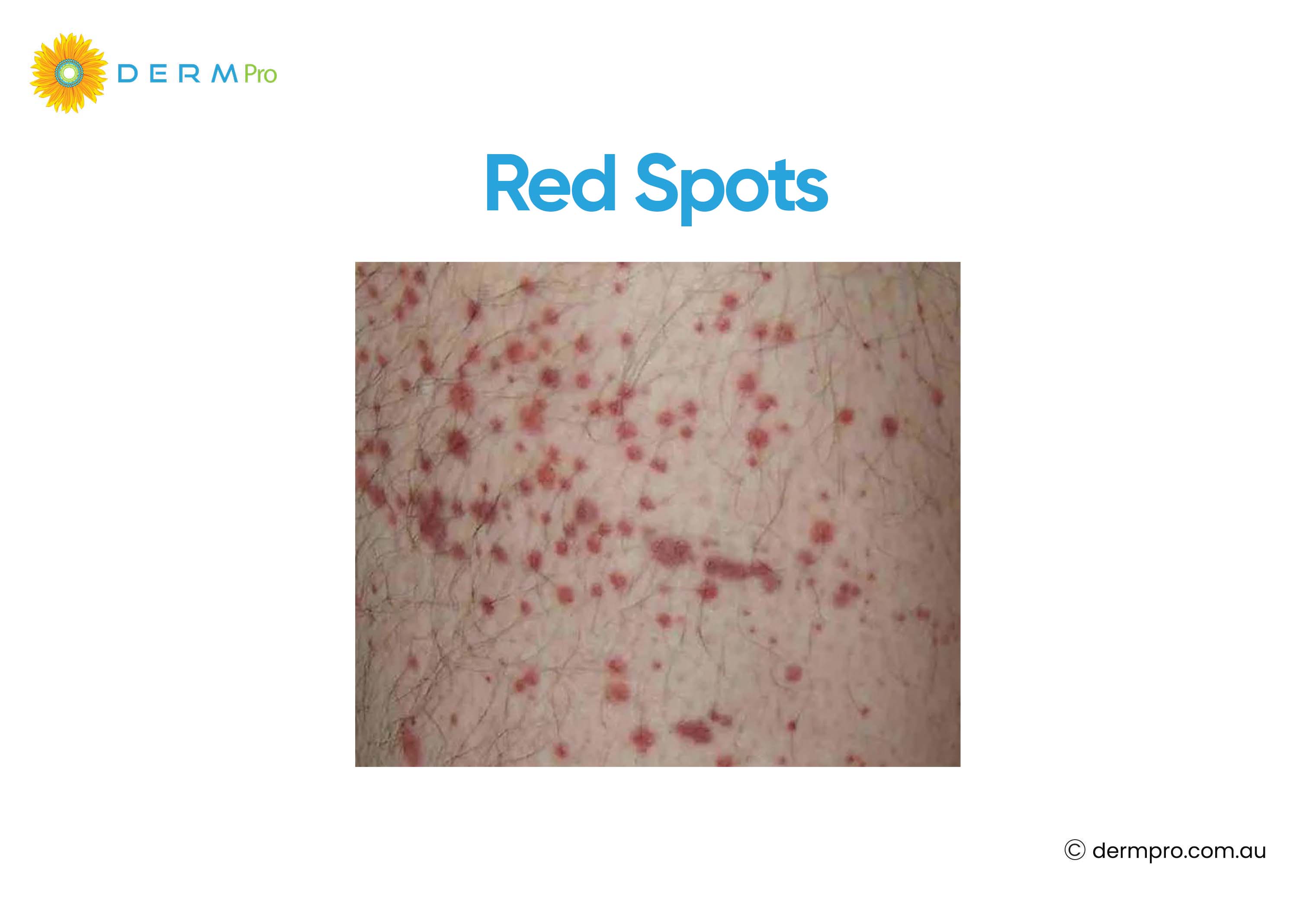
Image of red spots
White Spots Image
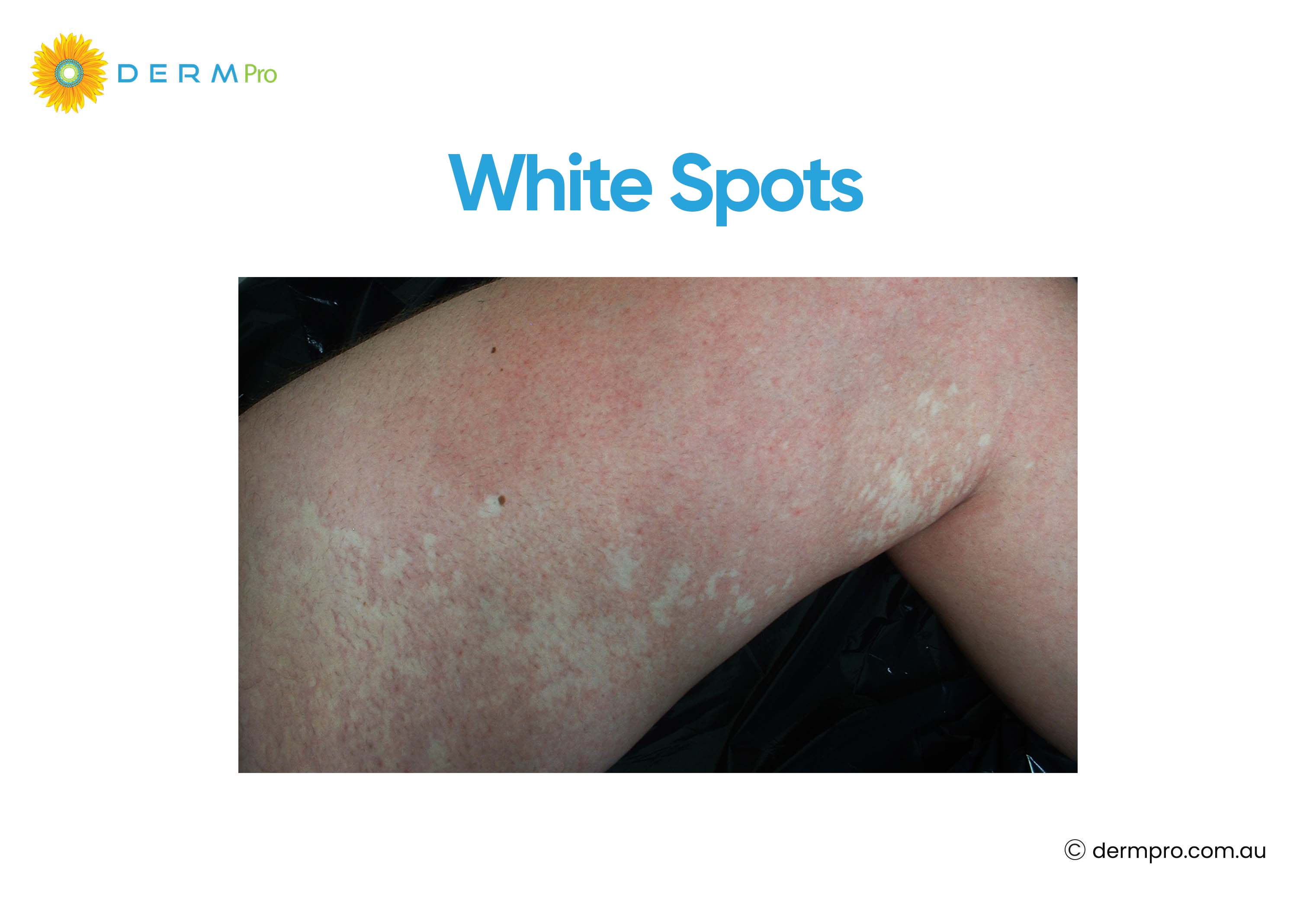
Appearance alone cannot confirm what is causing your spots, even though many skin conditions can look similar.
What Do Red and White Spots Look Like on Skin?
Skin spots can vary a great deal, and the small details often matter more than the colour alone.
Before searching for a cause, it helps to look closely at a few features.
Consider the following:
- Size and shape, e.g. tiny dots, large patches, round, or irregular
- Colour, e.g. bright red, dull red, pale, white, or a mix
- Texture, such as smooth, rough, scaly, or flaky
- Whether the area is flat or slightly raised
- Whether they are spreading or staying the same size
- Itching, pain, or tenderness
- Location on the body
- How long the spots have been present
- Whether the colour, shape, or size is changing over time
- Whether they appeared suddenly or built up gradually
- Any other symptoms, such as fever or general illness
Skin conditions can also look different depending on natural skin tone. For example, redness may be harder to see on darker skin; instead, it can appear more brown, purple, or grey.
Images of white and red spots
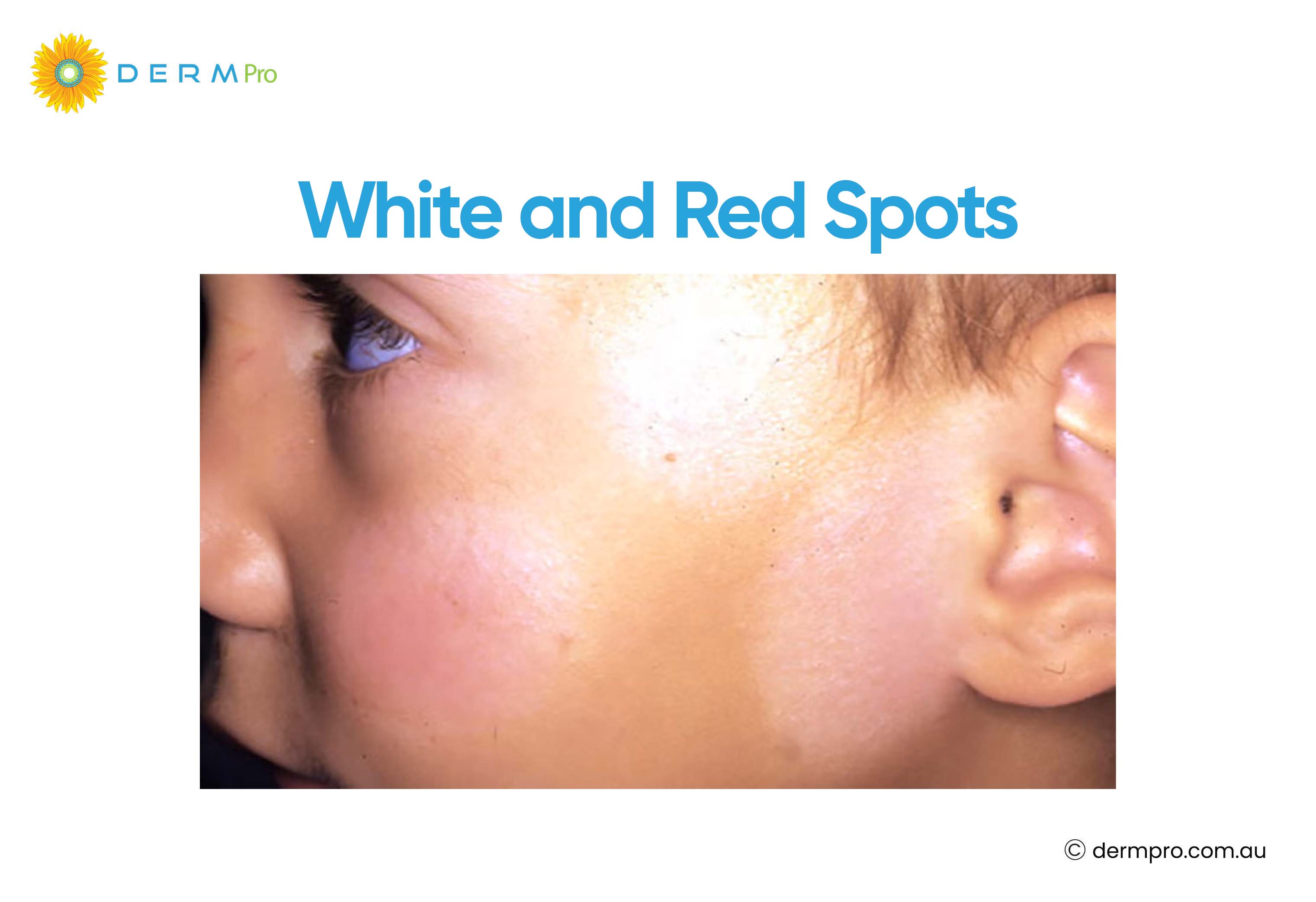
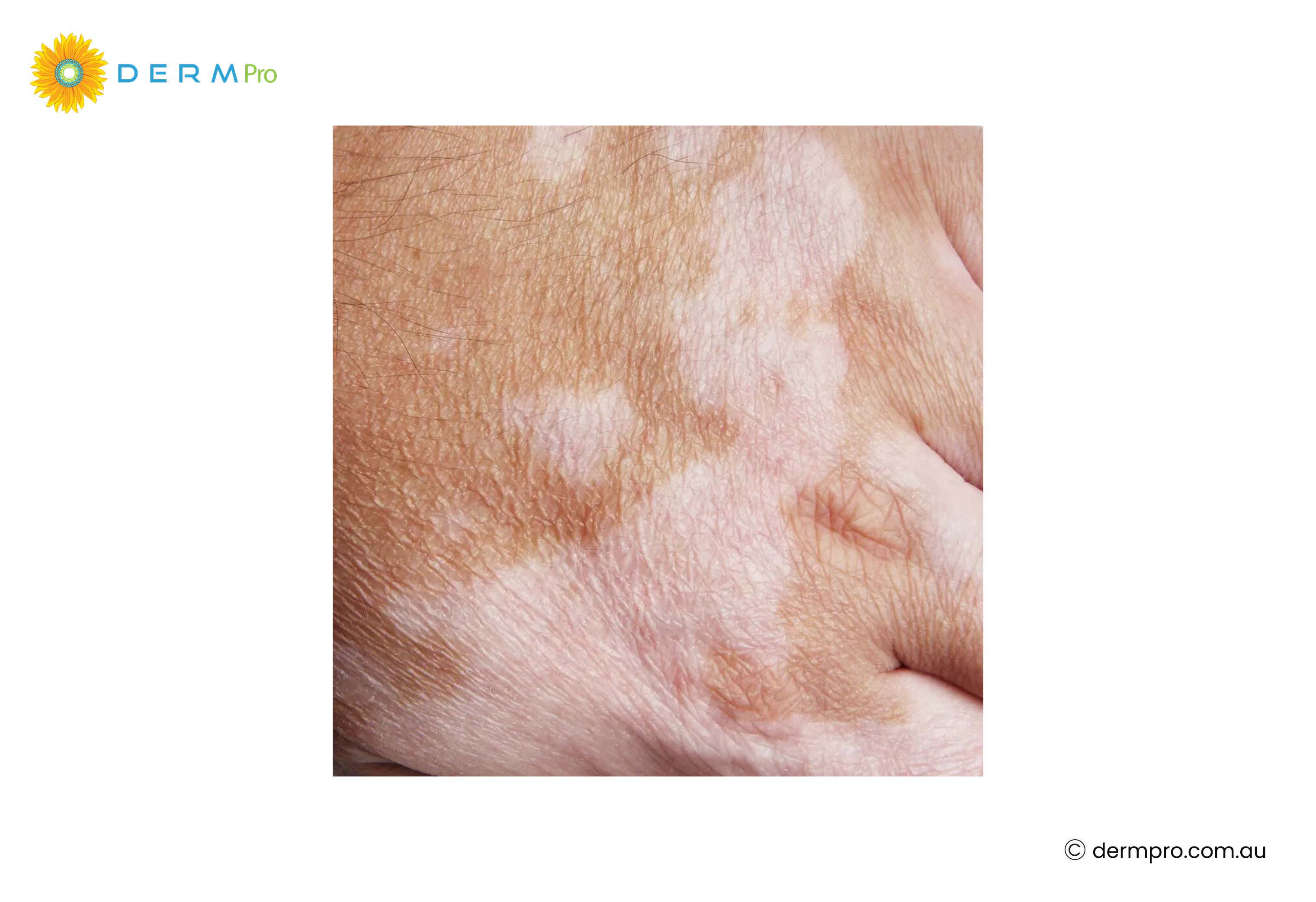
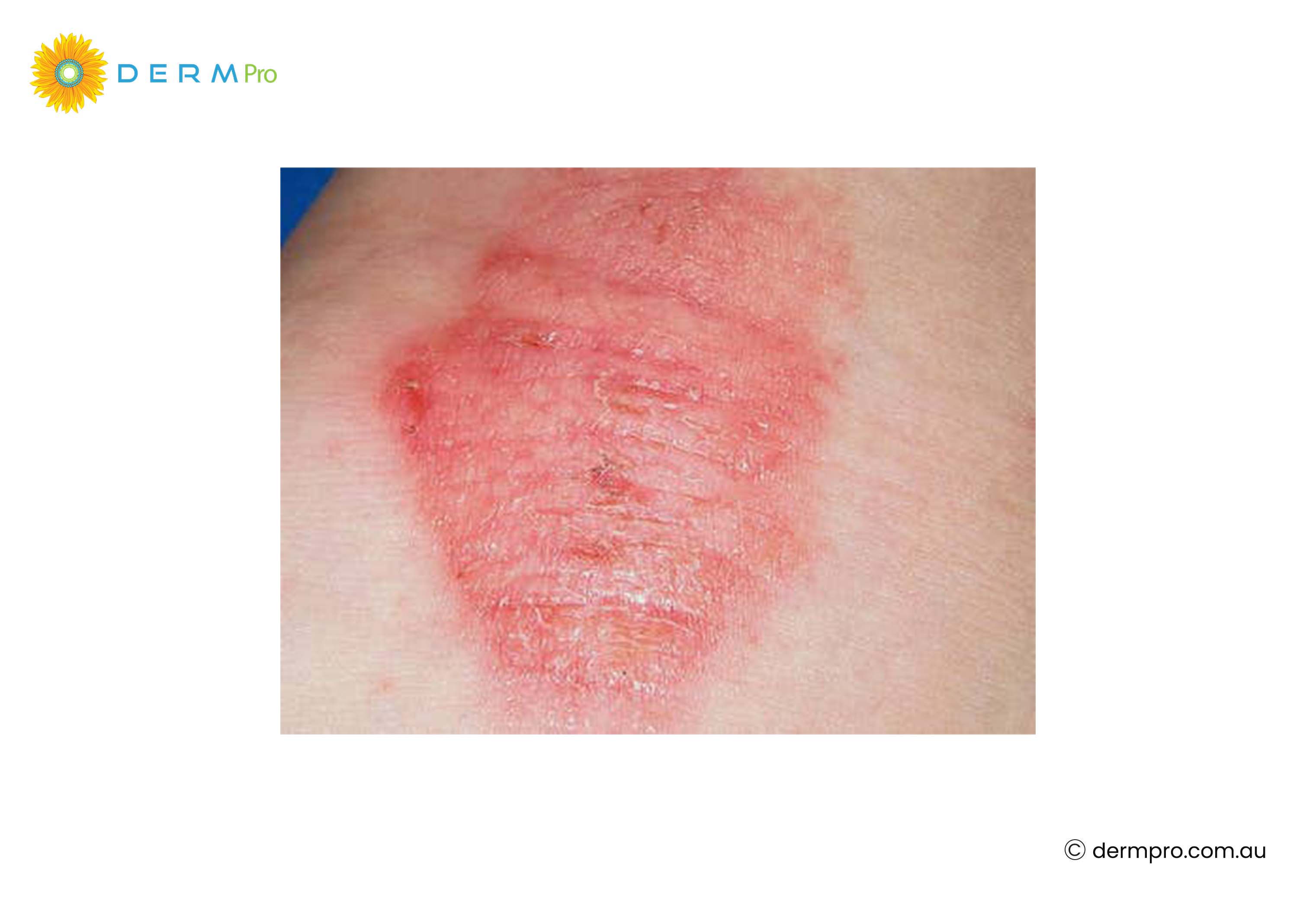
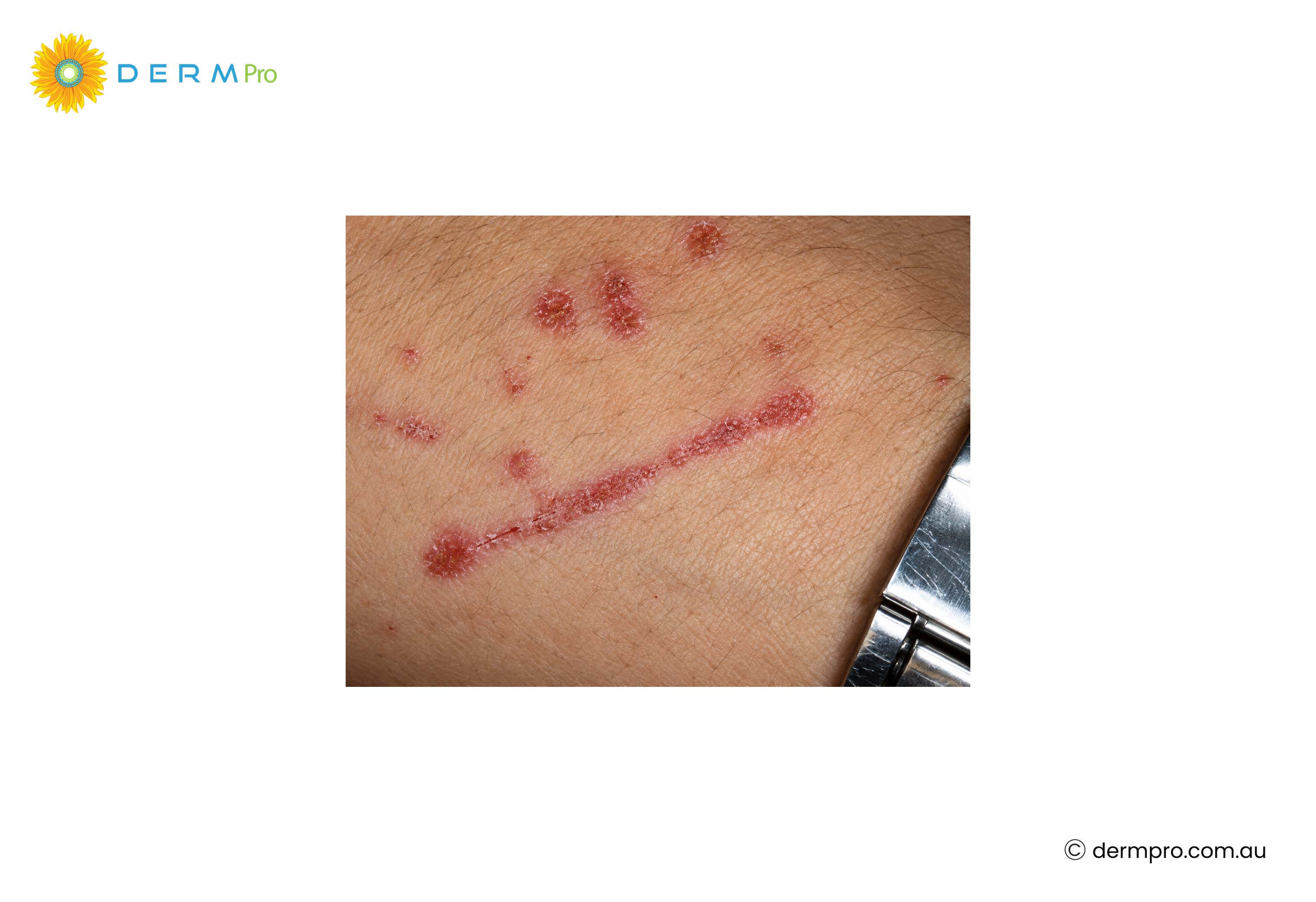
White or light patches may stand out more clearly on darker skin, while on lighter skin they can be less noticeable.
Appearance alone is not a reliable way to know what is causing your spots. Because so many conditions share similar features. A proper assessment usually needs a closer look, and sometimes tests, from a trained professional.
Common Causes of Red Spots on Skin
Red spots on skin have many possible causes. Some are related to irritation, others to inflammation, infection, or sun exposure.
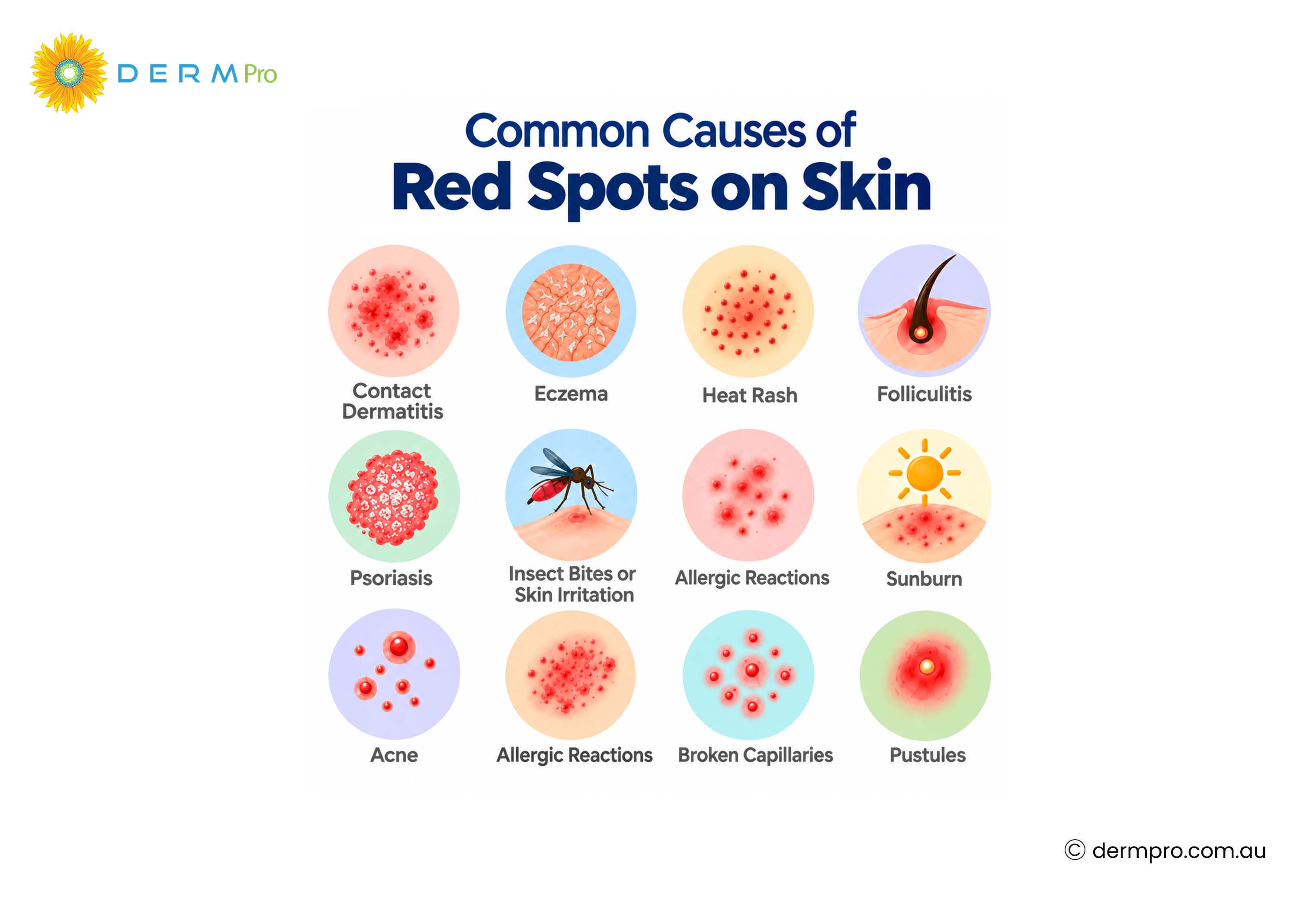
Here are the causes:
Contact Dermatitis
Contact dermatitis often appears as red, sometimes itchy patches where the skin has touched an irritating substance or allergen. It can look
- Dry
- Bumpy
- Slightly swollen
- In some cases, small blisters form
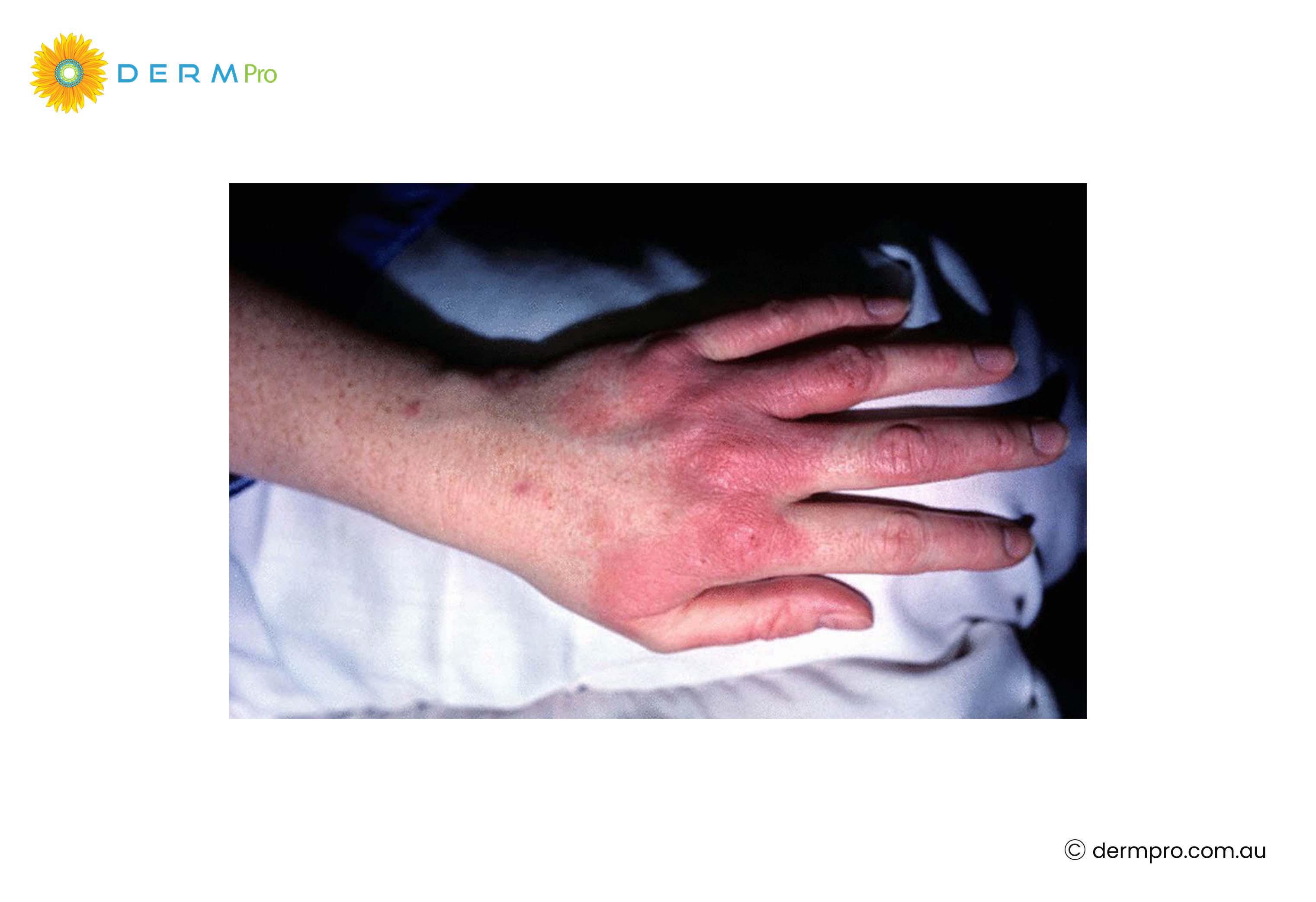
Common triggers of contact dermatitis include
- Soaps
- Fragrances
- Jewellery
- Latex and certain plants.
Mild cases often improve once the trigger is avoided and the skin is kept moisturised. If the rash is widespread, keeps coming back, or does not settle with basic care, a dermatologist can help identify the trigger and suggest suitable treatment.
Eczema
Eczema is also called atopic dermatitis. It often causes red, dry and itchy patches that can appear anywhere. But these signs are common on the hands, elbows, and behind the knees. The skin may feel rough or scaly, and scratching can make it worse.
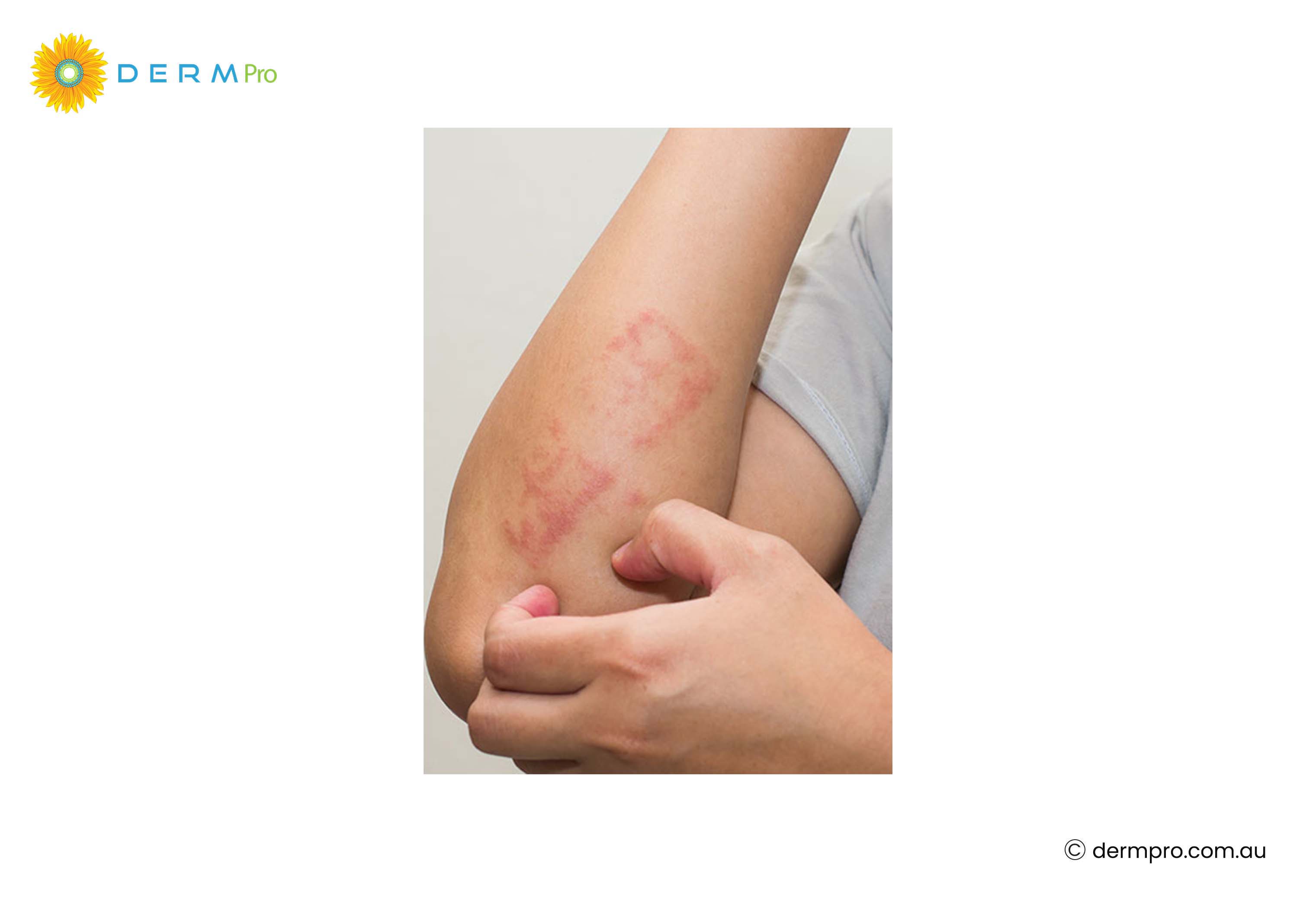
Use fragrance-free, gentle moisturisers to avoid skin irritants. For severe or persistent eczema, a doctor or dermatologist may prescribe treatment.
Heat Rash
Heat rash develops when sweat becomes trapped under the skin, especially in hot or humid weather. It commonly appears as
- Small red bumps or dots
- Sometimes with mild itching or a prickling feeling
- Commonly in areas where skin rubs together or clothing traps heat.
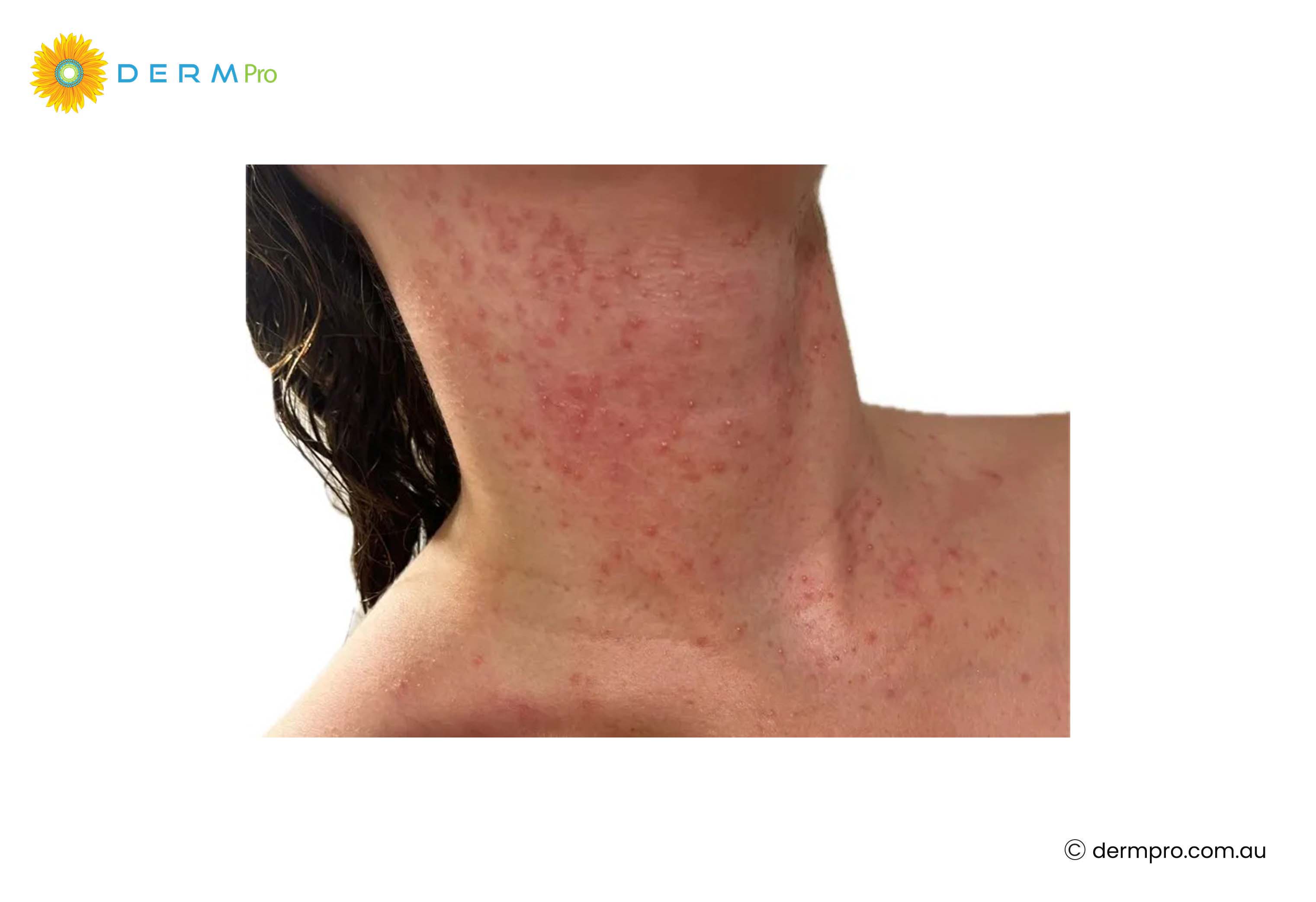
Heat rash usually settles once the skin cools down and stays dry. If it becomes painful, swollen, or does not improve, medical review is reasonable.
Folliculitis
Folliculitis happens when hair follicles become inflamed or infected. It may cause small red dots or red spots on the skin that can look like pimples.
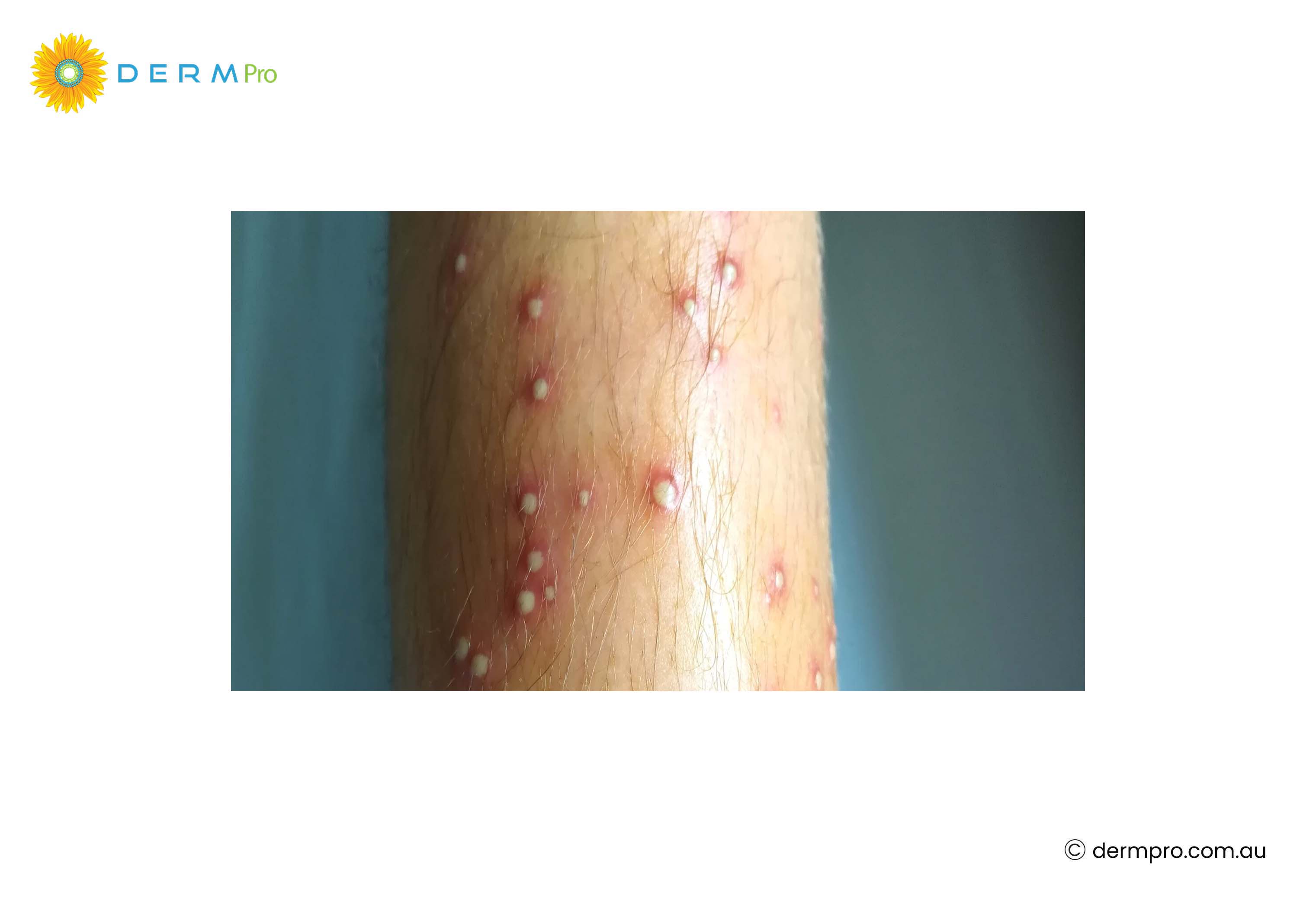
Shaving, friction, tight clothing, or sweating can cause it. It can appear on the face, legs, or body.
Good hygiene and looser clothing may improve mild cases. Professional treatment is crucial if the spots are painful, spreading, or filled with pus.
Psoriasis
Psoriasis can cause red patches covered with white, flaky skin. It often appears on the elbows, knees, scalp, and lower back. It can be itchy or sore, and the skin may crack in some areas.
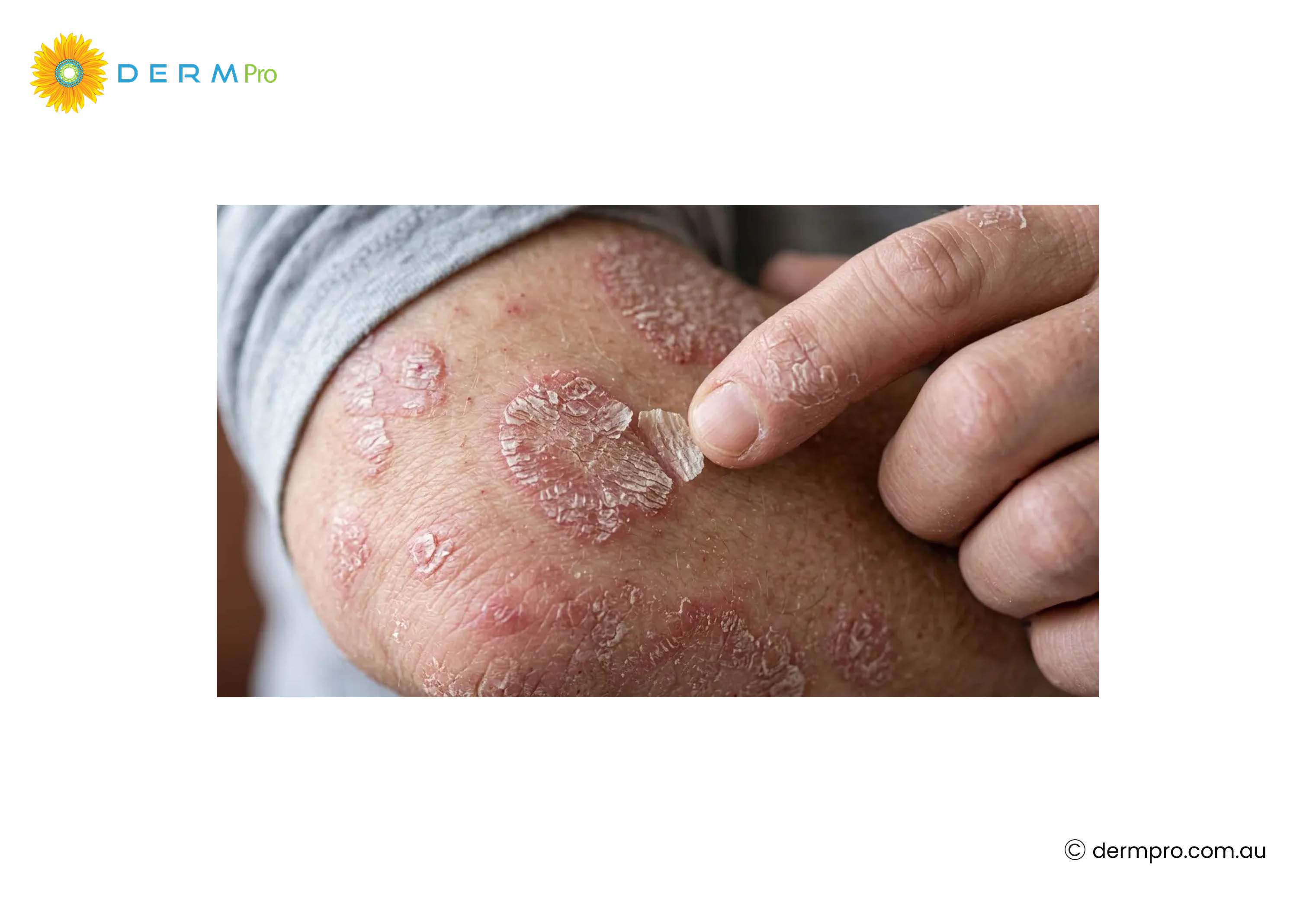
Psoriasis is a long-term condition. It can get worse at times and then improve. The treatment you need depends on how much skin the condition affects. It can include moisturisers, prescription creams or other therapies. A dermatologist can help too.
Make skin monitoring part of your routine. Download the DermPro App to keep track of changes over time.
Insect Bites or Skin Irritation
Insect bites often cause small and itchy red spots or a red dot on the skin. Sometimes with mild swelling around the bite. Normally, they improve within a few days.
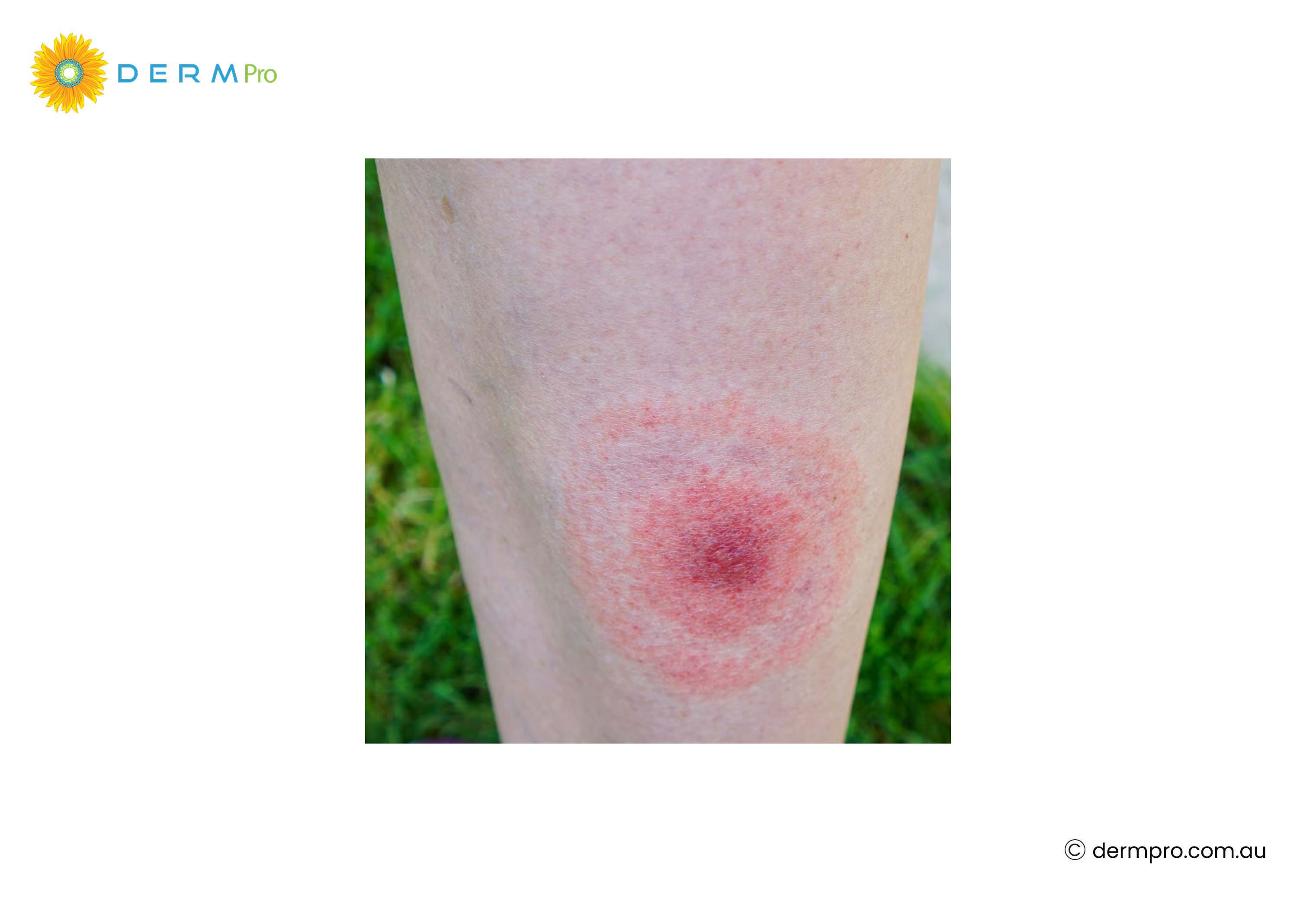
It is better to go to a doctor if a bite becomes increasingly painful, swollen, warm, and spreads outward.
Other Causes Worth Knowing
There are other causes of red spots on the skin. Rosacea can cause persistent redness and small red bumps on the face. It is often triggered by heat, sun, or certain foods.
On the other hand, Petechiae are tiny, flat red or purple dots that can appear when small blood vessels under the skin break, and unexplained petechiae should be assessed by a doctor.
Skin infections, including bacterial infections, can also cause red spots on body areas that may be tender, warm, or swollen.
Small red spots often appear on sun-exposed skin after spending time outdoors, including on the face and feet. For example, you may notice small red dots on your skin after wearing sandals in the sun.
Common Causes of White Spots on Skin
White spots on skin can result from pigment loss, fungal overgrowth, or changes following inflammation or sun exposure.
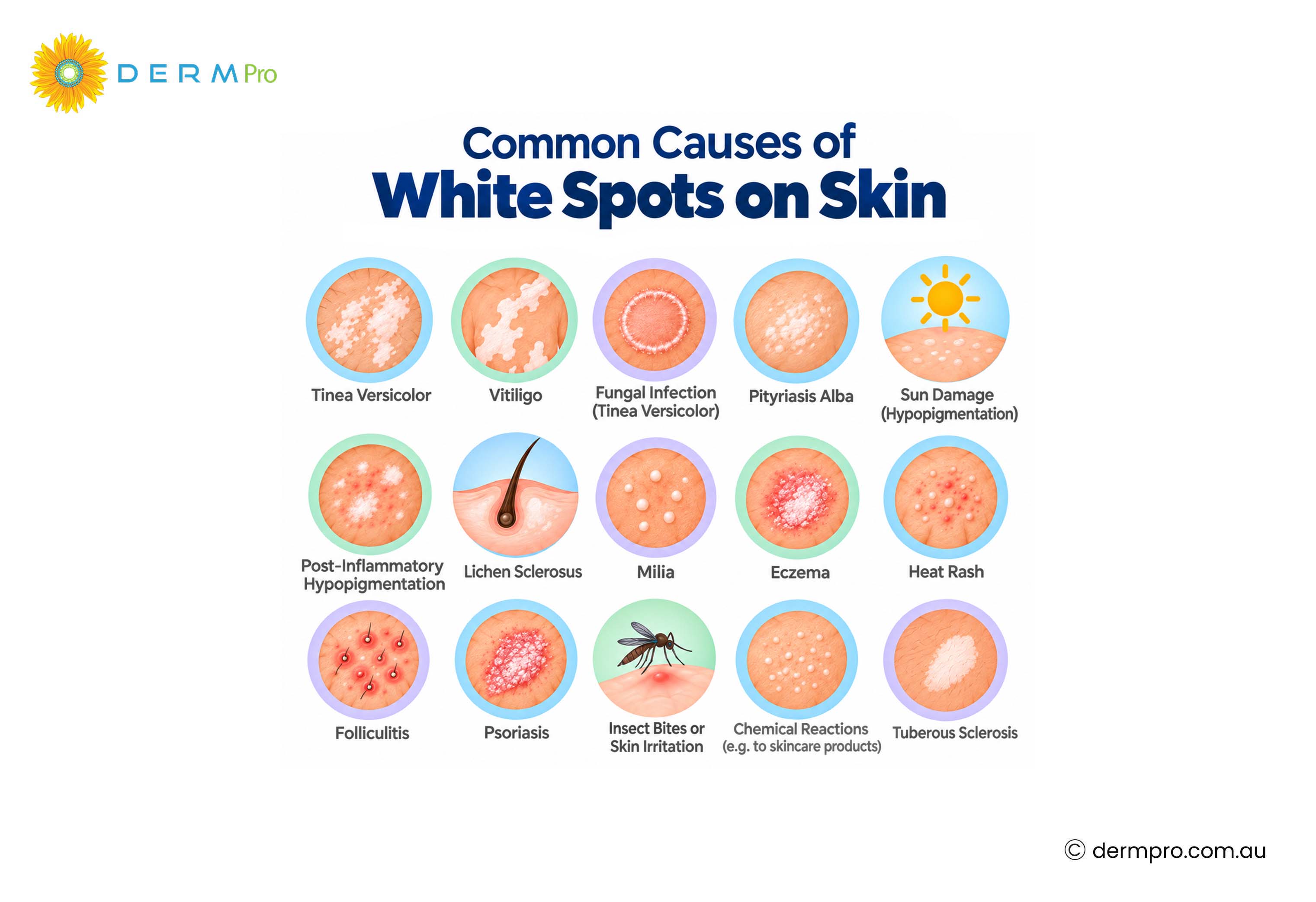
The common causes of white dots on skin, white patches on skin, or white spots on legs, arms, and feet are:
Tinea Versicolor
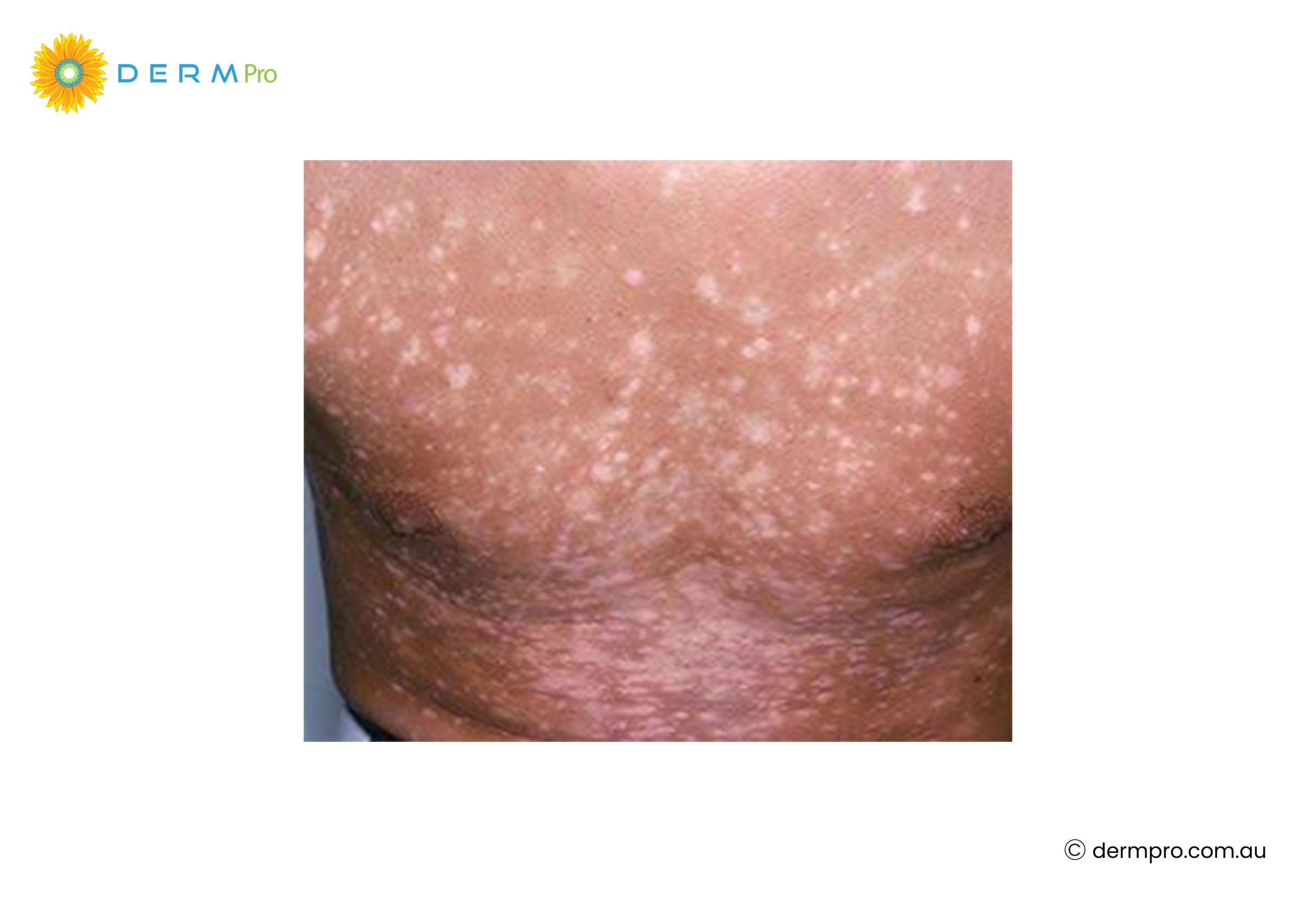
Tinea versicolor is a common fungal skin condition. The cause of Tinea Versicolor is an overgrowth of yeast that naturally lives on the skin.
It often produces small, sometimes scaly, white, pink, or light brown patches. Most commonly, it appears on the chest, back, and shoulders. Sun exposure can make patches easier to see. Because the affected skin does not tan the same way as surrounding skin.
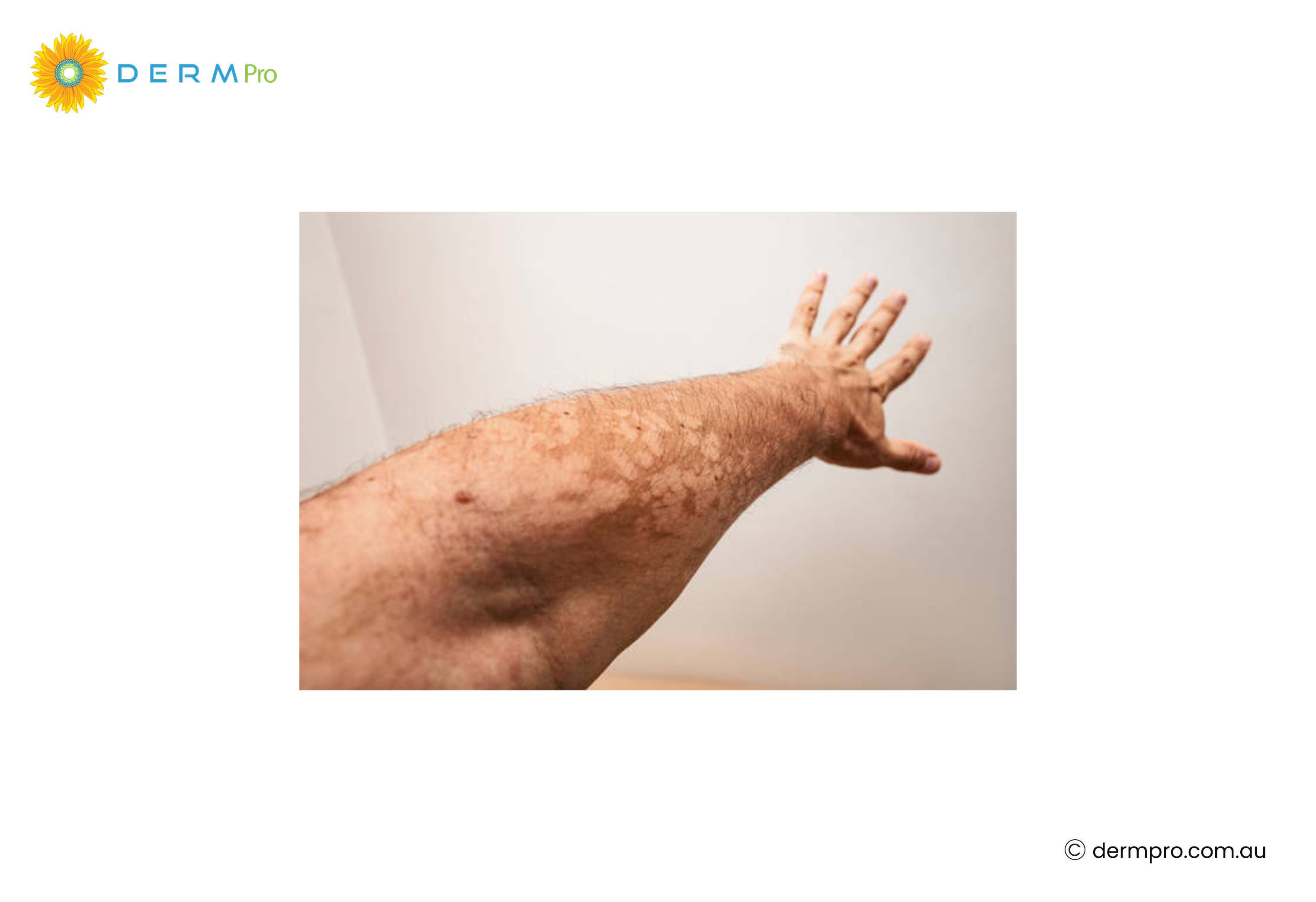
Mild itching can occur. However, many people do not notice any discomfort. A doctor or pharmacist may recommend antifungal treatment. Because tinea versicolor can look similar to other pigment conditions, a professional opinion helps confirm the cause.
Vitiligo
Vitiligo causes areas of the skin to lose their natural colour. It results in smooth, flat white patches that can appear anywhere on the body. It can also affect the hands, face, and around the eyes or mouth. Pigment loss happens because the cells that produce skin colour stop functioning in that area.
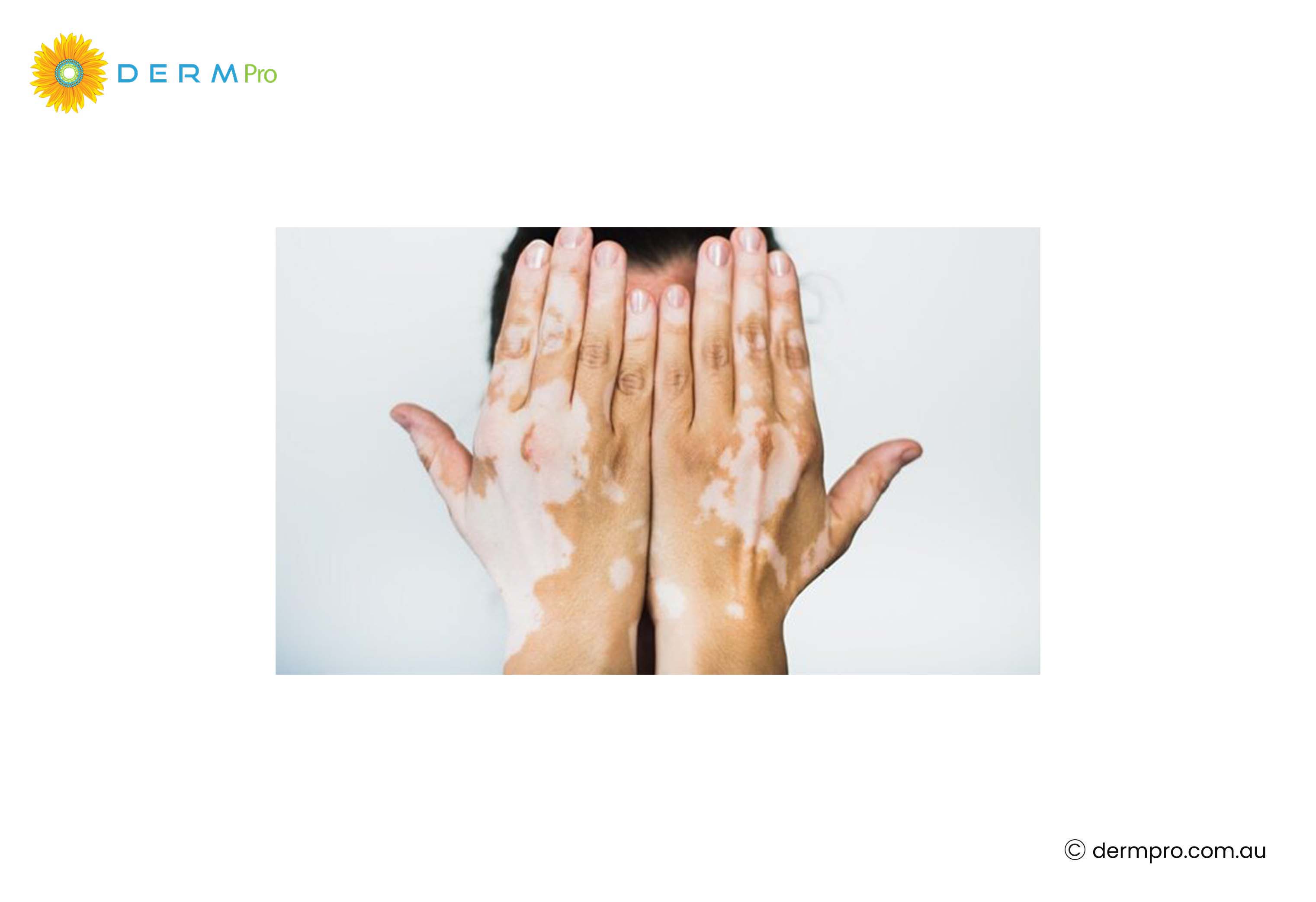
The patches can slowly spread over time. However, the pattern varies from person to person. Vitiligo is not contagious and is not caused by poor hygiene. Management may include sun protection, cosmetic camouflage, or medical treatments aimed at restoring some pigment. A dermatologist can help explain the options that may suit an individual case.
Pityriasis Alba
Pityriasis alba is common in children and young adults. It often appears as pale, slightly scaly patches, usually on the face. It tends to be more noticeable in people with darker skin tones and after sun exposure, since the affected areas do not tan as easily. It generally fades on its own over time. However, moisturising can help with dryness.
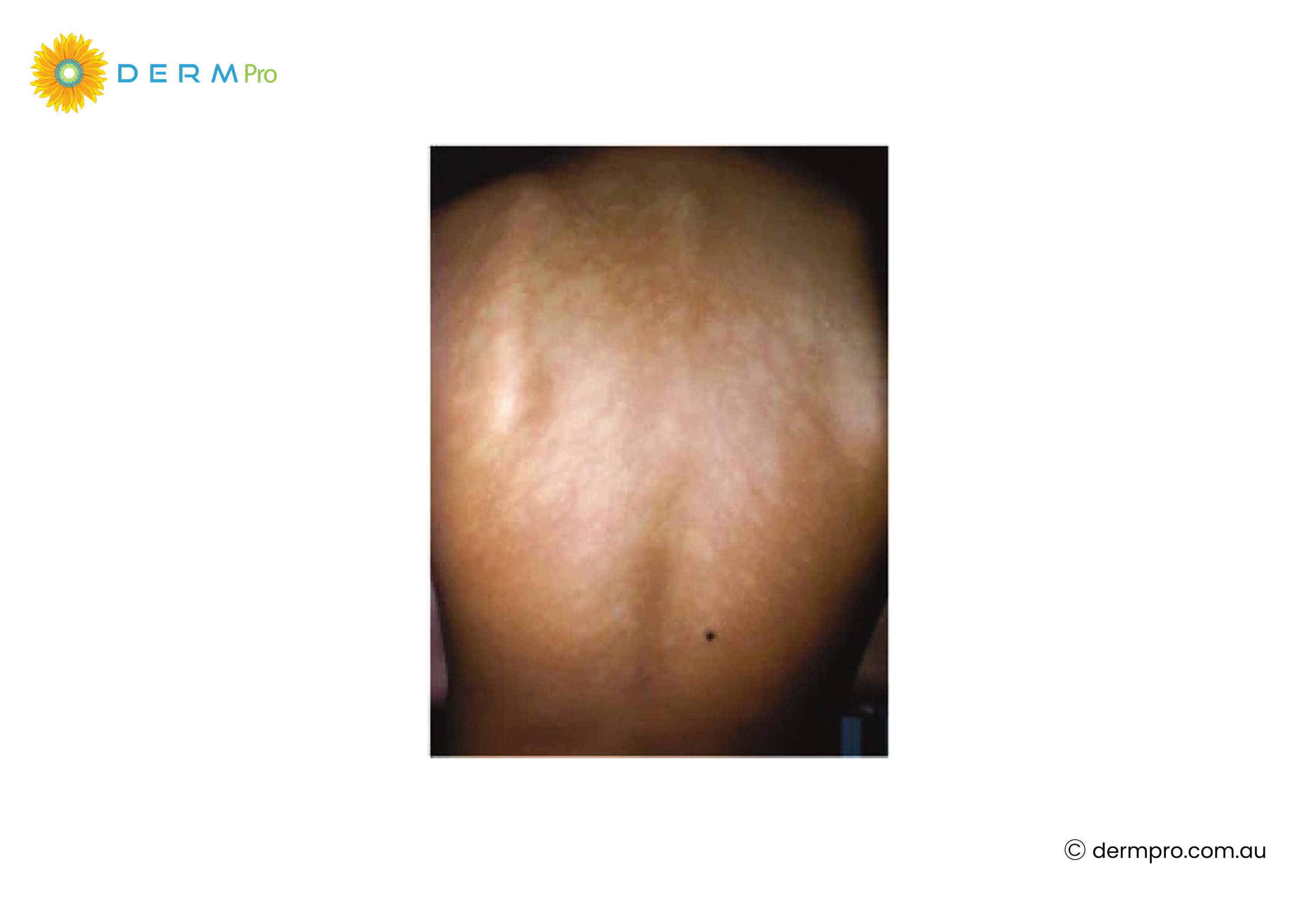
Post-Inflammatory Hypopigmentation
Sometimes skin becomes lighter after an injury, rash, or inflammation, such as eczema, a cut, or a healed infection. This is called post-inflammatory hypopigmentation. It usually fades gradually as the skin recovers, though it can take months.
Sun-Related White Spots
Some people develop small, flat, white spots on sun-exposed skin. Particularly, it appears on the arms, legs, and feet after years of sun exposure. These are related to changes in pigment-producing cells in the skin and are more likely to appear with increasing sun exposure over time.
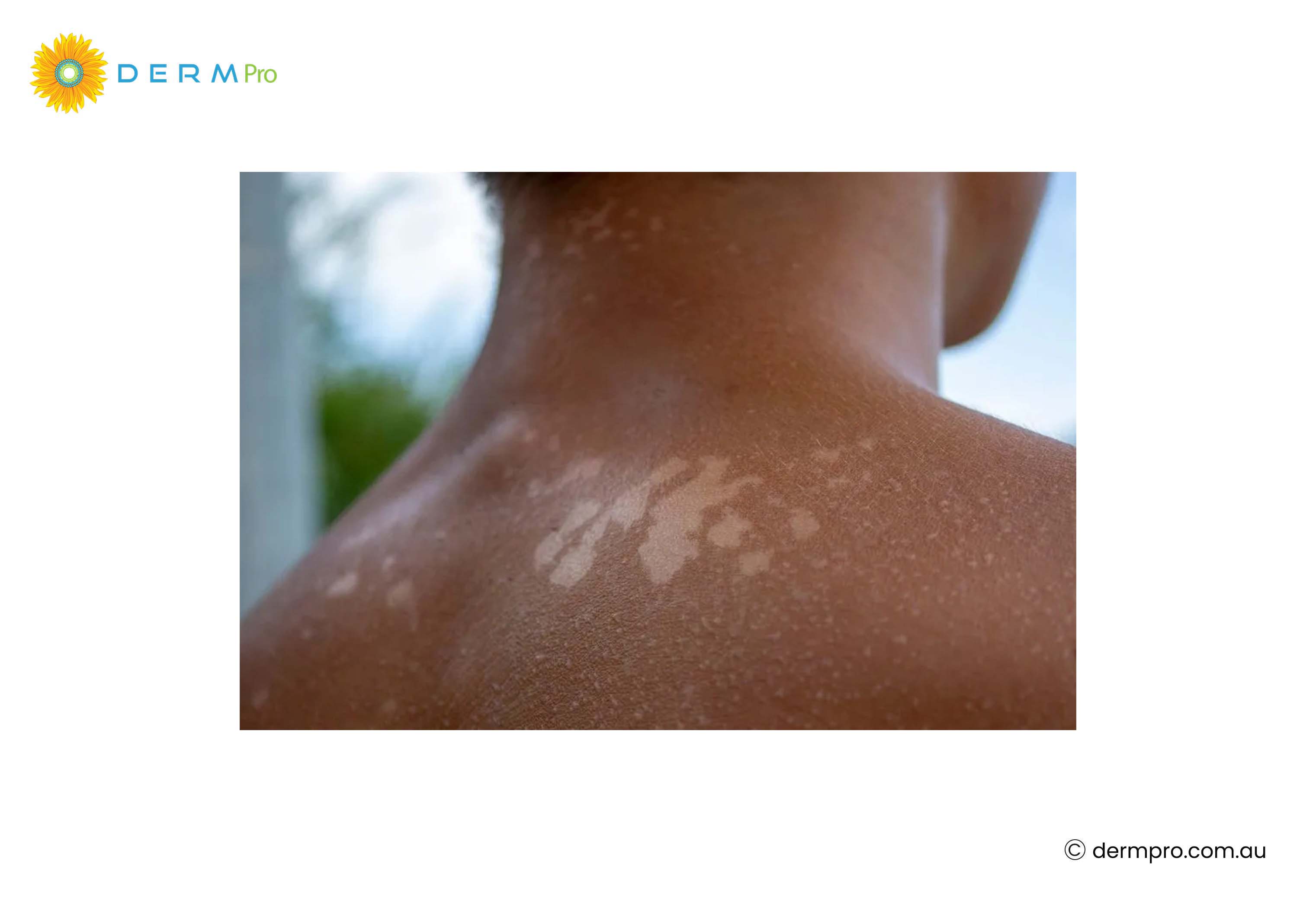
They are generally harmless but are best assessed if new spots appear rapidly or look different from typical sun-related changes. Not all white spots are related to sun exposure; that's why a professional opinion is useful if the cause is unclear.
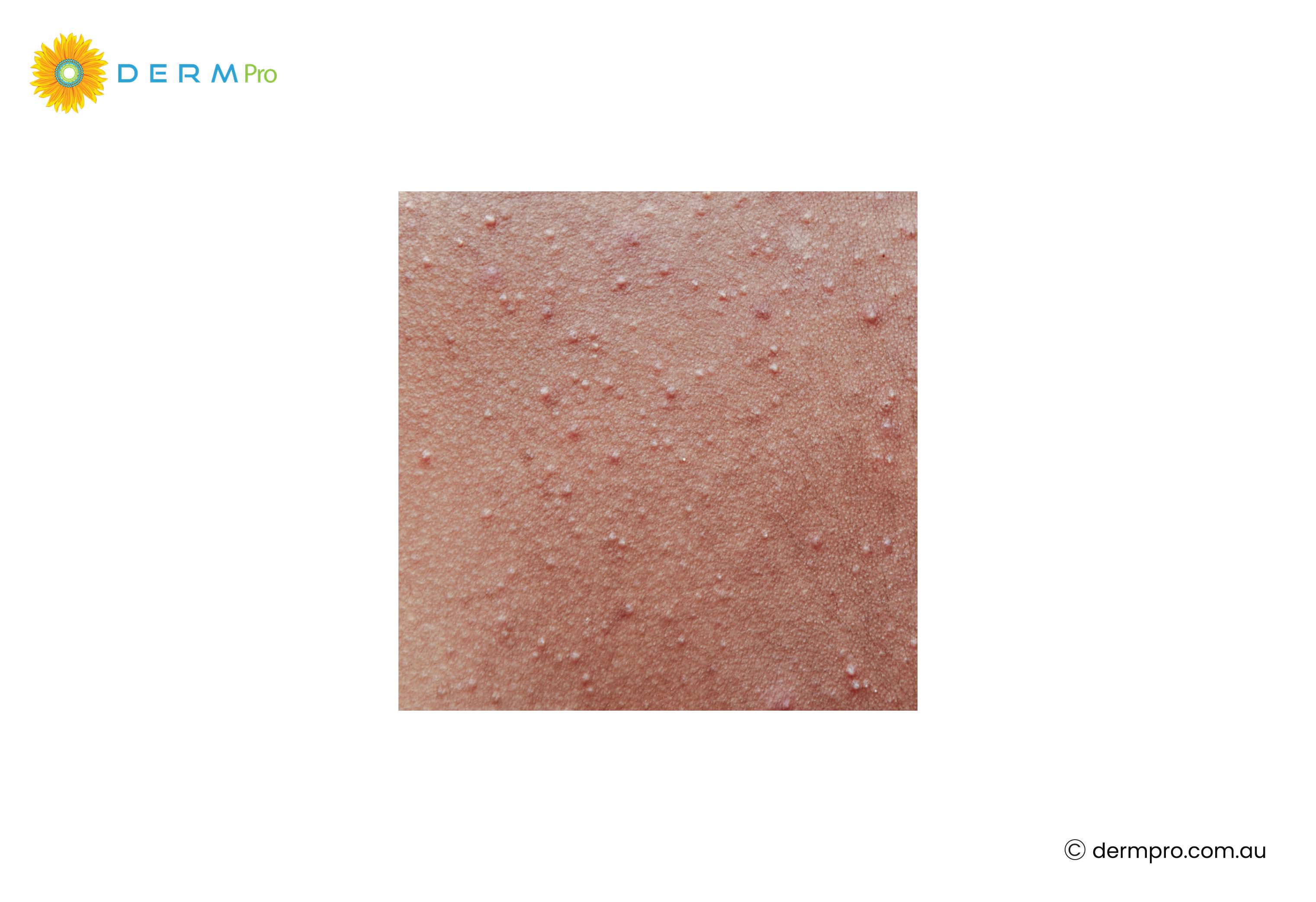
Milia and Small White Bumps
Milia are small, firm, white or skin coloured bumps. They are caused by trapped keratin, a protein found in skin. They commonly appear around the eyes, cheeks, or nose and are different from flat white patches caused by pigment loss. Milia are harmless and often resolve on their own, though persistent or bothersome milia can be removed by a professional.
Can Vitamin Deficiency Cause Small White Spots on Skin?
Vitamin deficiencies can sometimes cause small white spots, but these spots alone do not confirm a deficiency. Other skin conditions can cause similar changes.
Nutritional deficiencies can sometimes affect the skin, hair, or nails, and certain deficiencies are linked to specific changes in the body. However, small white spots are far more often related to causes such as tinea versicolor, pityriasis alba, vitiligo, or sun-related pigment changes rather than diet alone.
A doctor can review your diet, symptoms, and overall health, and arrange blood tests if you are concerned about a possible cause of nutritional cause. This is a more reliable approach than assuming a deficiency based on skin appearance alone, and it also helps rule out other explanations that may need different treatment.
Conditions That Cause Red and White Patches on Skin
Some skin conditions can cause both red and white spots, and their colour may change as they develop or heal.
Fungal infections, such as tinea versicolor and ringworm, can cause red or white patches. Some may have a red or pink edge with a lighter centre. Eczema and psoriasis can also cause red areas followed by lighter patches as the skin heals.
Allergic reactions or irritation may cause white spots with red around them, particularly where hives or a reaction is fading.
Keratosis pilaris, a very common condition causing small rough bumps, often on the upper arms, can create a mix of red and skin coloured or pale bumps, especially in cooler weather.
Itchy red and white spots and small red and white bumps can also occur together during a healing rash, where new irritation and older, lighter marks appear side by side.
In many of these cases, the exact pattern depends on the underlying cause. For example, how long it has been present and how the skin is responding, so a dermatologist is often best placed to work out what is happening.
Red and White Spots on Skin: Comparison Table
The table below is a general guide only. It does not replace a proper assessment, since many conditions can look similar.
|
Possible Cause |
Typical Appearance |
Other Clues |
Usual Next Step |
|
Tinea Versicolor |
May appear as small white, pink, or light brown patches, sometimes slightly scaly |
Often on chest, back, or shoulders; more visible after sun exposure |
Assessment by a doctor or pharmacist; antifungal treatment if confirmed |
|
Vitiligo |
Often causes smooth, flat white patches with normal skin texture |
Can occur anywhere, may slowly spread |
Dermatology assessment to confirm and discuss options |
|
Eczema |
Can be associated with red, dry, itchy patches, sometimes leaving lighter marks after healing |
Common on hands, elbows, and behind knees |
Moisturising and irritant avoidance; medical review if severe |
|
Heat Rash |
May appear as small red bumps or dots |
Linked to heat, sweating or trapped clothing |
Cool and dry the skin; medical review if it persists |
|
Contact Dermatitis |
Often causes red, sometimes itchy or swollen patches |
Linked to a new product, jewellery, or plant contact |
Avoid the trigger; medical review if widespread or persistent |
|
Psoriasis |
Can be associated with red patches with silvery or white scale |
Common on elbows, knees, scalp |
Dermatology assessment for ongoing management |
How Are Red and White Spots on Skin Treated?
There is no single treatment for red and white spots on skin. Because the right approach depends entirely on the underlying cause. What helps one condition can make another one worse. That's why identifying the cause matters before starting treatment.
The most common General approaches that are often used, once a cause is known or suspected, are:
- Avoiding known irritants, allergens, or triggers
- Gentle cleansing with mild, fragrance-free products
- Regular moisturising to support the skin barrier
- Daily sun protection, especially for pigment-related conditions
- Keeping sweaty or friction-prone areas cool and dry
- Antifungal treatment for confirmed fungal infections such as tinea versicolor
- Prescription anti-inflammatory treatment for conditions like eczema or psoriasis, when appropriate
- Dermatology-directed treatment for pigment disorders such as vitiligo
- Simply monitoring some spots over time, when active treatment is not needed
This blog does not provide medication doses, specific prescriptions, or a personalised treatment plan, since these depend on an individual assessment.
A Word of Caution
Do not keep using steroid, antifungal, or combination creams without medical advice. The wrong treatment or using a cream for too long can change how the skin looks that make diagnosis harder, or sometimes make the condition worse. If you are unsure what is causing the spots, see a doctor before continuing treatment on your own.
When Should You See a Dermatologist?
Many red and white spots on the skin are mild and settle with simple care. Others need a closer look. Knowing when to see a dermatologist for skin spots can help you get the right treatment sooner.
Reasonable for routine assessment when spots:
- Persist for several weeks despite basic skin care
- Keep coming back
- Cause ongoing itching or discomfort
- Are unclear in cause and causing you concern
Worth prompt assessment when spots:
- Spread quickly across the skin
- Change noticeably in size, shape, or colour
- Do not improve, or get worse, with basic care
- Appear alongside other new skin changes
May need urgent care when spots:
- Become very painful or swollen
- Become warm, swollen, produce pus, or develop redness that spreads
- Are crusted, bleeding, or form an open sore or ulcer
- Occur together with fever or feeling generally unwell
- Appear around the eyes or affect your vision
If you are ever unsure which category applies to you, it is reasonable to book an appointment rather than wait. A dermatologist can quickly tell you whether something needs treatment or simply needs watching.
How Do Dermatologists Diagnose Skin Spots?
Diagnosis usually starts with a detailed conversation and a physical examination. And then they start the exact process depends on what is suspected.
A dermatologist may ask about:
- How long the spots have been present and how they have changed
- Any itching, pain, or other symptoms
- Recent skin care products, soaps, or cosmetics
- Current medicines
- Recent travel or environmental exposures
- Sun exposure history
- Any recent illnesses
They will usually examine the affected skin closely, and often check other areas of the body as well, since some conditions appear in more than one place. Depending on what they suspect, they may use a special light called a Wood's lamp to look at pigment changes, take a small skin scraping to check for fungal infection, or in some cases take a small tissue sample, called a biopsy, for further testing. Not every visit requires these extra steps. The right assessment depends on the individual case.
Can a Photograph Confirm the Cause of a Skin Spot?
Photographs are useful for tracking a spot over time, especially to see whether it is growing, changing colour, or staying the same. Many dermatologists encourage patients to keep photos for this reason.
However, a photograph alone cannot confirm the cause of a skin spot. Lighting can change how a colour appears, camera settings can alter the image, and photos often do not capture texture, such as whether an area is raised, scaly, or rough. Different skin conditions can also look very similar in a photo, even though they need different treatment.
For these reasons, images of white spots on skin or red spots found online are useful for general education, not for self-diagnosis. A hands-on examination, and sometimes testing, remains the most reliable way to identify the cause.
Prevention and Everyday Skin Care
While not every skin spot can be prevented, some simple habits support healthier skin overall.
- Use gentle and fragrance-free skin care products where possible
- Moisturise regularly, especially if your skin tends to be dry
- Apply broad-spectrum sunscreen and reapply as needed
- Avoid scratching or picking at spots, which can worsen irritation or leave marks
- Keep sweaty areas, such as underarms and skin folds, cool and dry
- Stop using a new product straight away if irritation develops
- Avoid prolonged and unprotected sun exposure
- Avoid repeatedly self-treating spots that are unexplained or not improving
These steps support general skin health but are not a substitute for medical advice when a spot is persistent, changing, or causing concern.
Frequently Asked Questions
Are red and white spots on the skin always serious?
No, many causes, such as heat rash or mild irritation, are not serious, and they settle with simple care. Others, such as infections or ongoing inflammatory conditions, require proper treatment. Because appearance alone cannot confirm the cause. It is important to check whether persistent or worsening spots are worth having checked.
Can a fungal infection cause red and white spots?
Yes, fungal infections such as tinea versicolor can cause white, pink, or light brown patches. Sometimes they have a red or pink border, particularly on the chest and back. A doctor or pharmacist can help confirm whether a fungal cause is likely.
Can red spots turn white while healing?
In some cases, yes. As inflammation settles, the skin can temporarily lose some pigment in that area, leaving a lighter or white mark. This is often called post-inflammatory hypopigmentation and usually fades over time.
Should I use a steroid cream for red spots?
Steroid creams can help with some inflammatory skin conditions. But they are not suitable for every cause of red spots on the skin, and repeated use without medical advice is not recommended. The wrong treatment can worsen certain conditions or delay an accurate diagnosis.
Can a photograph confirm the cause?
Not reliably on its own. Photos are useful for tracking changes over time, but lighting, camera settings, and skin texture can affect how a spot appears, and different conditions can look alike in an image.
When should I see a dermatologist?
It is reasonable to see a dermatologist if spots persist, spread, become painful, show signs of infection, bleed, or change in size, shape, or colour, or if you are simply unsure what they mean. Evaluation is best if symptoms are worsening quickly.
Key Takeaway
Red and white spots on skin can come from many different causes. These range from mild irritation and sun-related changes to fungal infections, inflammatory conditions, and pigment disorders.
Colour, size, and location can offer clues, but appearance alone cannot confirm a diagnosis, and treatment depends entirely on the underlying cause.
Simple skin care is needed if your spots are mild and improving. If they are persistent, spreading, painful, bleeding, infected-looking, or changing over time, it is a good idea to have them properly assessed by a doctor or dermatologist rather than guessing or self-treating.
Disclaimer
This blog is for general educational purposes only and does not provide a diagnosis or personalised medical advice. Red and white spots can have many different causes, and their appearance alone cannot confirm a condition. If you have persistent, changing, painful, bleeding, or concerning skin spots, consult a qualified healthcare professional for appropriate assessment and treatment.
Authoritative External Sources
- DermNet: Clinical information on skin conditions.
- AAD: Patient-friendly skin and rash guidance.
- NHS: Skin conditions, symptoms, and care advice.
- Mayo Clinic: Skin condition and treatment overviews.
- Australasian College of Dermatologists: Australian dermatology guidance.
- Healthline: White Spots on Skin
Was this article helpful?
Your feedback helps us create better content for everyone.