How to Get Rid of Blisters: Effective Treatments for Fast Healing

Most blisters caused by friction aren't dangerous. In most cases, they are easy to manage at home by taking the pressure off the area, keeping it clean, and covering it so it isn't rubbed further. However, blisters that show signs of infection, cover a large area, or keep coming back for no clear reason need a closer look from a healthcare provider. Read this blog to learn how to get rid of blisters with effective treatments for fast healing.
Blisters
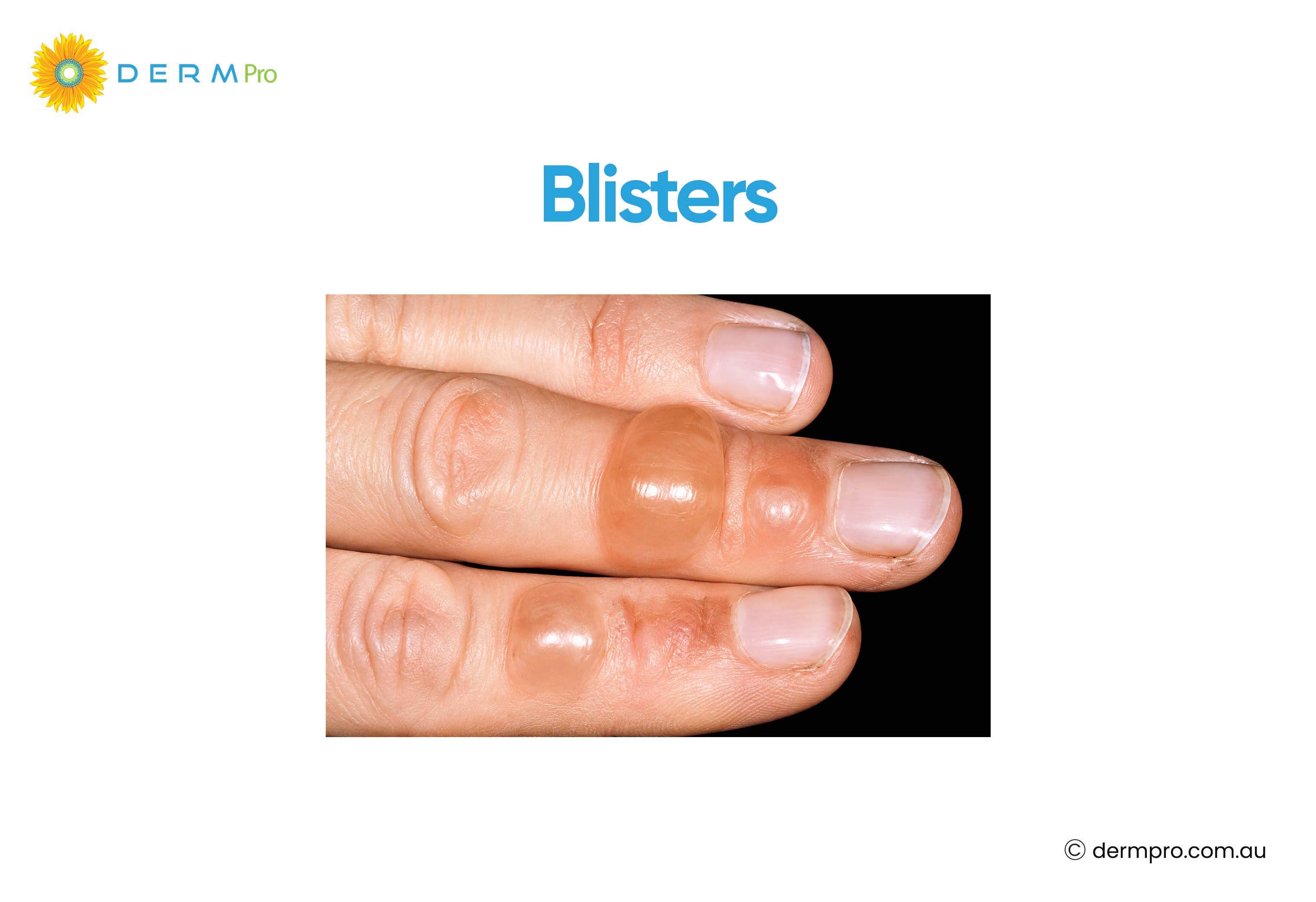
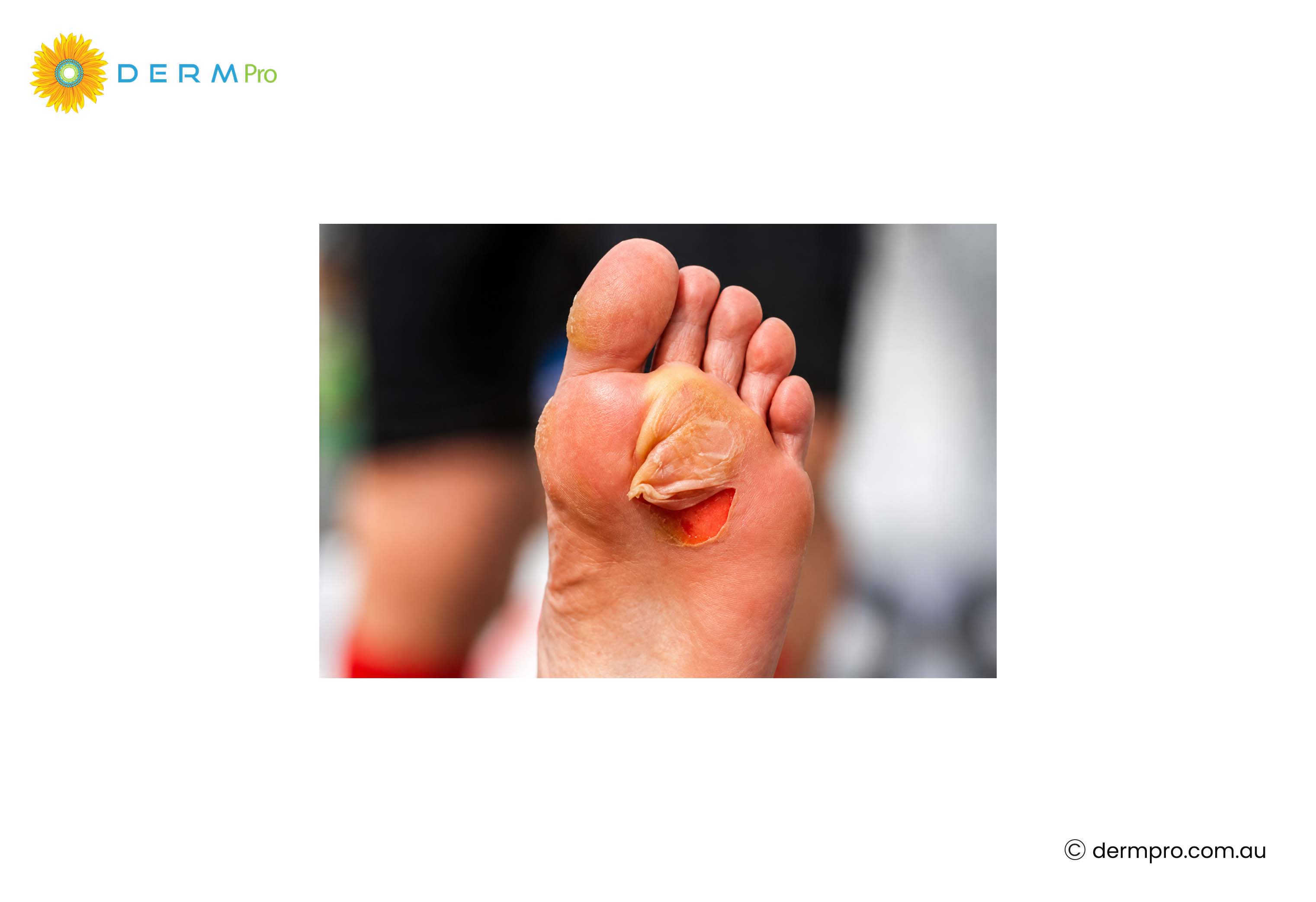
How to Get Rid of Blisters Safely?
You can get rid of an uncomplicated friction blister by protecting it, keeping it clean, and letting your body do the healing. Here are the ways to safely get rid of blisters.
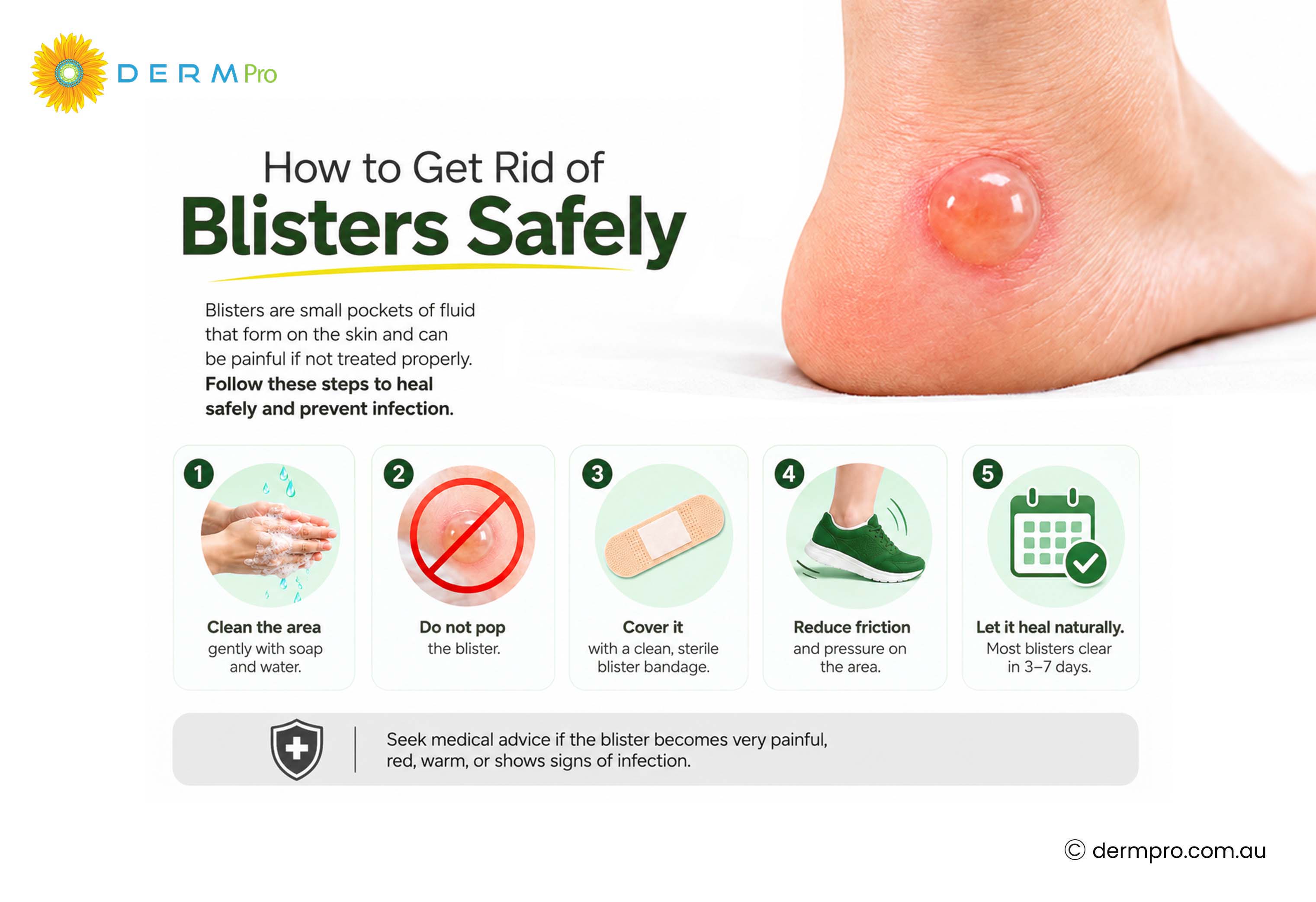
- Stop the friction first. If a shoe, tool, or piece of equipment caused the blister, change what you're using or add padding before doing anything else.
- Wash the area gently. Use mild soap and water, then pat it dry rather than rubbing.
- Leave an unbroken blister alone if you can. The skin covering it acts as a natural barrier against bacteria and lowers infection risk, so resist the urge to pop it unless it is large and painful enough that popping is genuinely necessary.
- Cover and cushion it. Cover the blister with a soft bandage or special blister dressing to protect it and reduce pressure.
- Avoid tight or ill-fitting footwear or gloves over the area until it's healed.
- Check on it daily. Look for changes in colour, swelling, or pain that might suggest it's not healing as expected.
A blister may not disappear overnight because healing takes time. However, proper care can help it heal comfortably and reduce the risk of further irritation.
How to Treat Blisters on Feet?
Foot blisters are very common. Because feet keep working even while a blister is healing. You can still walk, stand, or exercise on the same skin. That ongoing pressure is what makes foot blisters slower to settle down and more prone to reopening.
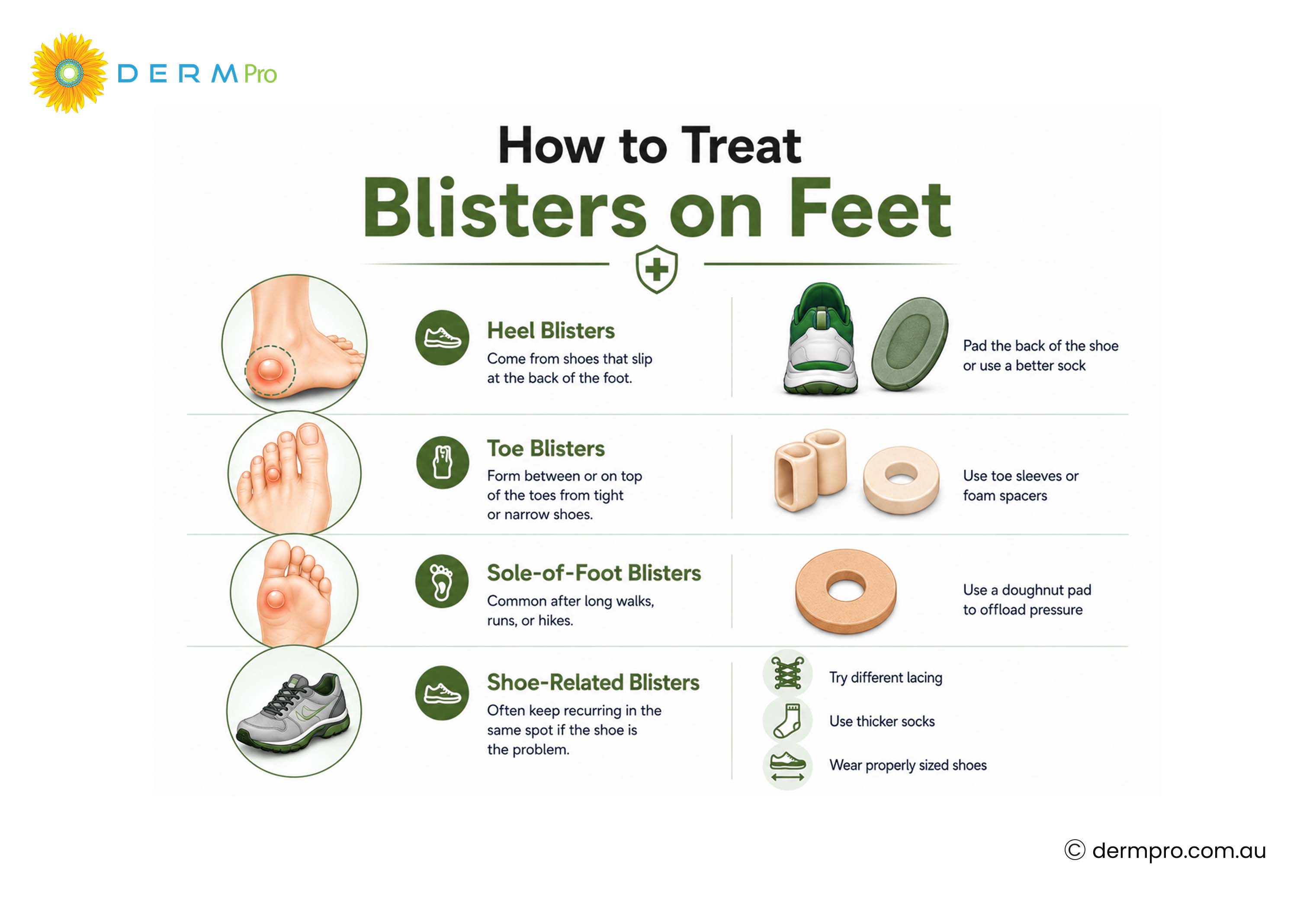
Blisters on Feet
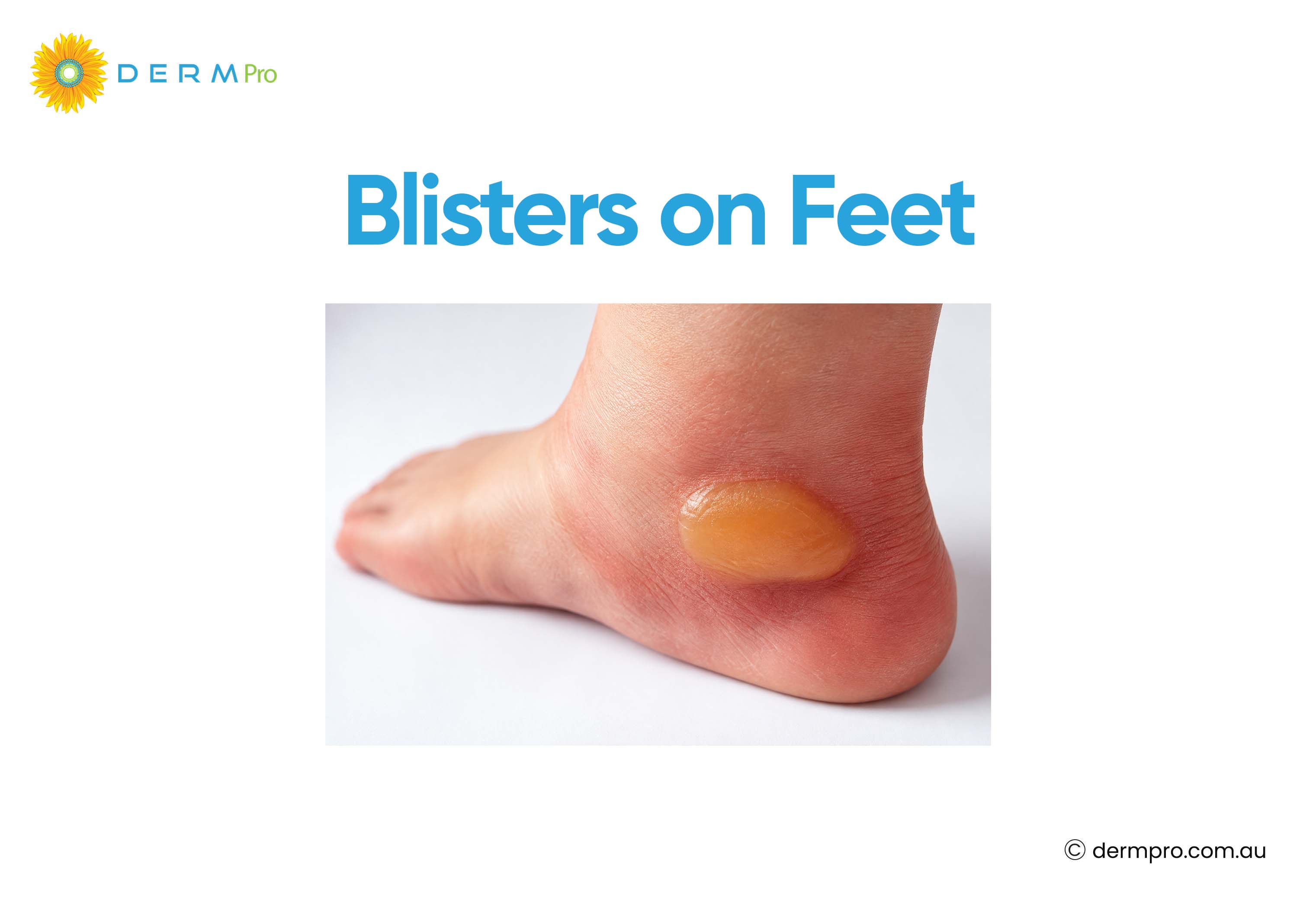
Heel blisters usually come from shoes that slip at the back of the foot. Padding the back of the shoe, or switching to a lower-friction sock, can matter as much as anything you put on the blister itself.
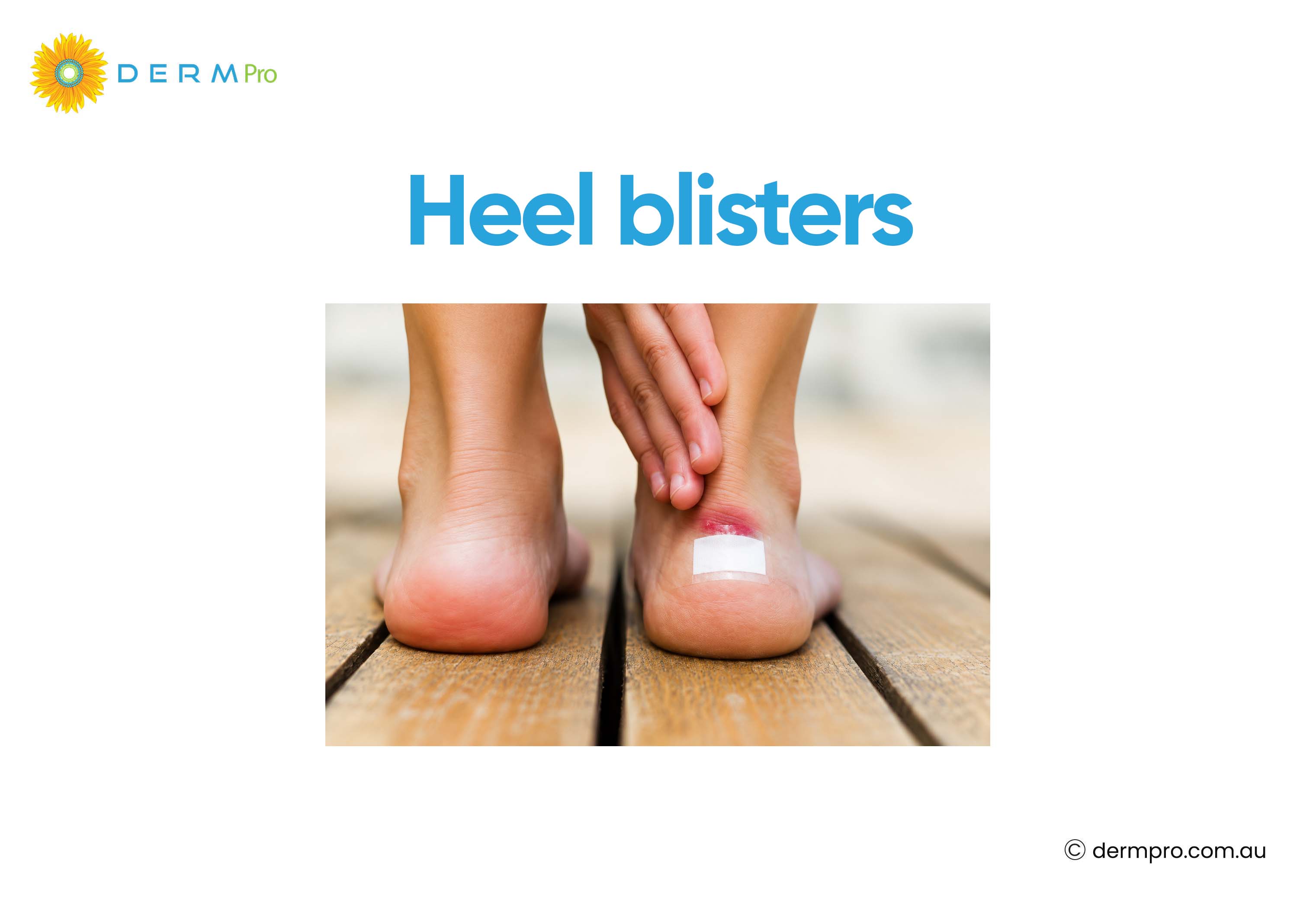
Toe blisters often form between or on top of the toes from tight or narrow shoes. Toe sleeves or small foam spacers can reduce rubbing between toes while the skin heals.
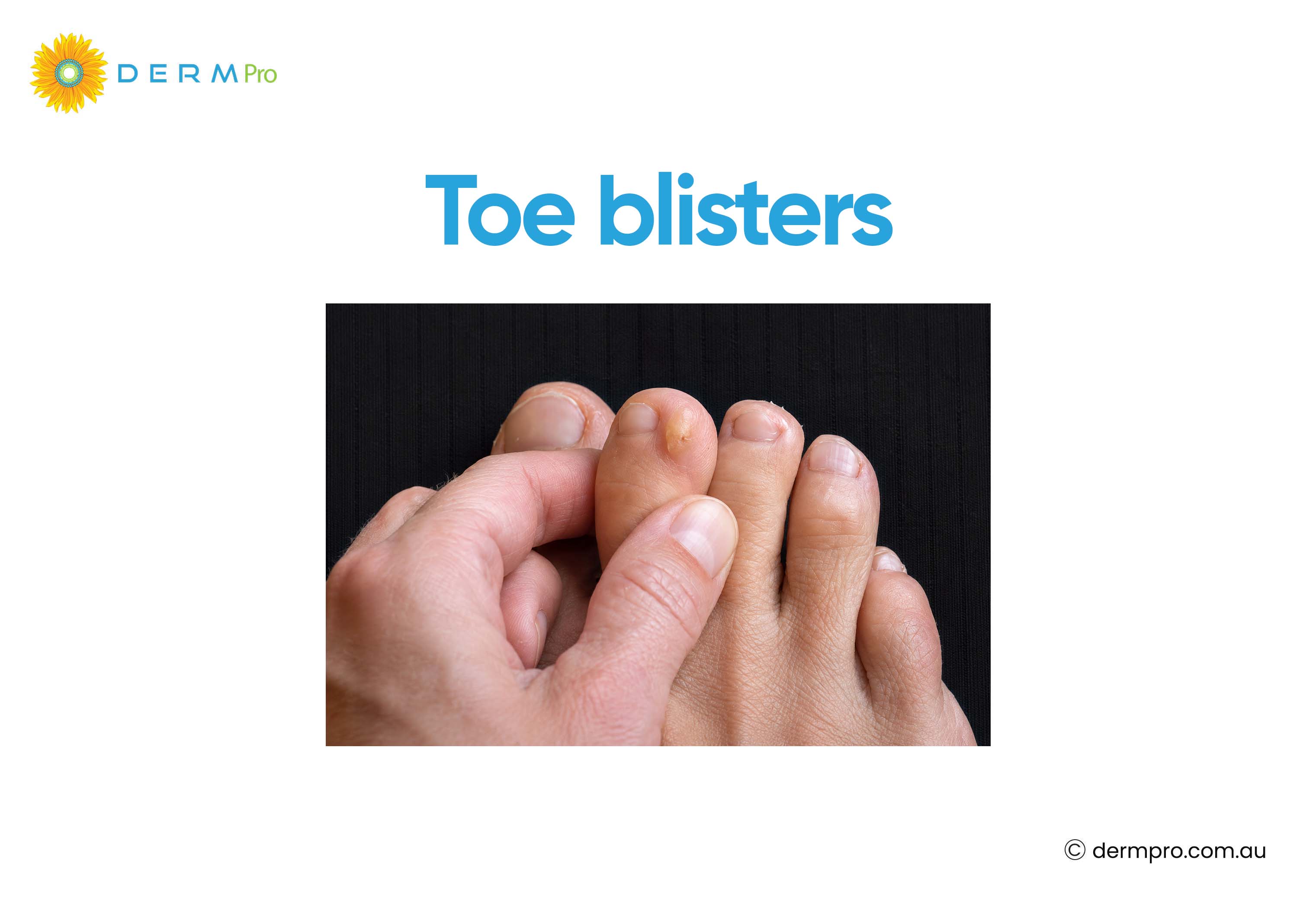
Sole-of-foot blisters are common after long walks, runs, or hikes. They sit on weight-bearing skin, so a cushioned, doughnut-shaped dressing around the blister rather than directly on top of it helps take pressure off the centre.
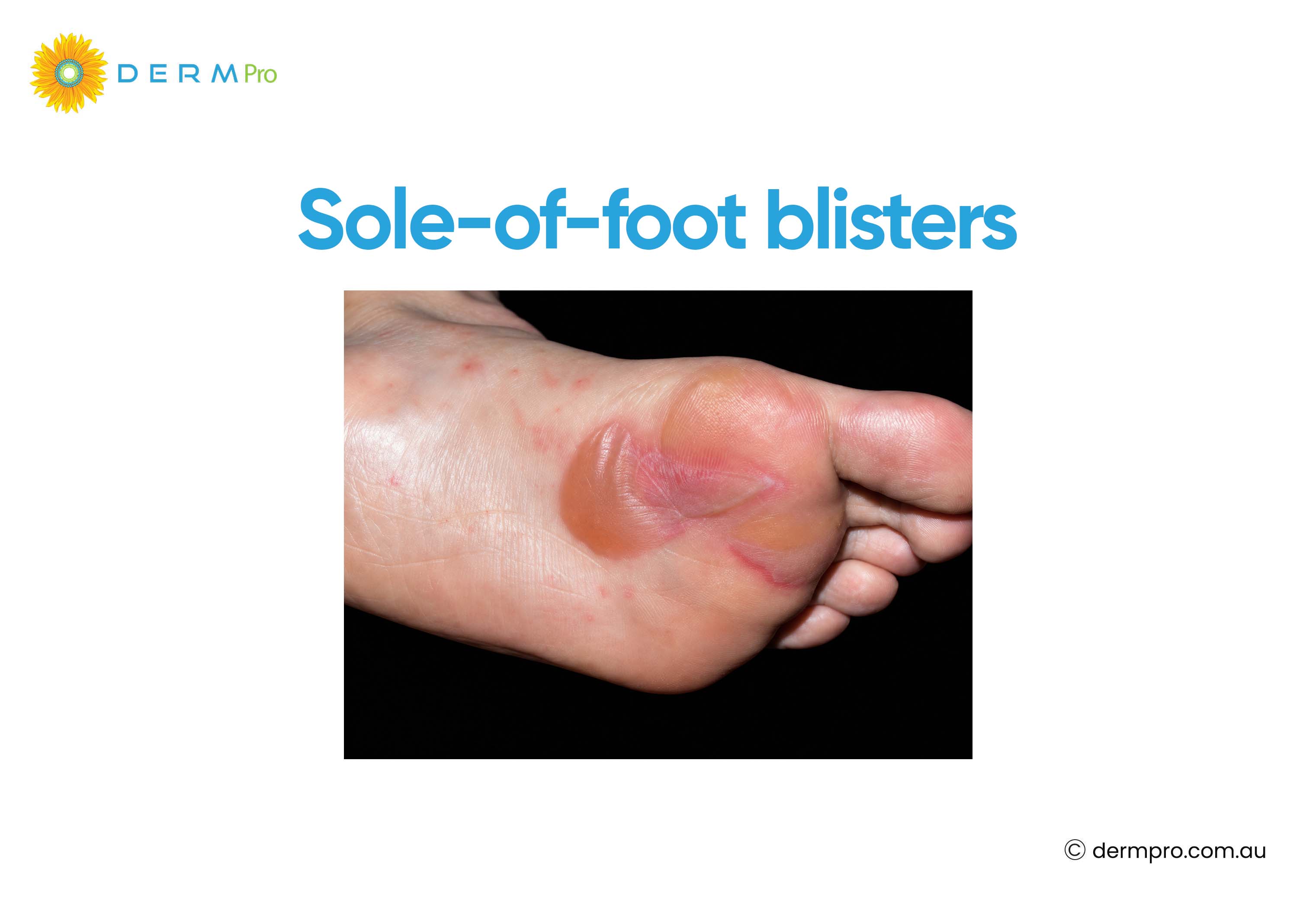
Shoe-related blisters often keep recurring in the same spot if the shoe itself is the problem. Sometimes the more effective fix is adjusting the footwear (different lacing, thicker socks, or a properly sized shoe) rather than just treating each new blister as it appears.
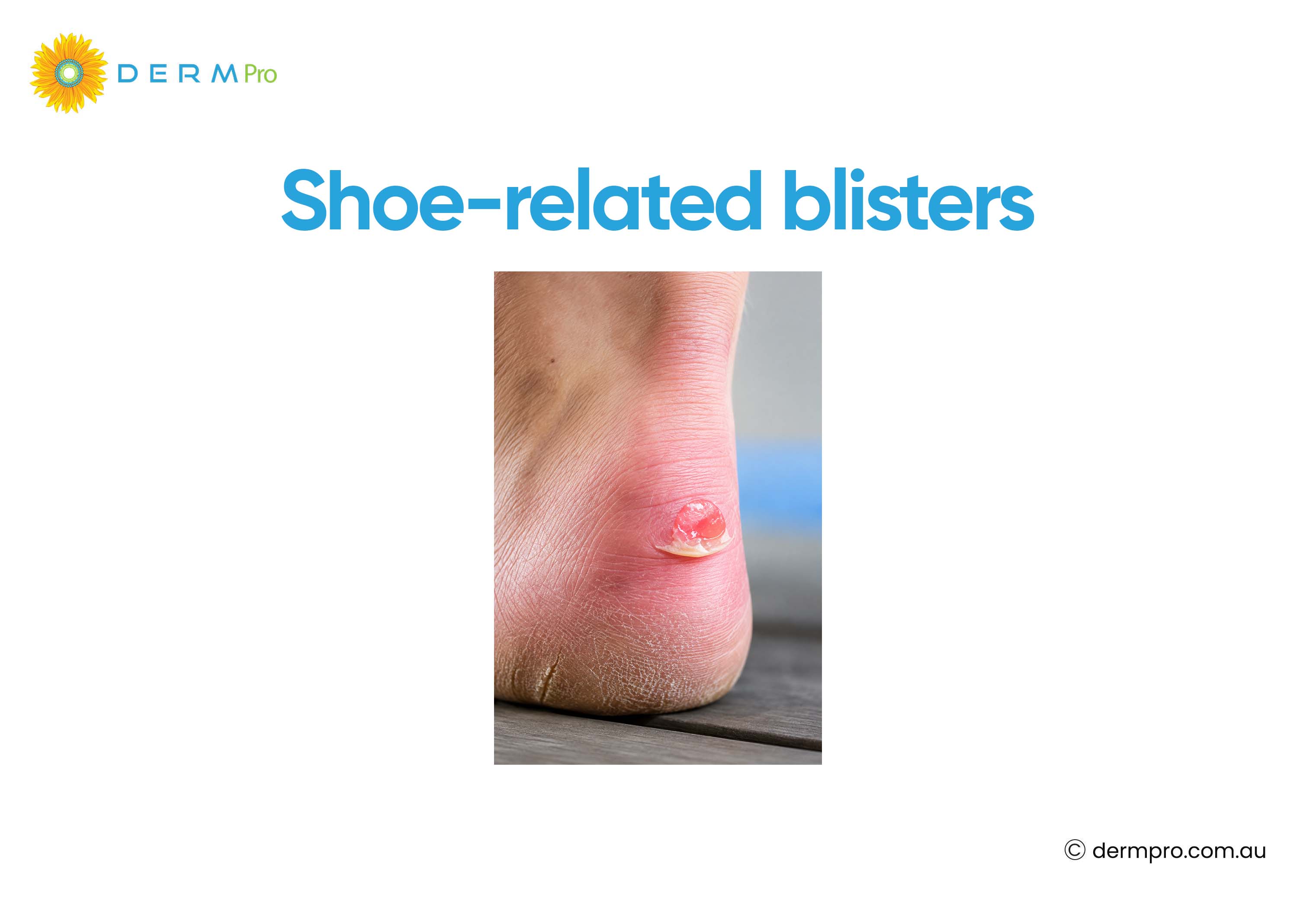
If you're on your feet all day or mid-activity, moisture-wicking socks and well-broken-in shoes go a long way toward preventing the next one, which we'll come back to in the prevention section.
In Australia, your skin deserves attention. Download DermPro from the Apple App Store or Google Play to check your skin, understand your risk and stay proactive about skin health.
How to Treat Popped Blisters on Feet?
If a blister has already broken on its own or by accident, the priority shifts from "protect the fluid" to "protect the raw skin underneath."
- Clean it gently with mild soap and water. Don't scrub.
- Leave the flap of loose skin in place if possible. It still offers some protection to the tender skin below, even once the blister has drained.
- Apply a thin layer of petroleum jelly or an antibiotic ointment, then cover with a nonstick bandage or gauze pad to keep the area moist and shielded.
- Change the dressing daily, or sooner if it gets wet or dirty.
- Watch for infection. Increasing redness, warmth, swelling, or pus over the next few days is a sign to get it checked out rather than continuing to self-treat.
This is often the moment people want the fastest possible fix, but the fastest safe approach is still the boring one: clean it, cover it, keep the pressure off, and give it a few days.
How to Treat Blisters on Hands?
Hand blisters come with a different problem than foot blisters. However, the common causes of blisters on hands include gardening tools, gym equipment, guitar strings, manual labour, and any repetitive gripping motion.
Blisters on Hands
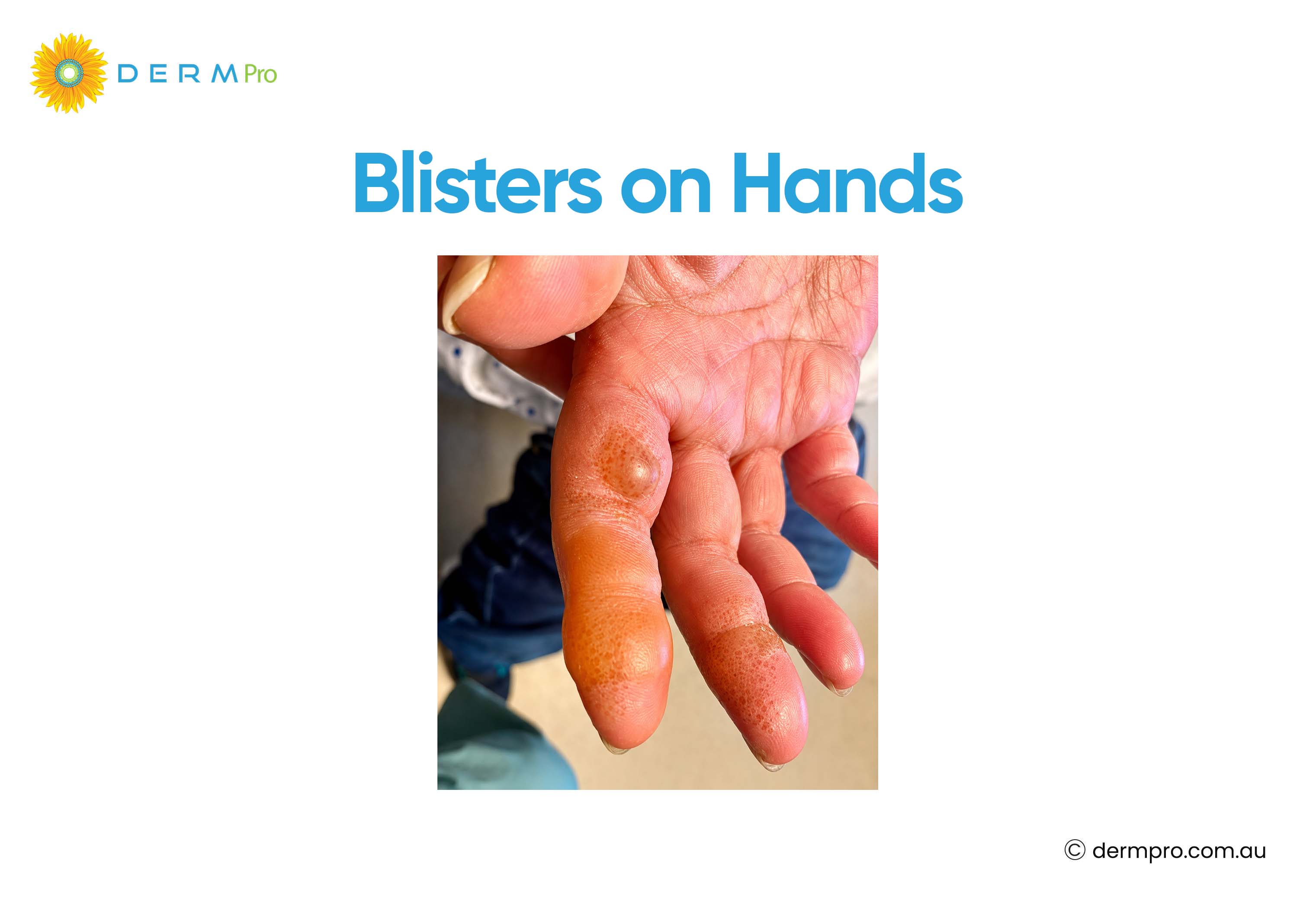
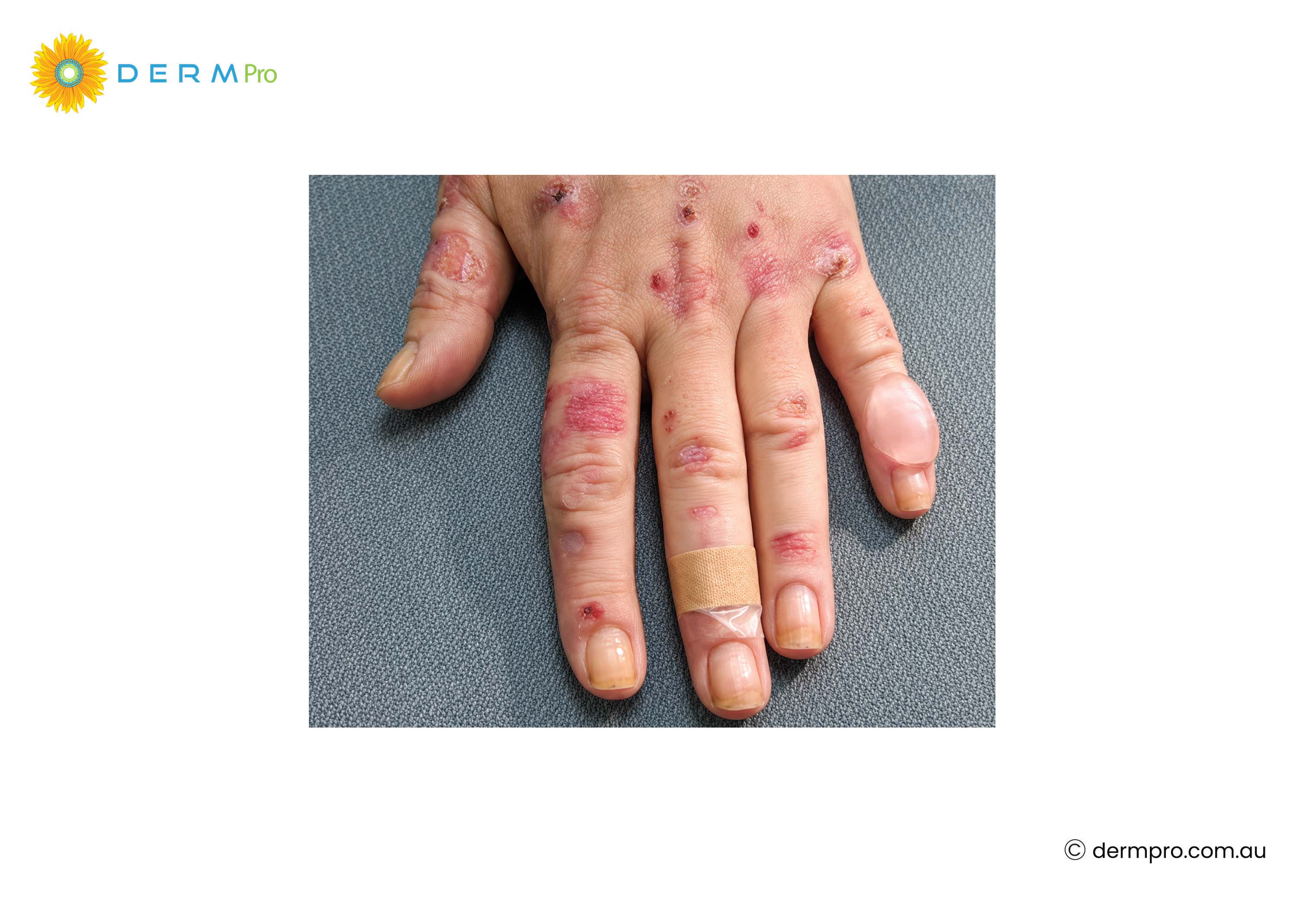
The core treatment is the same as for any friction blister. For example, clean and protect the blister and avoid popping it if you can. But a few adjustments help specifically for hands:
- Gloves or grip tape over the dressing can prevent it from being torn off during activity.
- Padded gloves for the activity that caused the blister in the first place help prevent the next one in the same spot.
- Give the hand a break where possible. Continuing the exact motion that caused the blister, even with a bandage on, slows healing and raises the chance it reopens.
If calluses are building up alongside blisters from a repeated activity (like weightlifting or manual work), that's often the skin's way of adapting, but a blister underneath a callus can be more painful and harder to treat, so it's worth easing up on the activity for a few days if you can.
What About Blisters on Legs?
Blisters can also form on the legs, just as they can on the feet and hands. However, the possible causes of blisters on legs include:
- Friction from tight clothing, especially during long walks or runs
- Burns, including sunburn
- Insect bites or allergic skin reactions
- Certain skin conditions that cause blistering, such as contact dermatitis or shingles
Can You Get Rid of a Blister Overnight?
No, because skin healing is a biological process that generally takes days, not hours, and no treatment reliably makes a blister vanish by morning.
What you can do overnight is reduce irritation and set the blister up to heal well:
- Apply a clean, cushioned bandage before bed so nothing rubs against it while you sleep
- Elevate the affected foot or hand if swelling or throbbing is bothering you
- Avoid tight socks, gloves, or bedding that could put pressure on the area
- Resist picking at it, even if it's itchy as it heals
Think of overnight care as damage control rather than a cure. The actual healing still happens over the following days.
What Is the Best Ointment for Blisters?
There isn't a single ointment that's "best" for every blister. However, the right choice depends on whether the blister is intact, open, or already showing signs of infection.
- Intact blisters generally don't need ointment. A clean bandage or blister-specific dressing is often enough, since the unbroken skin is already doing the protective job.
- Open or popped blisters benefit from a thin layer of petroleum jelly or an over-the-counter antibiotic ointment before covering, which keeps the wound moist and creates a barrier against bacteria.
- Irritated skin around a blister (from rubbing against a bandage, for example) may do fine with plain petroleum jelly rather than a medicated product.
- Blisters that already look infected with spreading redness, pus, or worsening pain need medical attention rather than an over-the-counter ointment as a stand-in for treatment.
No ointment can speed up healing beyond what clean, protected, moist wound care already does. The value is in preventing infection and reducing pain, not in accelerating biology.
Types of Foot Blisters
Not every blister on the foot is the same, and recognising the type helps you know what kind of care or caution it needs.
- Friction blisters are the most common type. They are caused by repeated rubbing, usually with clear or pale fluid
- Blood blisters form when small blood vessels are damaged along with the skin, appearing dark red or purple
- Burn-related blisters are caused by heat, chemical exposure, or sunburn, sometimes larger and more painful than friction blisters
- Blisters linked to skin conditions include fungal infections, eczema, or other dermatological issues, which may need targeted treatment rather than standard blister care
If a blister looks different from a typical friction blister, such as being unusually large, very painful, or appearing without any clear cause, it may have another cause and should be checked by a healthcare professional.
Tiny Blisters on Fingers: What Could Cause Them?
Small clusters of blisters on the fingers aren't always from friction. Depending on the pattern and other symptoms, possible causes include:
- Contact dermatitis from a soap, detergent, or other irritant
- Dyshidrotic eczema, which classically causes small, itchy blisters along the sides of the fingers
- Viral infections, including certain strains that cause hand-focused blistering
- Allergic reactions to something the hands have touched
These blisters can have different causes and may look similar. If tiny blisters on your fingers keep coming back, do not go away, or have no clear cause, it is best to see a healthcare professional rather than treating them at home for too long.
Foot Swollen With Blisters: When Should You Be Concerned?
A single blister with a little surrounding puffiness is common and usually not worrying. A foot that is notably swollen along with multiple blisters is a different picture and deserves more attention, particularly if it comes with:
- Increasing pain rather than gradual improvement
- Redness spreading beyond the blister itself
- Warmth to the touch
- Difficulty bearing weight on the foot
- Fever or feeling generally unwell
These combinations can point to infection or another underlying issue that needs proper assessment. This isn't something to try to diagnose from a symptom list, but it is a clear signal to get it looked at rather than waiting it out.
Can Blisters Become Infected?
Yes. A blister that's healing normally tends to become gradually less painful and less red over a few days, with the fluid staying clear (or, for blood blisters, gradually reabsorbing). An infected blister moves in the opposite direction.
Signs that point toward infection with blisters include:
- Redness that spreads or worsens rather than fading
- Increasing warmth around the area
- Pain that gets worse instead of better
- Pus or cloudy, yellowish drainage
- Swelling that continues to increase
- Red streaking extending away from the blister
- Fever or feeling unwell overall
A foot infection with blisters can get worse if left untreated. If you notice several signs of infection, such as increasing redness, swelling, warmth, pain or pus, see a healthcare professional instead of continuing to treat it at home.
When Should You Seek Medical Care for a Blister?
Most blisters heal fine without medical care, but it's worth seeing a healthcare provider if you notice:
- Signs of infection, as described above
- Severe or worsening pain
- Significant swelling around the blister
- A blister that's unusually large or in an unusual location
- Blisters that keep coming back without an obvious cause
- Widespread blistering across the body
- A blister that isn't improving after several days, or seems to be getting worse
- Blistering connected to a significant burn or other injury
- You have diabetes, poor circulation, or a weakened immune system, since these conditions raise the risk of complications from what would otherwise be a minor blister
Most blisters are minor and heal on their own. However, if a blister looks unusual, keeps coming back, or is not healing as expected, it is best to have it checked by a healthcare professional.
How to Prevent Blisters From Coming Back?
Once you've dealt with a blister, the more useful question is often how to avoid the next one.
- Get shoes that actually fit, with enough room in the toe box and no slipping at the heel
- Break in new footwear gradually rather than wearing it for a full day right away
- Choose moisture-wicking socks over cotton, since damp skin blisters more easily than dry skin
- Keep feet reasonably dry, changing socks during long days or heavy activity
- Use protective padding or tape on spots that have blistered before, before you start the activity, not after
- Identify the specific activity or equipment causing the rubbing a tool, a shoe, a piece of sports gear and address that directly, since treating the blister without fixing the cause just invites another one
Preventing blisters is usually simple. Pay attention to where the blister forms, what you were doing, and what may have caused the rubbing so you can make the right changes next time.
Frequently Asked Questions
What Are Blisters?
A blister is a small pocket of fluid that forms between the upper layers of your skin. When skin is irritated or damaged, our body creates this small fluid-filled space that protects the area underneath and gives the skin time to heal.
Blisters on skin can show up anywhere on the skin. However, they mostly appear on areas that are repeatedly rubbed or under pressure, such as the heels, toes, palms, and fingers. Most are the ordinary friction type, but blisters can also form from heat, chemical exposure, certain infections, or underlying skin conditions.
How Do Blisters Form?
The blister formation mechanism is simple to understand. When something repeatedly rubs against your skin, like a heel rubbing inside a stiff shoe, the friction can make the top layer of skin pull away from the layer underneath. Fluid seeps into that gap and collects there, forming the raised, fluid-filled bump you can see and feel.
Friction is not always the only trigger. Blisters can also form from:
- Pressure held in one spot for a long time, like from a poorly fitted shoe
- Heat, including sunburn or contact with a hot surface
- Burns, chemical or thermal
- Repeated rubbing, common with new footwear, manual tools, or sports gear
- Certain skin conditions or infections, such as contact dermatitis, chickenpox, shingles, or other blistering skin diseases
It is worth paying attention if a blister appears without any obvious rubbing or heat exposure.
What Is the Liquid in a Blister?
The fluid inside a blister mainly comes from plasma, which is the liquid part of our blood. Small blood vessels release it after the skin gets injured. The fluid protects the damaged area and keeps it moist, helping new skin grow underneath.
This fluid cushions the damaged area and helps create a moist environment that supports new skin growth underneath.
Sometimes the fluid looks red or dark; that's a blood blister, which forms when small blood vessels near the surface are damaged along with the skin layers. If the fluid turns cloudy, yellow, or milky, that can signal infection rather than normal healing fluid; more on spotting that below.
How quickly can a blister heal?
Most friction blisters heal within about a week to ten days if you keep them clean and protected from further rubbing. Larger blisters or ones on high-pressure areas like the sole of the foot can take longer.
Should you pop a blister?
Generally, no, unbroken skin protects against infection and tends to heal with less pain. If a blister is very large and painful, carefully draining it while leaving the overlying skin in place is sometimes reasonable, but it's not necessary for most blisters.
How can you heal a blister quickly and safely?
There's no way to make a blister heal instantly, but keeping it clean, protected from friction, and appropriately covered gives it the best conditions to heal as quickly as it naturally can.
What should I put on a popped blister?
A thin layer of petroleum jelly or an over-the-counter antibiotic ointment, followed by a nonstick bandage, helps keep the area moist and protected while new skin forms.
How long do foot blisters take to heal?
Similar to other blisters, typically around a week to ten days, though ongoing pressure from walking or footwear can slow healing if it isn't addressed.
Can I put ointment on a blister?
Yes, you can put a thin layer of ointment on an open blister that keeps the wound moist to reduce infection risk.
Why do I keep getting blisters on my feet?
You are getting blisters on your feet because of friction, moisture pressure that tears the skin upper layer. It happens due to ill-fitting shoes, a particular activity, or damp feet.
When is a blister a sign of infection?
When it comes with spreading redness, increasing warmth, worsening pain, pus, significant swelling, red streaking, or fever. If you find any of these signs, immediately seek medical advice.
Disclaimer
This blog is for general information only and does not replace professional medical advice, diagnosis or treatment. If your blister is severe, infected, recurring or not healing, speak with a GP or qualified healthcare professional.
References
- NHS – Blisters
- Mayo Clinic – Blisters: First Aid
- American Academy of Dermatology – How to Prevent and Treat Blisters
- Mayo Clinic – Sunburn: First Aid
- NHS – Burns and Scalds
Was this article helpful?
Your feedback helps us create better content for everyone.