Wart: How to Identify a Wart, Causes, Symptoms & Treatment

A wart is a common skin growth. Certain types of human papillomavirus (HPV) infect the skin and result in the development of warts. Most warts are harmless. Many go away over time.
But not every rough bump is a wart. Corns, calluses, skin tags, cysts, and other skin lesions can look similar.
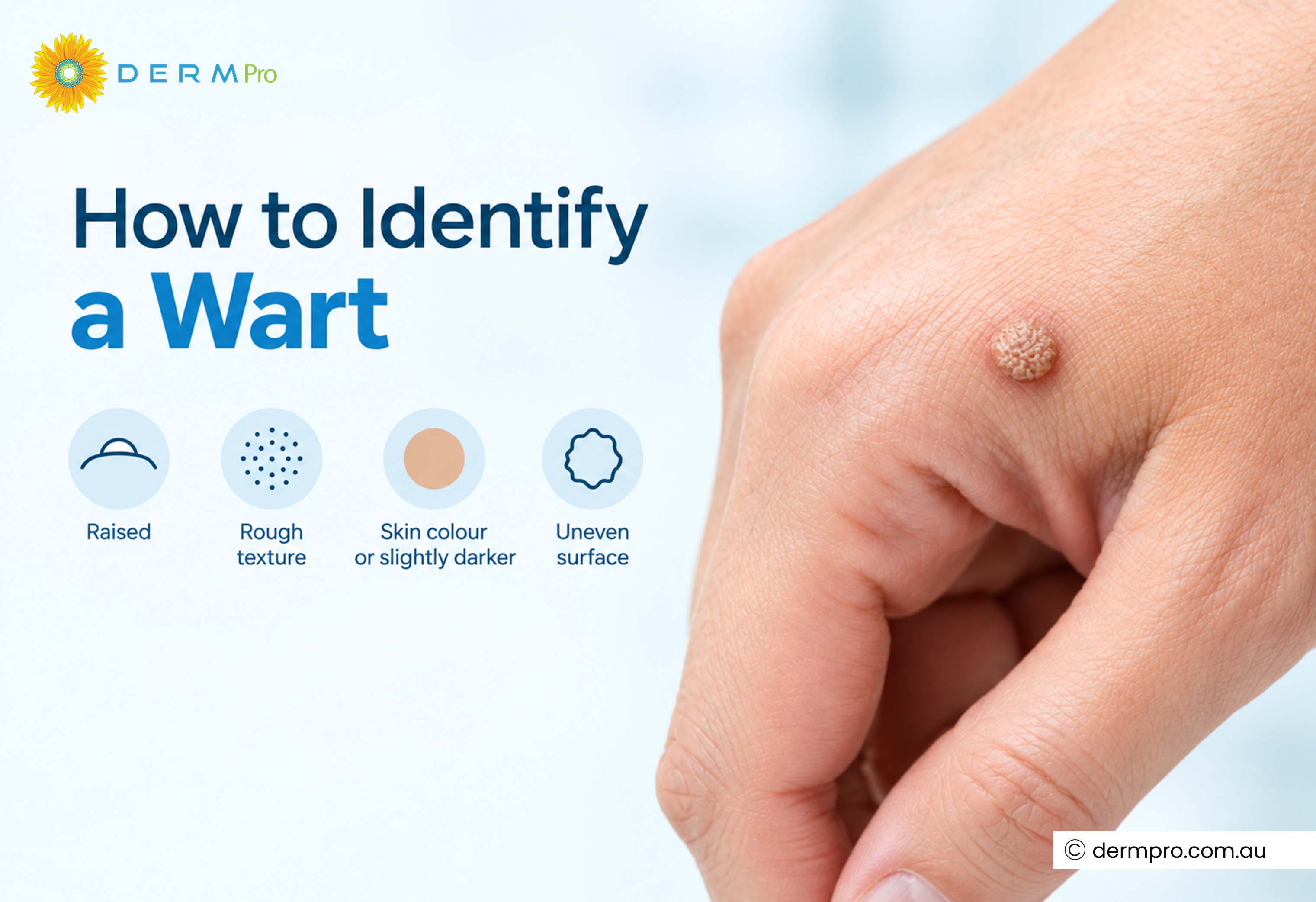
How to Identify a Wart?
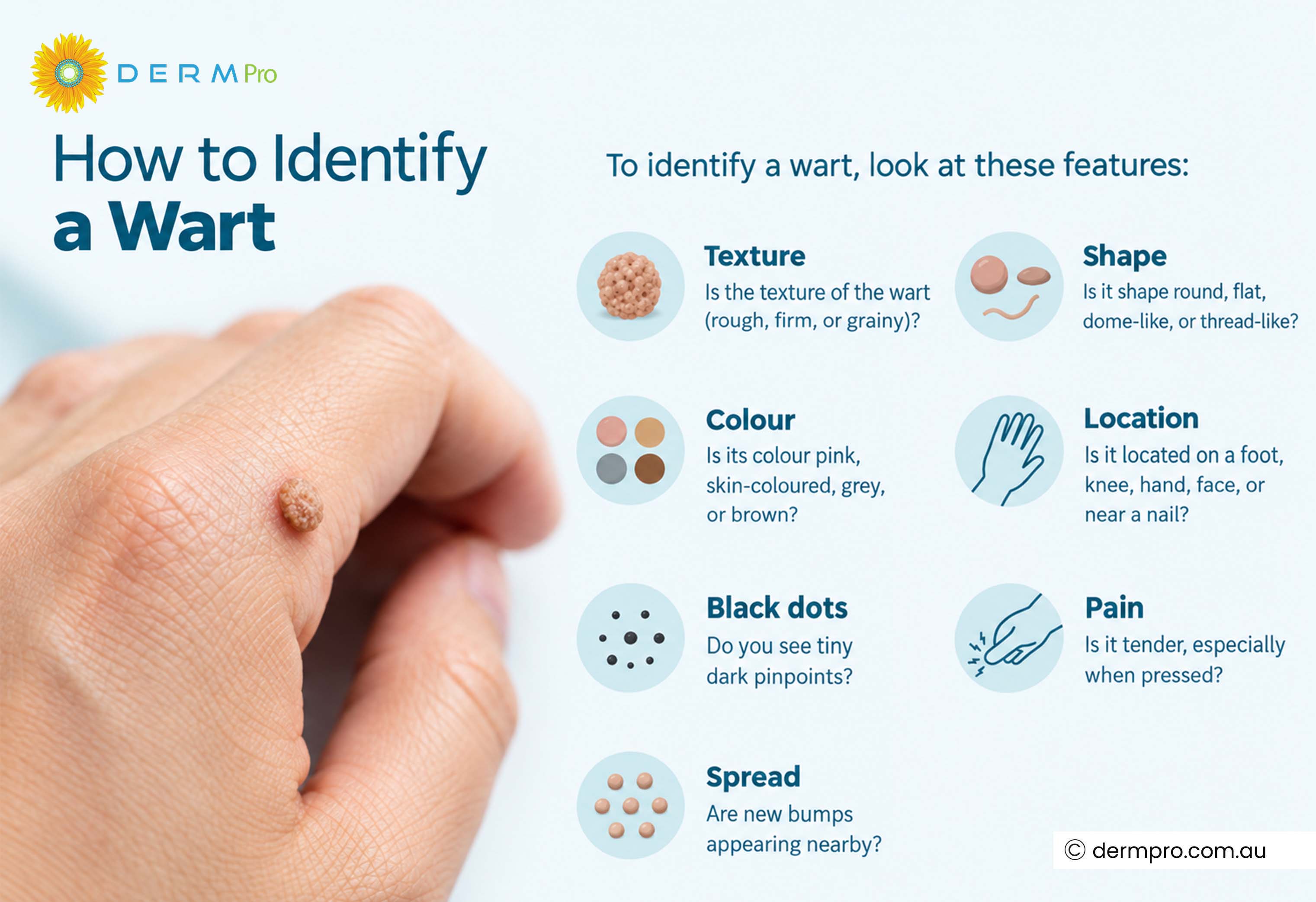
To identify a wart, look at these features:
- Is the texture of the wart rough, firm, or grainy?
- Is its shape round, flat, dome-like, or thread-like?
- Is its colour pink, skin-coloured, grey, or brown?
- Is it located on a foot, knee, hand, face, or near a nail?
- Black dots: Do you see tiny dark pinpoints?
- Pain: Is it tender, especially when pressed?
- Spread: Are new bumps appearing nearby?
- Duration: Has it been there for weeks or months?
Important: A checklist cannot confirm that a growth is a wart. If you are unsure, a healthcare professional can examine it. Or you can monitor it with the DermPro app. Download the DermPro App to send scan images of any skin changes to a dermatologist.
What Is a Wart?
A wart is a non-cancerous small growth on the skin. It forms when certain types of HPV infect the top layer of the skin. The virus makes skin cells grow faster than normal. This creates a rough or raised bump. However, they are not a sign of poor hygiene.
Many warts are harmless. They can still be annoying, painful, or embarrassing.
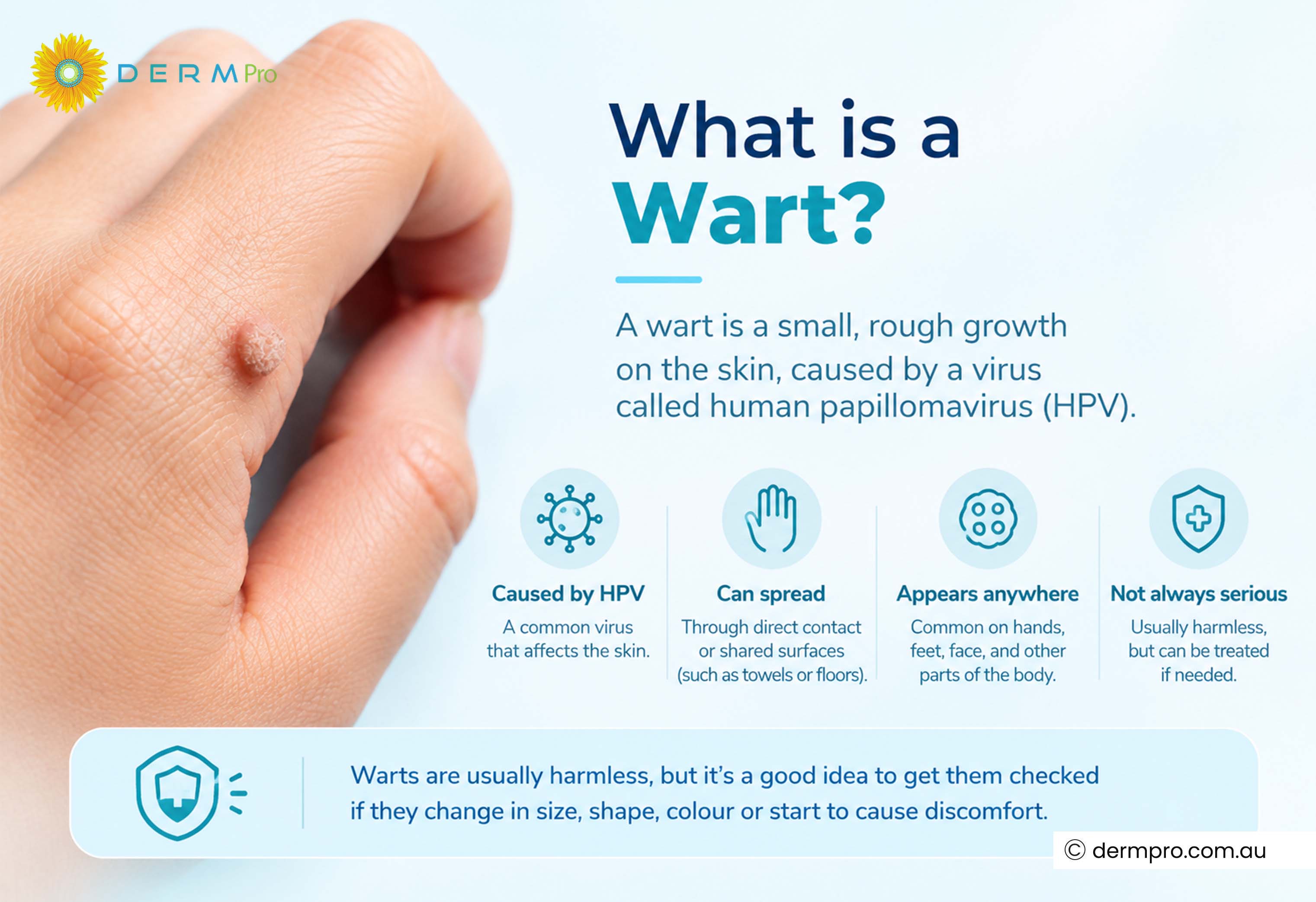
The type of wart depends on the type of HPV and also the body area. A wart on the foot can look very different from one on the face or hand.
Not every HPV infection causes a visible wart. Many people carry HPV without any skin changes.
What Does a Wart Look Like?
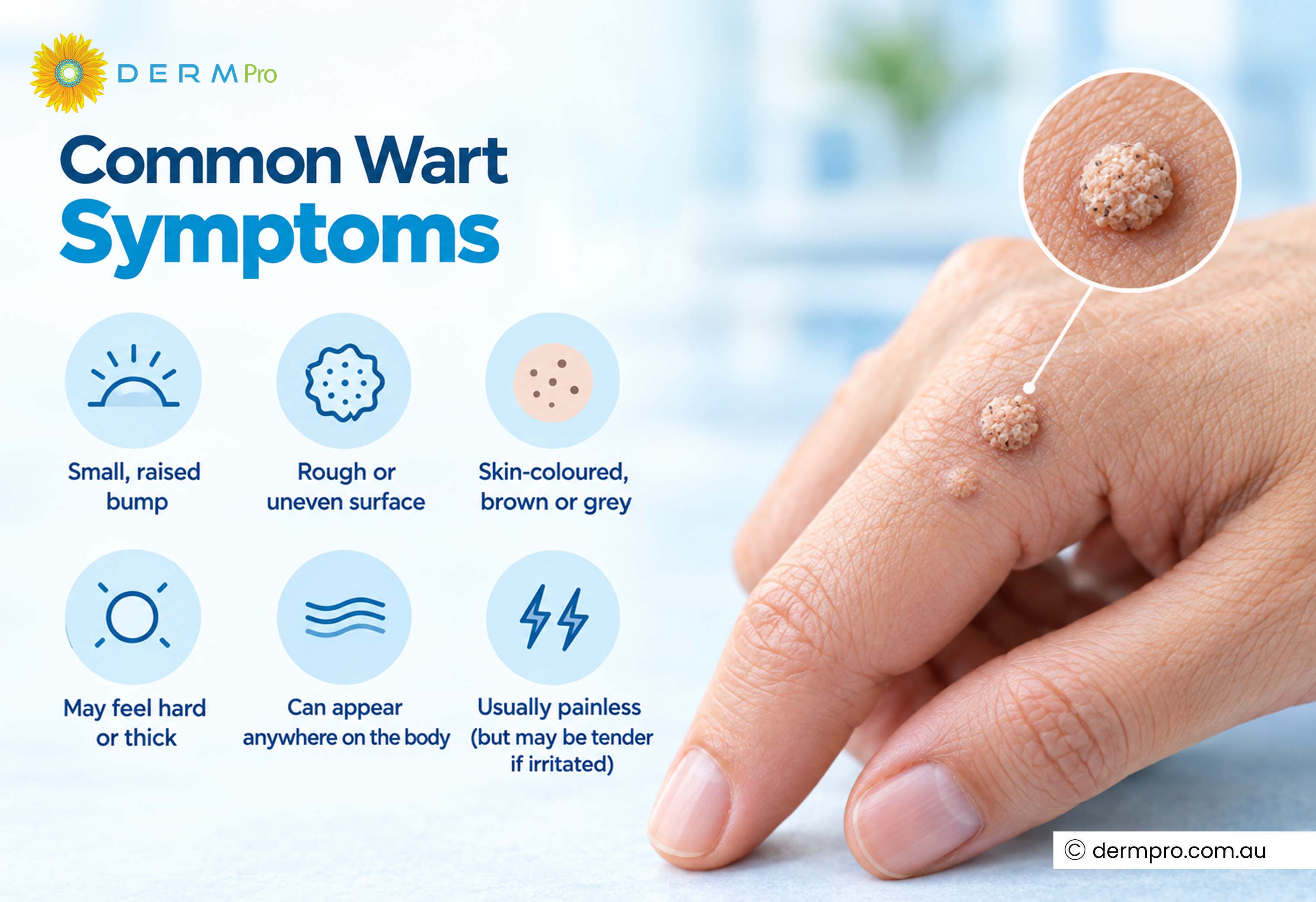
A wart mostly has an uneven, grainy, or rough surface. Some of them look dome-shaped. However, others are flat and smooth.
Common features of warts include:
- A "cauliflower-like" or rough surface
- A raised or slightly flat shape
- Skin-coloured, pink, grey, brown, or darker colour
- Small dark or tiny clotted blood vessels that have clotted or thrombosed capillaries
- One bump or a cluster of bumps
The colour of warts looks different on every skin tone. On darker skin, they may look brown or darker than the skin around it.
Moreover, friction, picking, shaving or pressure can change how a wart looks. It may become thicker, flatter, irritated, or sore.
Download the DermPro App
Today and scan all the skin changes that look suspicious and send scanned images to your dermatologist.
Where Can Warts Appear?
Warts can grow anywhere on the skin. However, some places are more common.
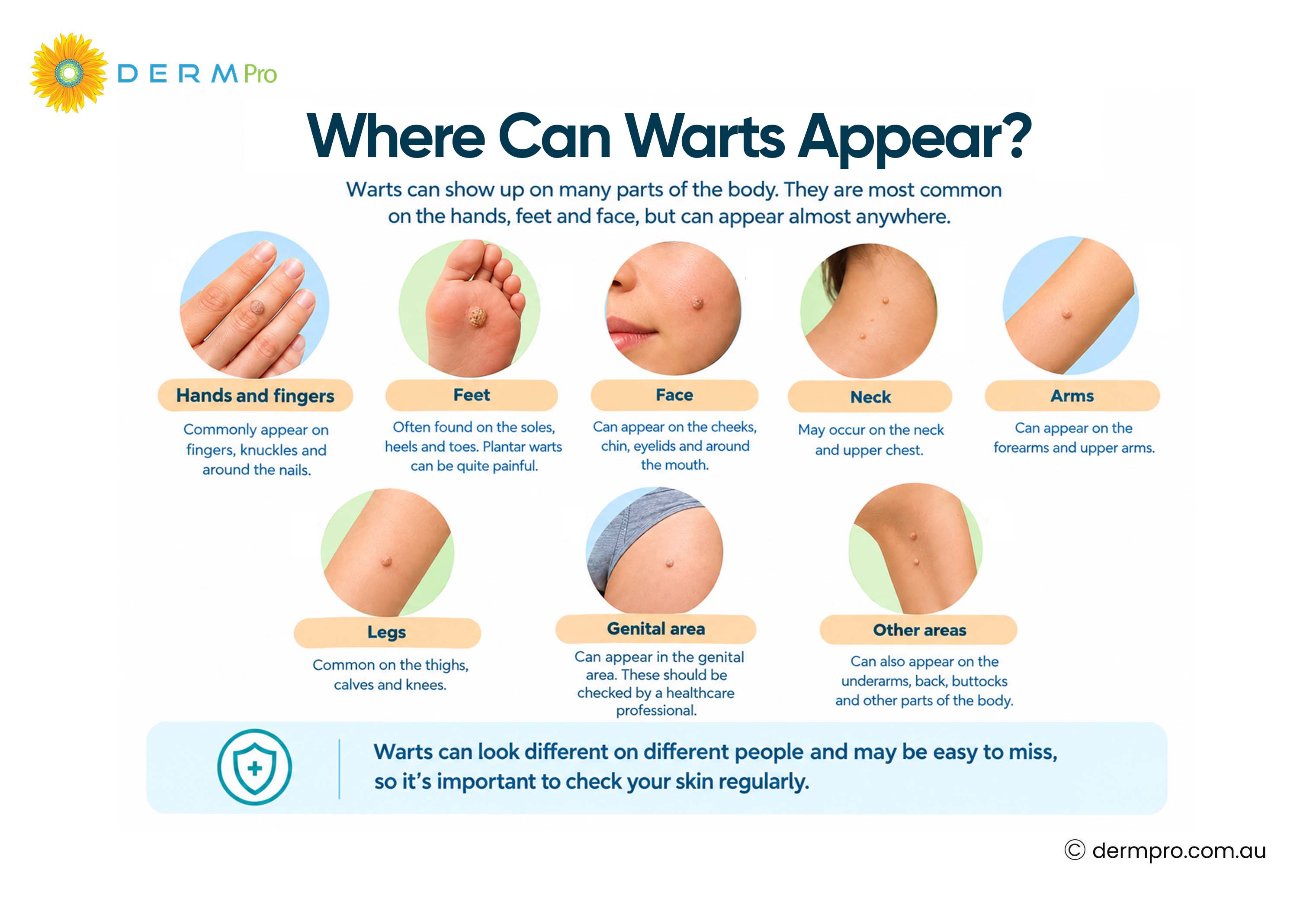
Hands and fingers
Warts frequently appear on the backs of hands, fingers and knuckles. In addition, nail biting, picking and cuts can make them more likely.
Feet
Warts on the sole are called plantar warts. A wart on the foot may be flat because walking presses it inward.
Knees
Warts on the knee are possible, especially after shaving or scrapes. A knee bump may also be something else, so it is important to check if it changes.
Around or under the nails
A wart around the nail edge or under the nail is called a periungual wart. A wart under a fingernail can be painful. It may also lift or change the nail. Check nail growths that are unusual or last a long time.
Face
Flat warts and thread-like warts are the types most often seen on the face. As the skin of the face is delicate, home treatments can cause irritation or scarring. So it is better to go to a professional for a facial growth/warts checkup.
Warts inside your nose
A bump inside the nose should not automatically be treated as a wart. Because several other conditions can look similar. Also, do not use over-the-counter (OTC) wart products inside the nose. Seek medical advice if a skin growth bleeds, looks unusual, or does not go away.
Types of Warts
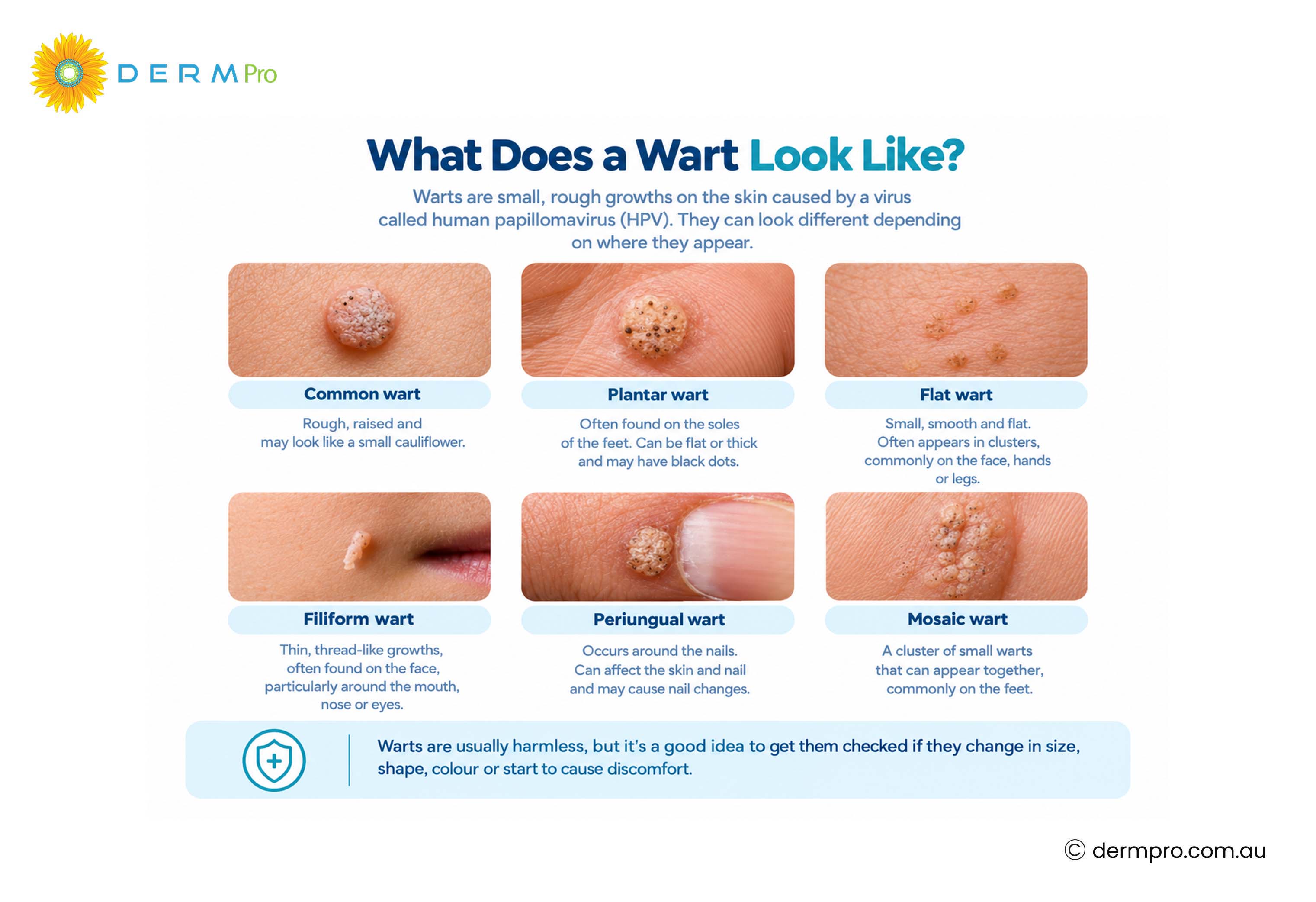
Approximately, there are several types of warts. Also, their appearance and locations vary. These types include:
Common warts
- Common warts look like rough, raised, and dome-shaped bumps.
- They often appear on hands, fingers, knees, and elbows.
- The signs of common warts include a grainy surface, sometimes with black dots.
Plantar warts
- Plantar warts look like rough spots, often flat or sometimes with a thick skin layer.
- They appear on the soles of the feet, especially heels and the ball of the foot.
- The indication of a plantar wart is pain when pressing or walking.
Flat warts
- Flat warts look small, smooth, and slightly raised. In colour, they are pink, brown, or yellowish.
- They appear on the face, arms, and legs.
- They often appear in groups. These are among the types of warts on the face.
Filiform warts
- Filiform warts are thin, thread-like or finger-like growths.
- They appear on the face, especially around the eyes, nose, and mouth.
- Their shape is long and narrow.
Periungual warts
- Look: Rough bumps around or under the nail.
- Where: Fingernails and toenails.
- Clue: They may disturb nail growth.
Mosaic warts
- Mosaic warts form a cluster of small, tightly grouped warts, often creating a broader affected area.
- They often appear on the soles or palms.
- They form a tile-like patch.
Genital warts
- They look like small, flesh-coloured or grey bumps. They may be smooth or rough.
- They often appear on the genital or anal area.
- They are linked to specific HPV types that are usually spread through sexual contact.
Remember: Genital warts need medical assessment. Do not treat them with ordinary OTC wart removers.
Plantar Warts: What Do They Feel and Look Like?
Plantar warts are HPV-related skin growths that develop on the bottom of the foot. Standing up and walking puts pressure on them. This can push the wart inward under a layer of thick skin.
Common plantar wart symptoms include:
- A rough or hard spot on the sole
- Tiny dark pinpoint dots
- Tenderness when pressing the spot
- Pain while walking, often like a stone in the shoe
- Skin lines that seem to go around the spot
Plantar warts can look like corns or calluses. Corns and calluses are thickened skin from rubbing or pressure. They usually do not have black dots, but skin lines usually continue across them. A wart often interrupts those lines.
Wart vs. Other Skin Bumps: What Could It Be?
Many skin conditions can look like a wart. This table shows how they usually differ. It cannot diagnose a skin lesion.
Table 1: Wart vs. similar skin bumps
|
Feature |
Wart |
Corn |
Callus |
Skin Tag |
Mole |
Cyst |
Blister |
|
Usual Look |
Rough or Grainy Bump |
Small, hard, thick skin with a core |
Wide patch of thick skin |
Soft, small flap of skin |
Flat or raised spot, often brown |
Smooth lump under the skin |
Raised, fluid-filled bubble |
|
Texture |
Rough, firm |
Hard, dense |
Hard, flat, dry |
Soft, smooth |
Smooth or slightly raised |
Firm or rubbery |
Thick Skin over fluid |
|
Common Location |
Hands, face, knees, feet |
Toes, feet |
Heels, palms, balls of feet |
Neck, armpits, groin |
Anywhere |
Face, neck, back, scalp |
Where skin burns or rubs |
|
Usual Cause |
HPV infection |
Pressure or friction |
Repeated Friction |
Friction; often unclear |
Clusters of pigment cells |
Trapped skin material or oil |
Friction, burns, irritation |
|
Pain |
May be Tender |
Often painful or pressure |
Usually mild |
Usually painless |
Usually painless |
May hurt if inflamed |
Often sore |
|
Helpful Clue |
Black dots; may spread |
Central core; sits at pressure points |
Even Thickening |
Hangs from a stalk |
Look for changes |
Lump sits beneath the skin |
Clear fluid inside |
A few comparisons come up often:
- Wart vs. corn: A wart is viral and can spread. Corn comes from pressure. Warts often show black dots. Corns often have a hard central core.
- Wart vs. callus: A callus is a wide, evenly thick patch. A wart is usually more defined and rough.
- Cysts vs. warts: A cyst sits under the skin and feels like a smooth lump. A wart grows on the skin surface and feels rough.
- Wart vs. blister: A blister is filled with fluid and usually appears after rubbing or a burn. A wart is solid.
Moles also need attention. Any mole that changes in size, shape, or colour should be checked by a professional.
Are Warts Filled With Fluid?
Ordinary warts are not usually filled with fluid. They are solid, rough growths.
A fluid-filled bump may be a blister or another skin problem. But appearance alone may not tell you the cause. If a bump contains fluid, keeps coming back, or hurts, have it checked.
What Causes Warts?
HPV is the cause of warts. However, many HPV types exist. Different types tend to affect different parts of the body.
If you are wondering what the reason for warts is, it comes down to the virus getting into the skin. Common routes include:
- Skin-to-skin contact with someone who has a wart
- Contact with contaminated surfaces or objects may also spread the virus, such as damp floors, swimming pools, showers and changing rooms
- Small cuts, cracks, or breaks in the skin that let the virus in
- Nail biting or picking around the nails
- Shaving or minor skin injuries may make it easier for the virus to spread to nearby skin.
Some things can raise the chance of getting warts:
- Skin injuries
- Frequent contact with shared wet surfaces, such as pools and locker rooms
- Close skin-to-skin contact
- A weakened immune system
Getting a wart does not mean you did anything wrong. HPV is very common.
Can Warts Spread?
Yes, warts can spread. They can spread in two ways.
On your own body: Touching, picking, biting, or shaving over a wart can move the virus to nearby skin.
To other people: Direct contact with an infected wart can allow the virus to spread.
Contact with the virus may not always lead to a visible wart. Spread is not certain. See the prevention tips below.
Wart Symptoms
Many warts cause no symptoms except how they look. Wart symptoms can include:
- A rough or firm bump
- A grainy surface
- Black pinpoint dots
- Tenderness or pain, especially on feet or fingers
- Itching in some cases
- Clusters of warts
- Discomfort depending on location, such as when walking or gripping
Warts bleeding: A wart may bleed if it is picked, scratched, or cut while shaving. That is usually due to injury. However, bleeding should not be assumed to be normal. Immediately see a professional if a growth bleeds without a clear cause, keeps bleeding, or changes in appearance.
Can Warts Go Away on Their Own?
Yes, some can go away on their own. Warts can sometimes go away on their own as the immune system clears the infection.
But this can take months or longer. Timing differs between people and wart types. No one can promise how long a wart will last.
Treatment may be worth considering if a wart is:
- Painful
- Spreading
- Lasting a long time
- Getting in the way of daily activities
Wart Treatment: What Are the Options?
The right wart treatment depends on the wart location, type, symptoms, age, general health, and whether the diagnosis is certain. No single treatment works best for everyone. None is guaranteed.

At-home treatment
At-home treatment options include:
- Salicylic acid products: These slowly soften and peel away wart skin.
- OTC freezing products: These use cold to damage wart tissue.
Home treatment can take weeks to months. It often needs repeated use. Follow the product label.
Do not use OTC wart removers on:
- The face
- The genital area
- Inside the nose
- Any lesion you are unsure about
Professional treatment
A healthcare professional may offer these treatment options:
- Cryotherapy: Freezing the wart, often in repeated sessions
- Cantharidin: A blistering chemical applied in clinic, where appropriate
- Other chemical treatments: Stronger acids or agents applied by a professional
- Laser treatment: Used for some stubborn warts
- Minor surgical removal or curettage: Scraping or removing the wart, where appropriate
- Immune-based treatments: Sometimes used for selected persistent warts
Professional wart removal can still need more than one visit. Warts may also return.
Home Treatment vs. Dermatologist Treatment
Table 2: Home vs. professional wart therapy
|
Home Treatment |
Professional Treatment |
|
|
Best suited for |
Small, usual warts on hands or feet when you are sure it is a wart |
Painful, spreading, stubborn or uncertain growths; sensitive areas |
|
Examples |
Salicylic acid; OTC freezing kits |
Cryotherapy, cantharidin, other chemicals, laser, curettage, immune-based options |
|
How it works |
Softens or freezes wart tissue over time |
Destroys wart tissue or helps the immune system respond |
|
Time to results |
Often weeks to months |
Varies; often several visits |
|
Limitations |
Needs patience; can irritate skin; not for all areas |
May cause discomfort; warts can return |
|
When professional assessment is needed |
No improvement, worsening, bleeding or any doubt about the diagnosis |
Needed whenever the diagnosis is uncertain |
Always have uncertain lesions treated by a professional doctor or dermatologist. Do not try to treat them repeatedly at home.
How to Get Rid of Warts on Hands?
Many people ask how to remove warts on their hands. Common approaches to removing warts from hands include:
- Salicylic acid products used as directed
- OTC freezing products used as directed
- Professional treatment such as cryotherapy
Complete removal cannot be promised. Warts may need repeated treatment, and some return
Consider professional treatment if the wart is:
- Painful
- Spreading
- Bleeding
- Not improving
- Uncertain in diagnosis
Do not cut, burn, scratch, or tie off a wart. Avoid unverified home remedies. They can injure skin and spread the virus.
When Should You See a Dermatologist?
See a dermatologist or other qualified healthcare professional if:
- You are not sure it is a wart.
- The growth is changing or growing quickly.
- It bleeds without obvious injury or keeps bleeding.
- It becomes painful or very itchy.
- It develops an open sore.
- Its colour, shape, or size changes.
- It does not improve with appropriate treatment.
- It is on the face.
- It is in or around the genital area.
- It is inside the nose or another sensitive place.
- It is under or around a nail and is persistent or unusual.
- You have diabetes, poor circulation, or a weakened immune system.
- It keeps coming back.
A professional can examine the lesion. They may also suggest further tests to rule out another skin condition.
How to Prevent Warts From Spreading?
- Do not pick or scratch warts.
- Avoid shaving over them.
- Wash your hands after touching a wart.
- Do not share razors, nail files, towels, or other personal items.
- Keep feet clean and dry.
- Wear footwear in shared showers, changing rooms, and pool areas.
- Do not bite nails or pick the skin around them.
- Cover warts when appropriate, especially during close-contact activities.
Frequently Asked Questions
Are warts contagious?
Yes, warts are contagious, and they can spread through direct contact or shared items. However, not everyone exposed develops one.
Can warts go away without treatment?
Often, yes. But warts can take months or longer to go away without treatment. In a nutshell, time varies.
How long does wart treatment take?
It varies. Home treatments often take weeks to months. However, some warts need repeated sessions.
Can I remove a wart myself?
OTC products can help with some typical warts on hands or feet. Do not cut, burn, or scratch a wart. Do not use home removers on the face, genitals, inside the nose, or on uncertain lesions.
Is a wart dangerous?
Most skin warts are harmless. But some can be painful or bothersome, and some can spread.
Can a wart turn into skin cancer?
Common skin warts are not usually thought to turn into skin cancer. But some skin cancers can look like warts. That's why changing, bleeding, or unusual growths should be checked.
Are warts filled with fluid?
Usually, warts are not filled with fluid. A fluid-filled bump may be a blister or another condition.
What Are the Dark Spots Inside a Wart?
The black dots are commonly caused by tiny blood vessels that have formed clots. However, they are not enough on their own to identify a wart.
How can you tell a wart from a corn?
Warts can show small black dots and may cause the normal skin markings to become interrupted. Corns often have a hard central core and form at pressure points. A professional can tell them apart.
When should I stop using an OTC wart treatment?
Stop the OTC wart treatment if the skin becomes very sore, irritated, or bleeds, or if you are unsure of the diagnosis. Also stop if there is no improvement after the time on the product label. Then seek healthcare professional advice.
Do Warts Spread to Other Areas of the Body?
Yes, warts can spread if you pick, bite, or shave, which can move the virus to nearby skin.
When to see a dermatologist for a wart?
See one if the bump is uncertain, painful, bleeding, changing, spreading, in a sensitive area, or if you have a health condition that affects healing.
Final Remarks
Warts are common and often manageable. Not every skin bump is a wart. Some warts go away without treatment, and treatment can take time. Painful, bleeding, changing, or uncertain skin growths should be assessed by a professional. If you are unsure whether a skin bump is a wart, a qualified healthcare professional can help identify it and recommend the safest next step.
Sources / References
- American Academy of Dermatology (AAD): Warts overview, diagnosis, treatment, and prevention
- DermNet: Viral warts, plantar warts, and differential diagnosis pages
- NHS: Warts and verrucas
- Healthdirect Australia: Warts
- Mayo Clinic: Common warts; plantar warts
- Cleveland Clinic: Warts
- Johns Hopkins Medicine: Warts
- Centres for Disease Control and Prevention (CDC): Genital HPV and anogenital warts
- Peer-reviewed dermatology reviews on wart treatment (for example, Cochrane reviews on topical treatments for warts)
Disclaimer: This content and its images are provided for general educational and informational purposes only and are not a substitute for professional medical advice, diagnosis, or treatment. Skin conditions can look similar, and the information or images should not be used for self-diagnosis. Images are illustrative and may not represent how a condition appears in every person or skin tone. Consult a qualified healthcare professional if you have a new, changing, painful, bleeding, rapidly growing, or unusual skin growth.
Was this article helpful?
Your feedback helps us create better content for everyone.