Itchy Mole: Signs, Causes and Treatment

An itchy mole is something we notice at some point but ignore, as it seems nothing serious. However, any change in a mole, such as persistent itching, needs attention.
While itchy moles on the skin are often harmless, in some cases, they could not be. That's why they require medical attention. Understanding what causes moles to itch and when to act can help you make informed decisions about your skin health.
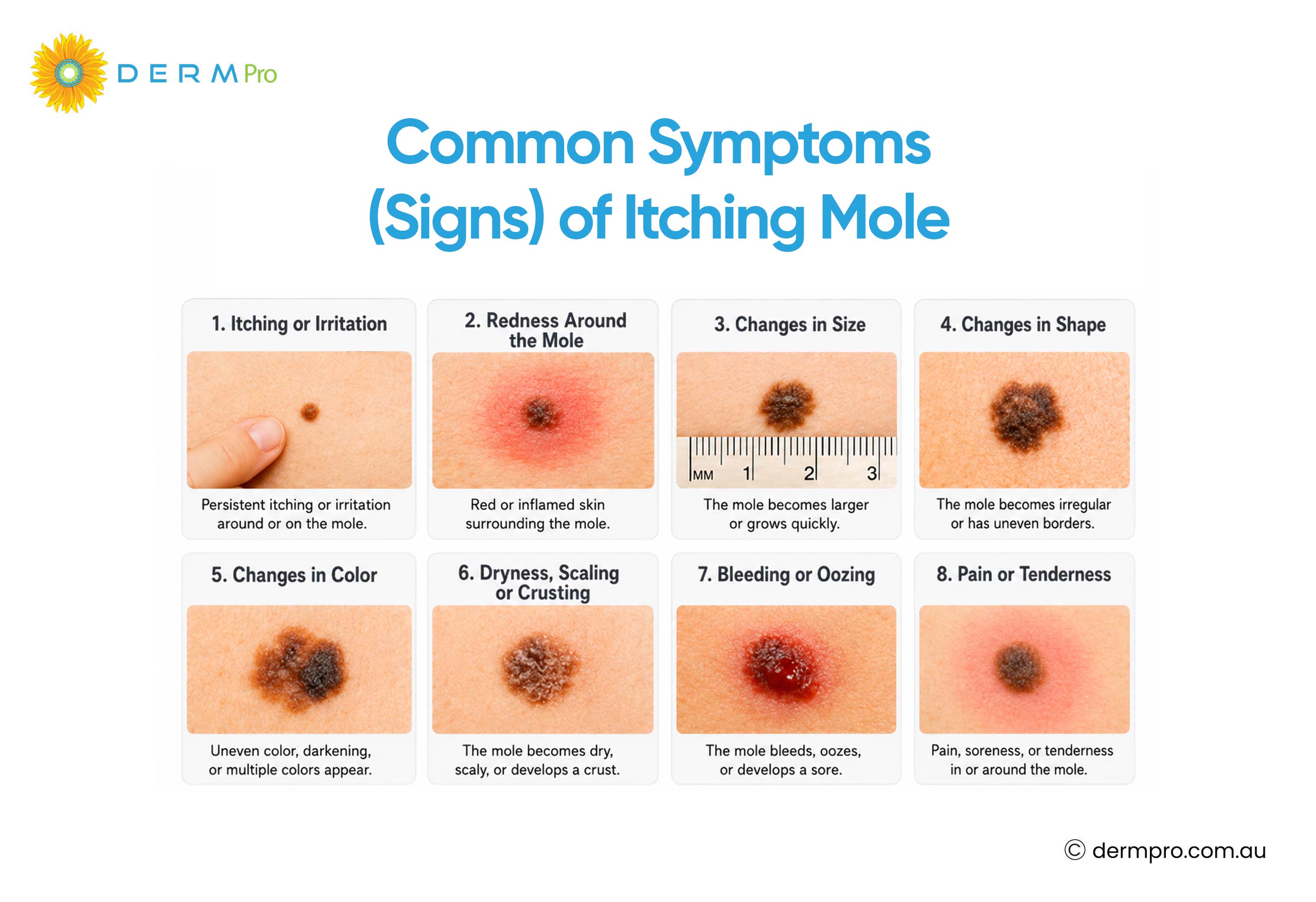
Common Symptoms (Signs) of Itching Mole
Knowing what it means when moles are itchy is more complex than a simple answer. Watch for these symptoms alongside itching:
- Persistent itching that doesn't settle within a week or two
- Colour changes, like new shades appearing within the mole
- Bleeding a mole that bleeds without injury is a red flag
- Crusting or oozing around or over the mole
- Growth in size, height, or spread
- Pain, if you find yourself saying my mole hurts when I touch it, that's a sign worth discussing with a doctor
- Red itchy moles, redness surrounding a mole, can indicate inflammation or irritation
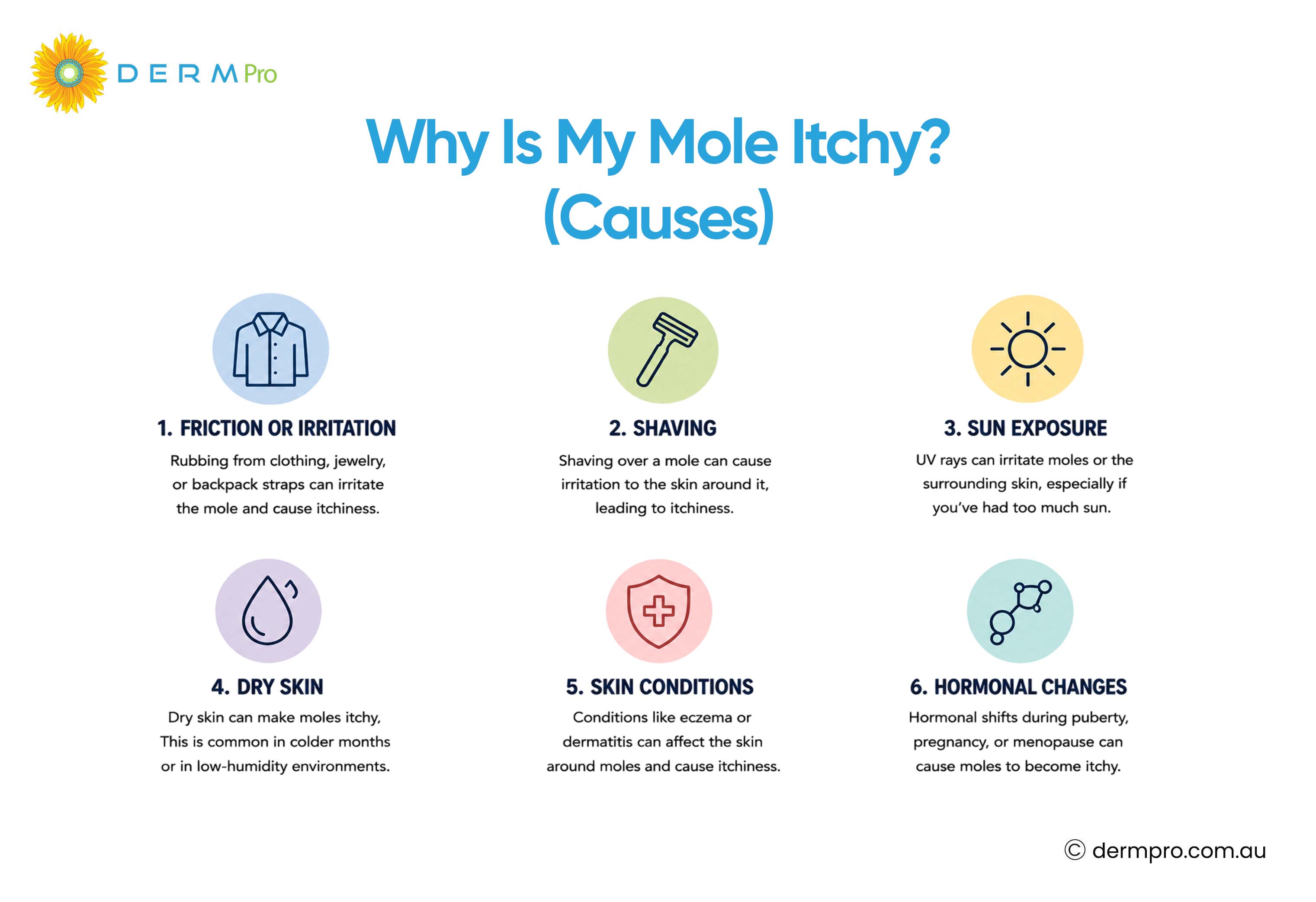
Why Is My Mole Itchy? (Causes)
If you've been wondering why my mole is itchy, you're not alone. There are several common and non-threatening reasons moles can itch:
- Dry skin: Skin around and over a mole can become dry and flaky, which can cause localised itching.
- Friction: An itchy mole on the back, under a bra strap, or on areas rubbed by clothing is often simply irritated by repeated contact.
- Allergic reactions: Skincare products, detergents, or fabrics can trigger contact dermatitis near or on a mole.
- Sun exposure: UV rays can irritate the skin around a mole, which can cause temporary itching and redness.
- Inflammation: Minor inflammation from insect bites or skin conditions like eczema can affect moles nearby.
An itchy mole on the arm or an itchy mole on the leg, for instance, might just be reacting to sunscreen, shaving, or everyday friction.
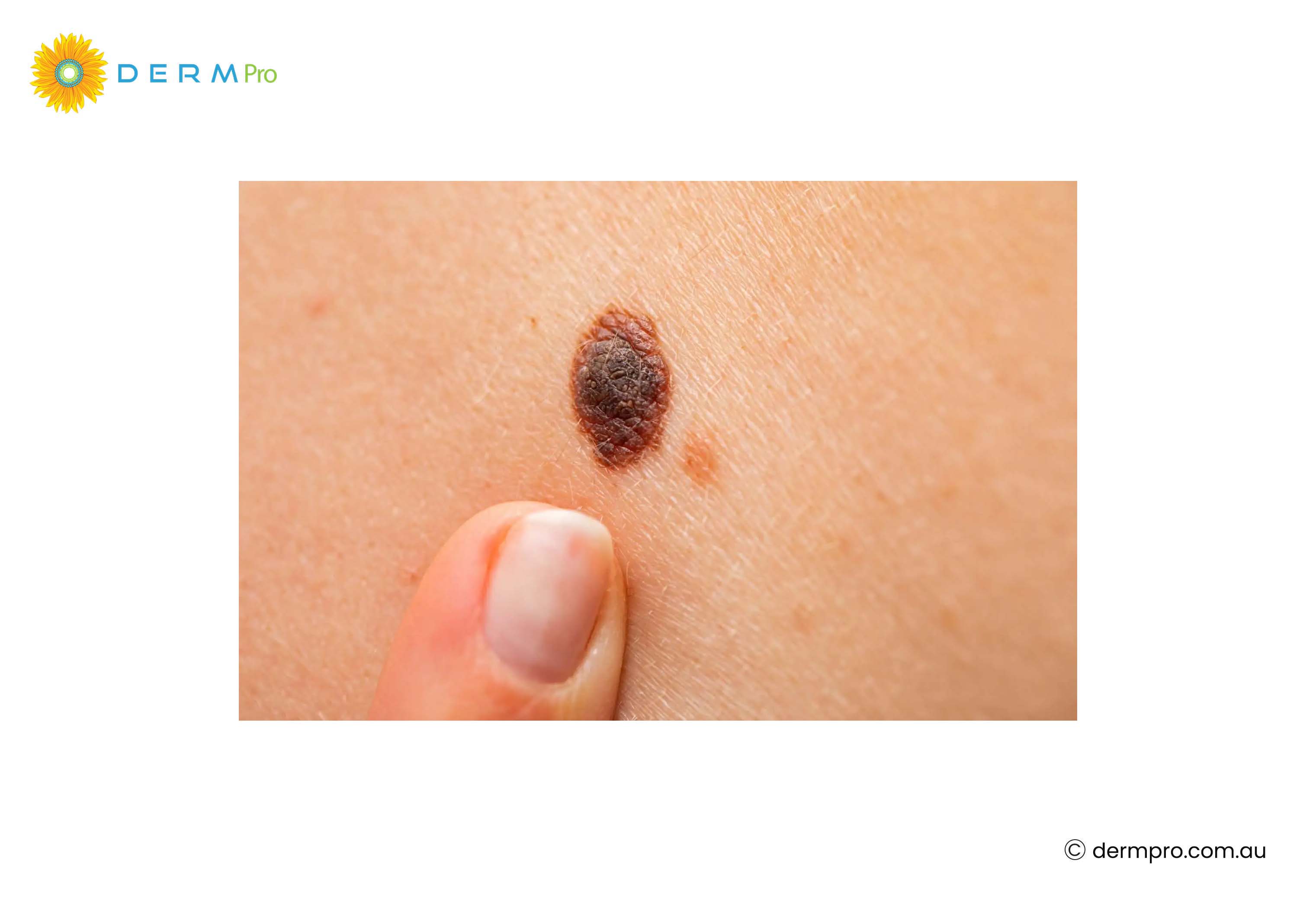
Can Itchy Moles Be Harmless?
Yes, in many cases, itchy moles can be harmless. Moles are collections of pigment-producing cells. Just like any part of the skin, they can respond to external irritants.
Back itchy moles are commonly caused by backpack straps or tight clothing rather than anything serious.
Temporary itching that resolves on its own, with no other changes to the mole's appearance, is rarely a cause for concern. The key is observing whether the itch is isolated or accompanied by visual changes.
Do melanomas itch?
The answer is yes, can melanoma be itchy? Absolutely. Itching can be one symptom of melanoma, though it rarely appears alone. Melanoma is a type of skin cancer that arises from pigment cells and can develop within an existing mole or as a new lesion.
Alongside itching, warning signs of melanoma include:
- Asymmetry (one half doesn't match the other)
- Border irregularity (ragged or uneven edges)
- Colour variation (multiple shades of brown, black, red, or white)
- Diameter larger than 6mm
- Evolution (any change in shape, size, colour, or new symptoms)
This is known as the ABCDE rule, a helpful tool for self-assessment. It's worth noting that itching alone does not mean skin cancer. But if you see ABCDE changes, it means it requires urgent medical attention.
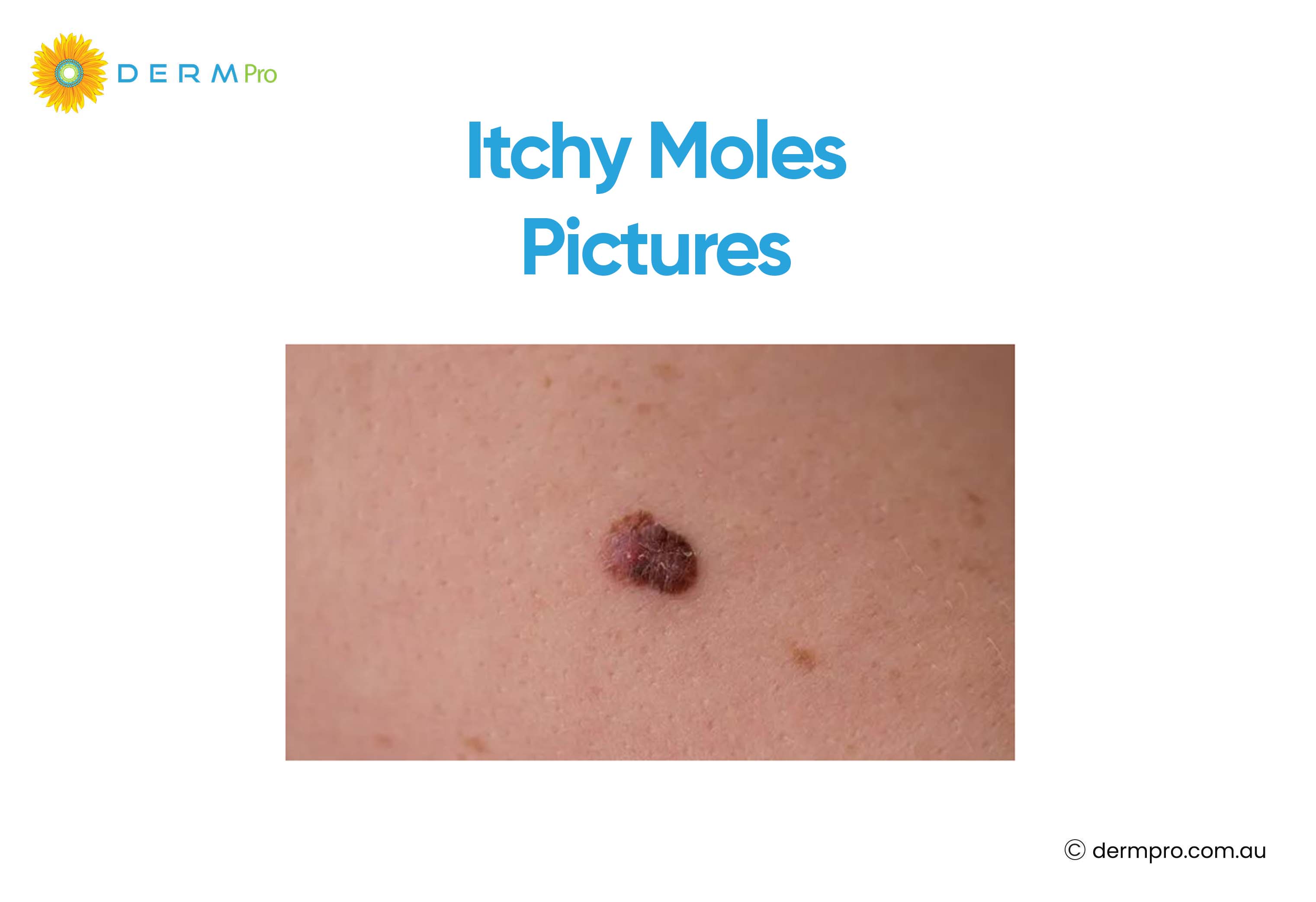
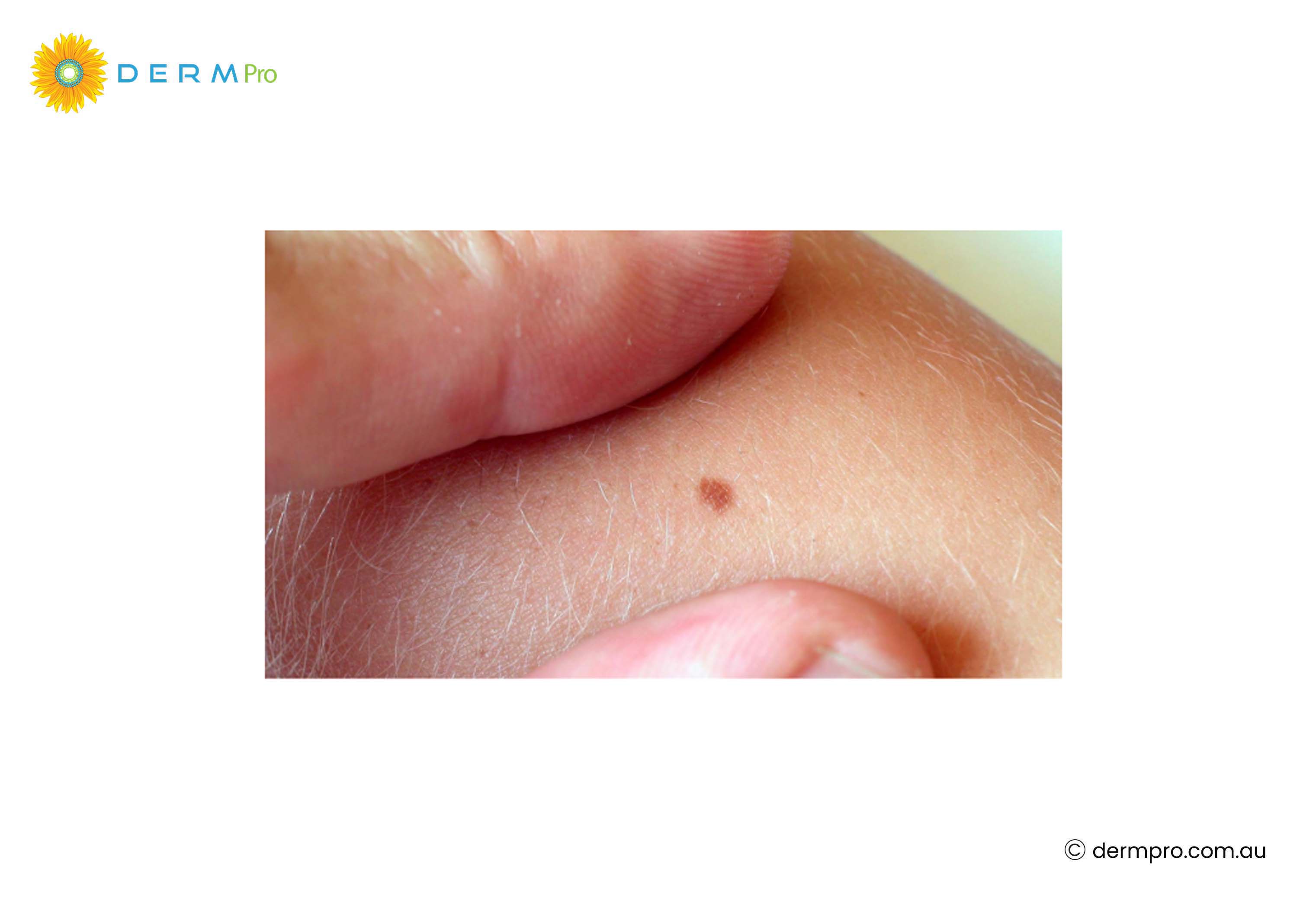
Keep in mind that comparing your mole with pictures of itchy moles is not a substitute for a professional skin check.
Itchy Moles Pictures
How to Treat an Itchy Mole?
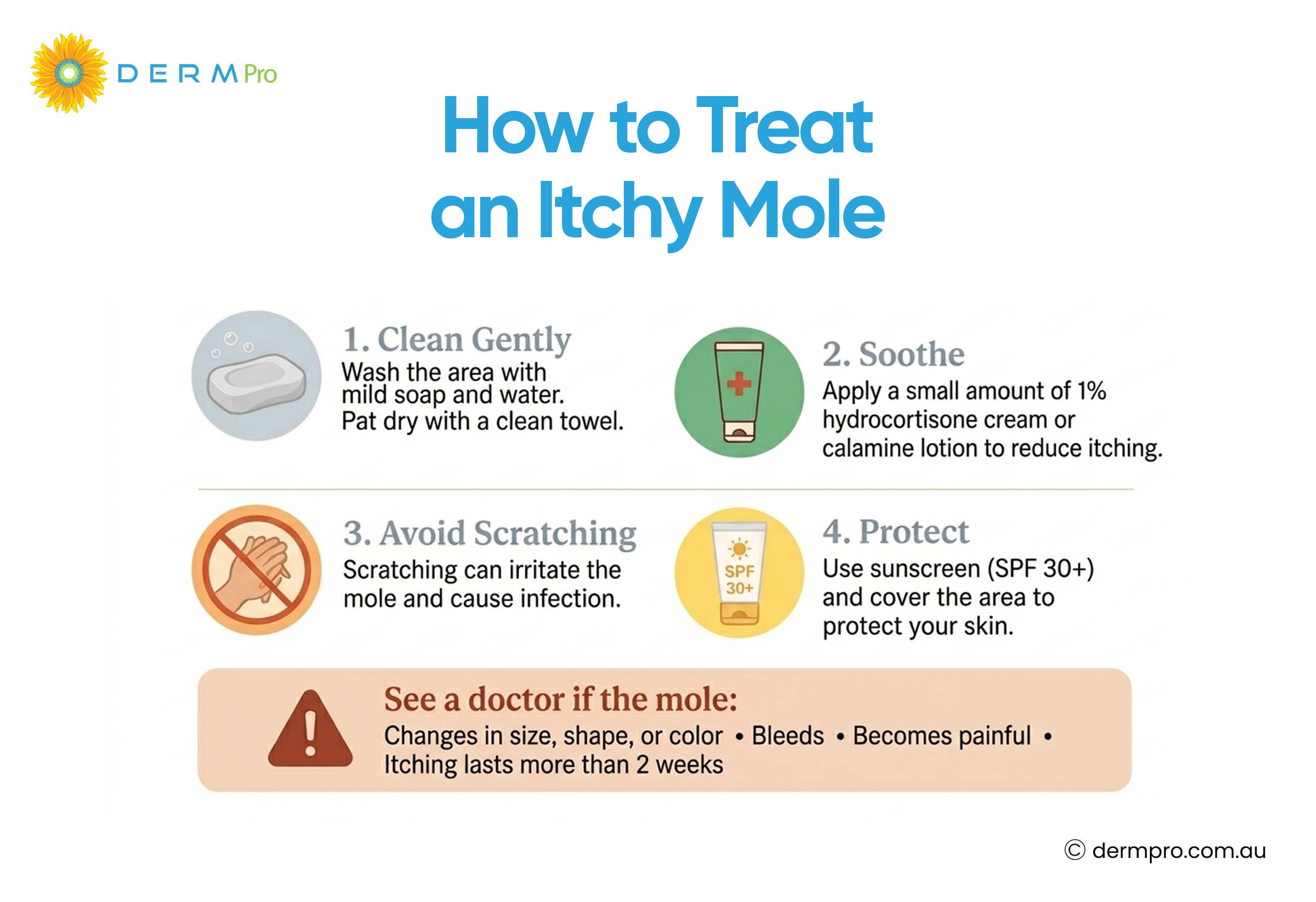
Understanding how to treat an itchy mole depends on the underlying cause. Here are practical steps:
- Avoid scratching: Scratching can break the skin that makes it worse for infection, and makes changes harder to assess medically.
- Moisturise the area: A fragrance-free moisturiser applied to dry skin around the mole can ease itching caused by dryness.
- Use sun protection: Apply broad-spectrum SPF 30+ sunscreen daily to minimise UV irritation.
- Eliminate potential irritants: Switch to gentle, fragrance-free products if an allergic reaction may be involved.
- Seek a medical assessment: If itching persists or if you notice any ABCDE changes, see your GP or a dermatologist. A skin check is the only reliable way to rule out melanoma.
- Treatment options: Depending on the diagnosis, options may include monitoring, biopsy, topical treatments, or surgical removal.
When Should You See a Doctor?
You should go to the doctor immediately if:
- Your mole has changed in colour, shape, or size
- It bleeds, crusts, or oozes without injury
- Itching lasts for more than two to three weeks
- The mole causes pain or feels tender to the touch
- You notice a new mole appearing after the age of 30
- You have a family or your own personal history of melanoma
Don't wait for multiple warning signs; one unexplained change is enough reason to get it checked.
Frequently Asked Questions
Why do moles get itchy?
Moles can itch due to dry skin, friction, allergic reactions and sun exposure. In rarer cases, it could be due to cellular changes. That's why it is important to monitor for any accompanying visual changes.
Is a bleeding mole a sign of skin cancer?
A bleeding mole does not necessarily mean skin cancer, as it can sometimes bleed after being scratched or irritated. However, a mole that bleeds without an obvious injury, or one that is changing in size, shape, colour, or appearance, should be assessed by a qualified healthcare professional to rule out melanoma or other skin conditions.
What does it mean when moles are itchy?
In most cases, itching reflects a benign skin response. However, if itching is persistent or combined with colour, shape, or size changes, it may indicate a more serious condition requiring evaluation.
Can itchy moles be harmless?
Yes. Most cases of moles itching are benign. Isolated itching without other changes is generally low-risk but should still be monitored.
Why are my moles itching?
Common reasons include skin dryness, clothing friction, sun damage, or contact with irritants. If multiple moles are itching simultaneously, it may reflect a broader skin reaction rather than a mole-specific issue.
Do melanomas itch?
Yes, melanomas can itch, but itching alone is not diagnostic. Look for ABCDE changes alongside itching for a clearer picture.
How to treat an itchy mole?
To treat an itchy mole, avoid scratching and keep the area moisturised. Also, protect it from the sun, and see a doctor if symptoms persist or worsen.
Conclusion
An itchy mole is usually harmless, but it should not be ignored. Most itching is tied to everyday skin factors like dryness, friction, and sun exposure. However, when an itchy mole shows any changes in appearance, bleeding, pain, or persistent symptoms, it is time to see your doctor. Early detection of skin conditions like melanoma significantly improves outcomes, so check your skin with the DermPro app if something doesn't feel right.
This article is intended for general informational purposes and does not substitute for professional medical advice. Please consult a qualified healthcare provider or dermatologist for personalised guidance.
Was this article helpful?
Your feedback helps us create better content for everyone.