Dermatofibroma Removal: When It's Needed and What to Expect?

If you've noticed a small and firm bump on your skin that doesn't seem to be going away, there's a chance it's a dermatofibroma. These are common and harmless growths in most cases. Dermatofibroma removal isn't medically necessary, but there are some specific situations where treatment makes sense.
What Is a Dermatofibroma?
A dermatofibroma (Histiocytoma) is a benign skin growth made up of fibrous tissue. They usually form as a small and firm nodule just under the skin's surface. It often feels like a hard pea and can be pink, brown, or reddish depending on skin tone.
Dermatofibroma Images
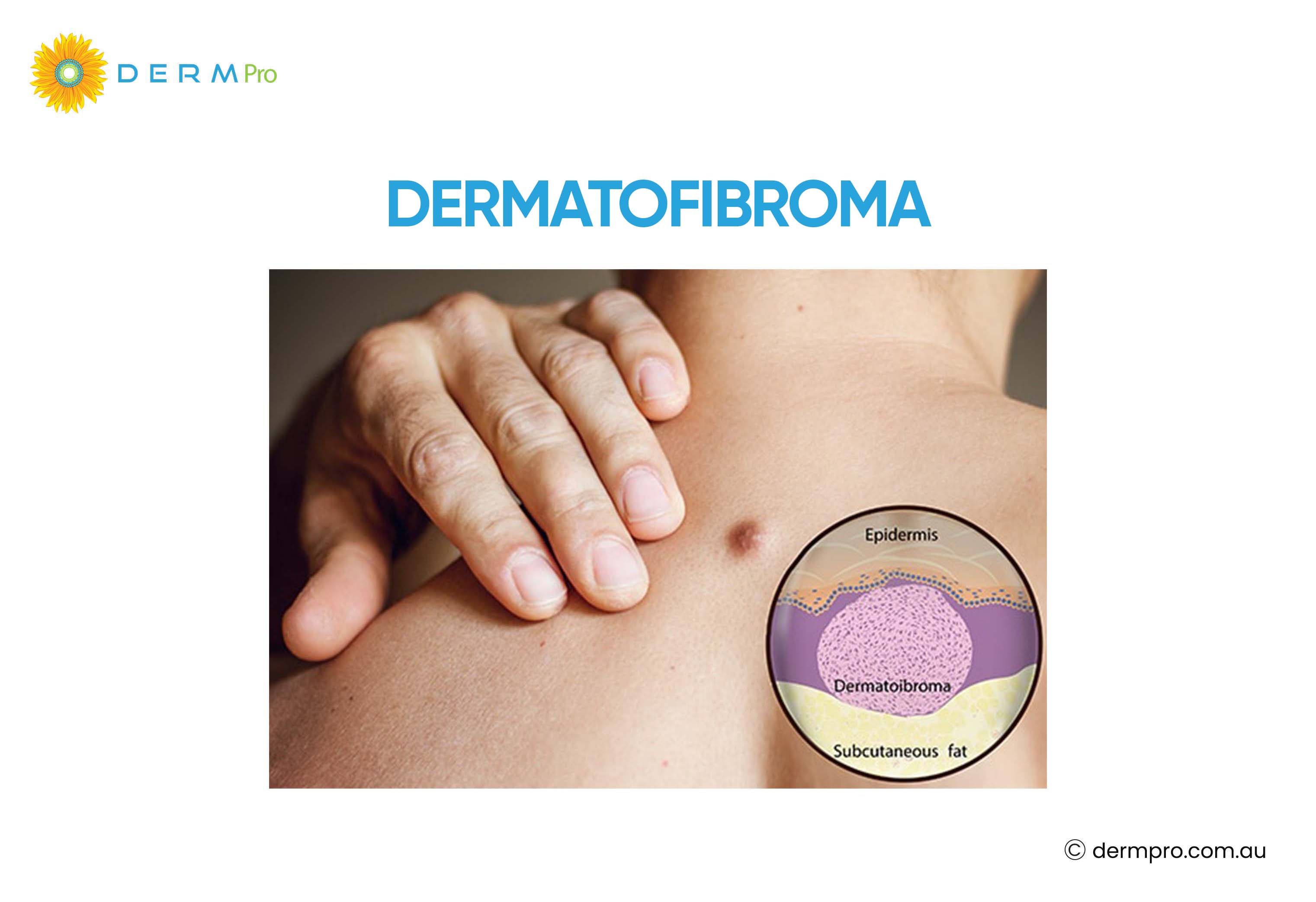
Dermatofibroma Images
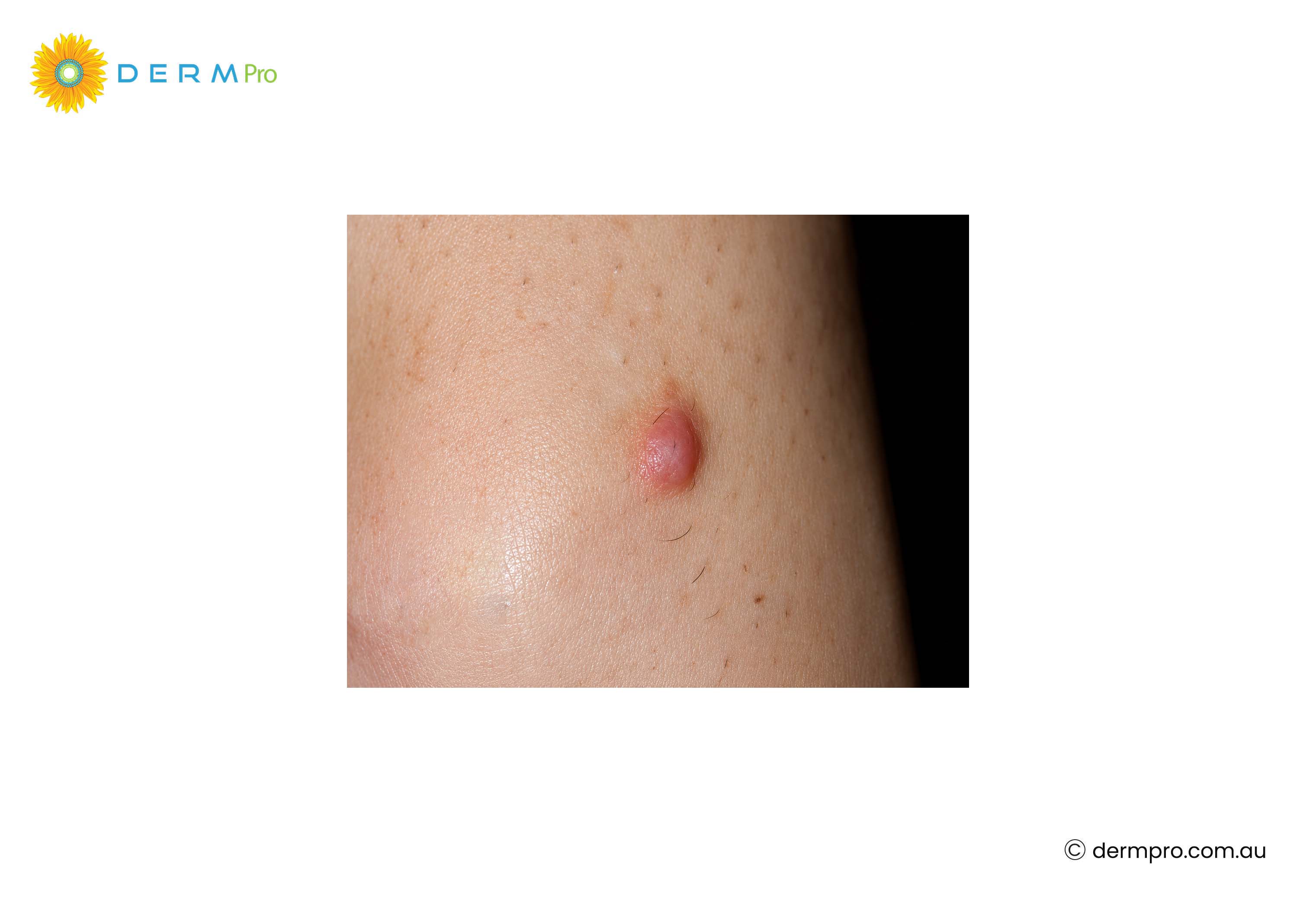
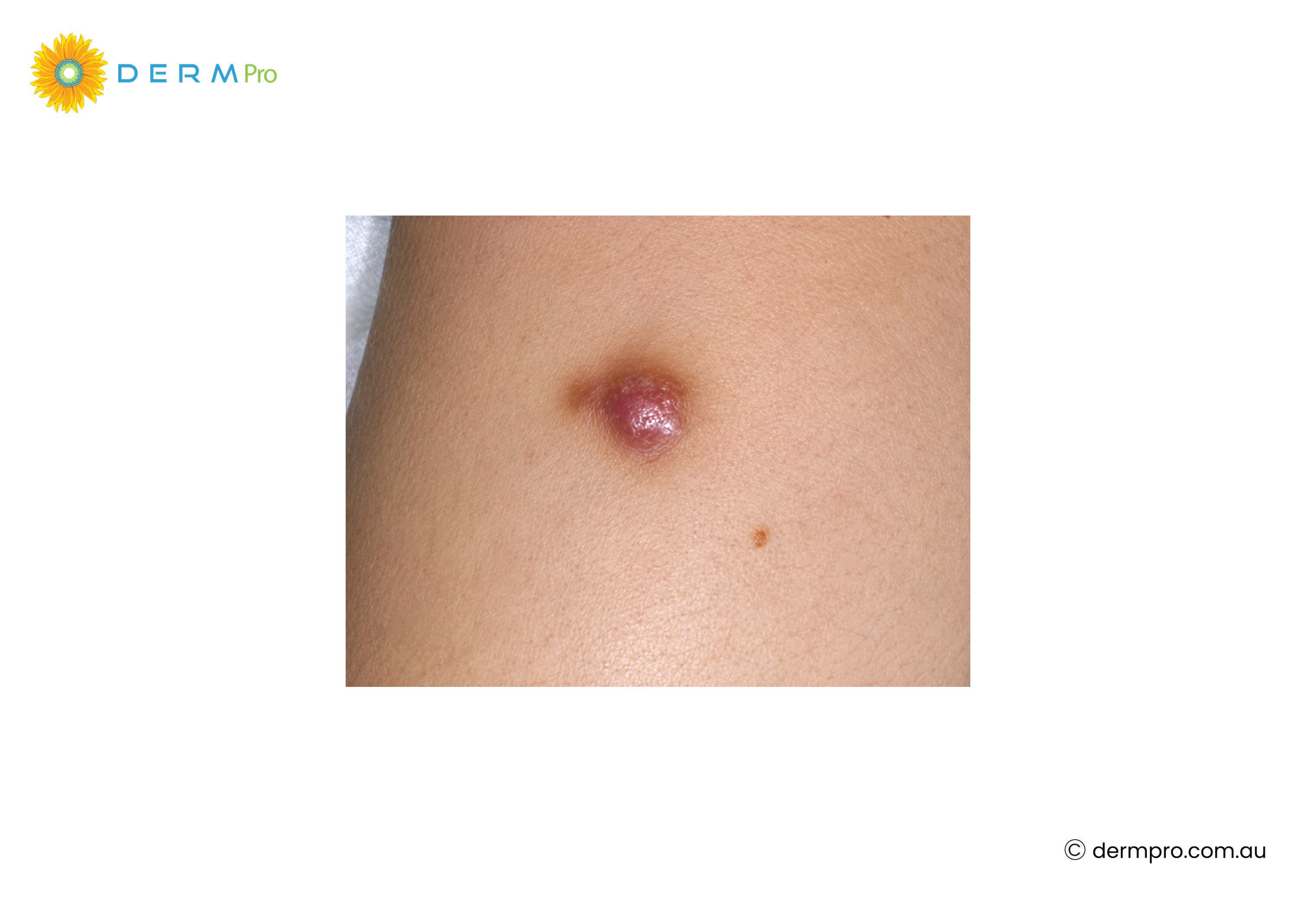
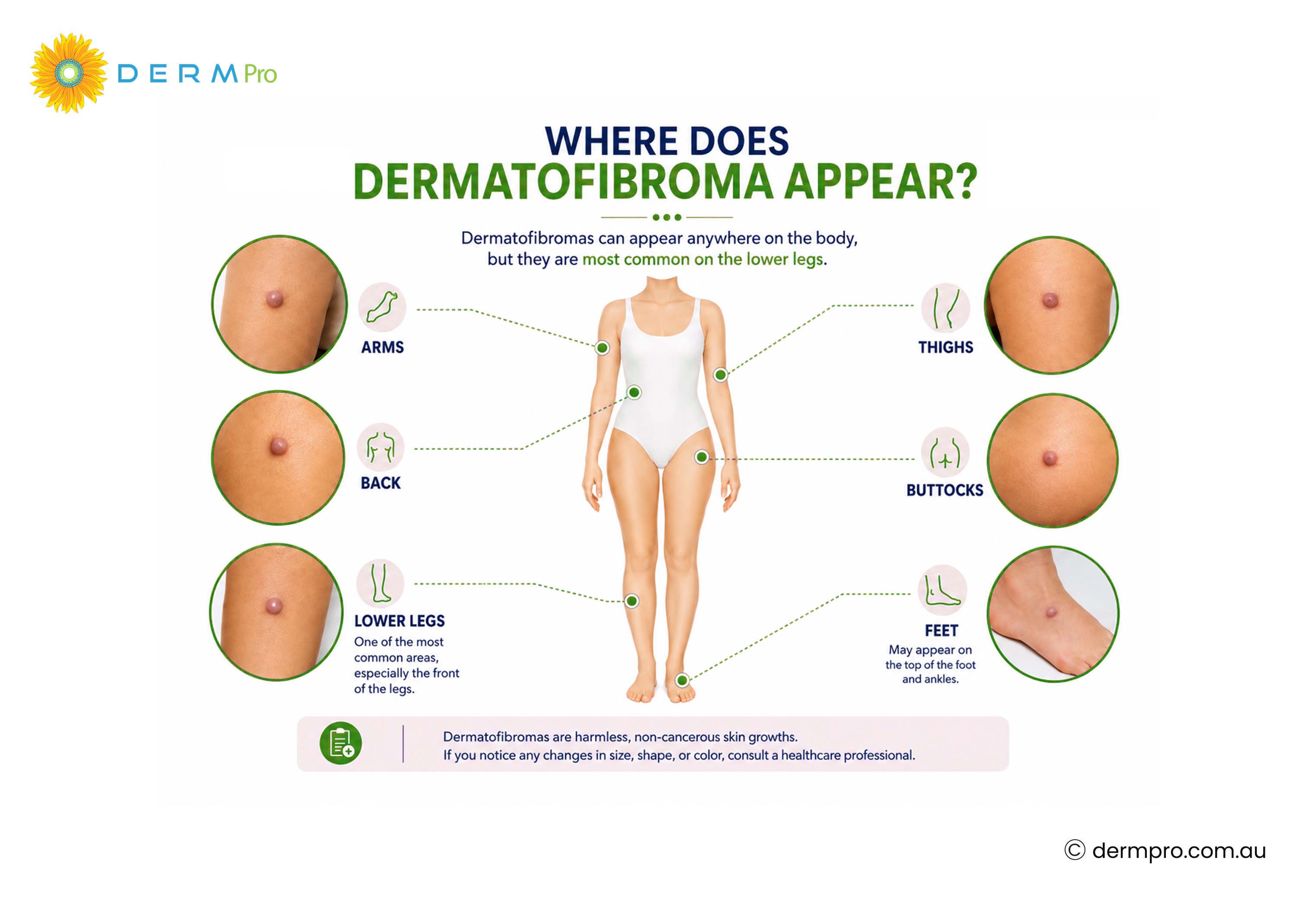
Where does dermatofibroma appear?
These bumps most often appear on the legs. However, they can develop on the arms or torso as well. They tend to grow slowly and then stay the same size for years.
How to Identify Dermatofibroma?
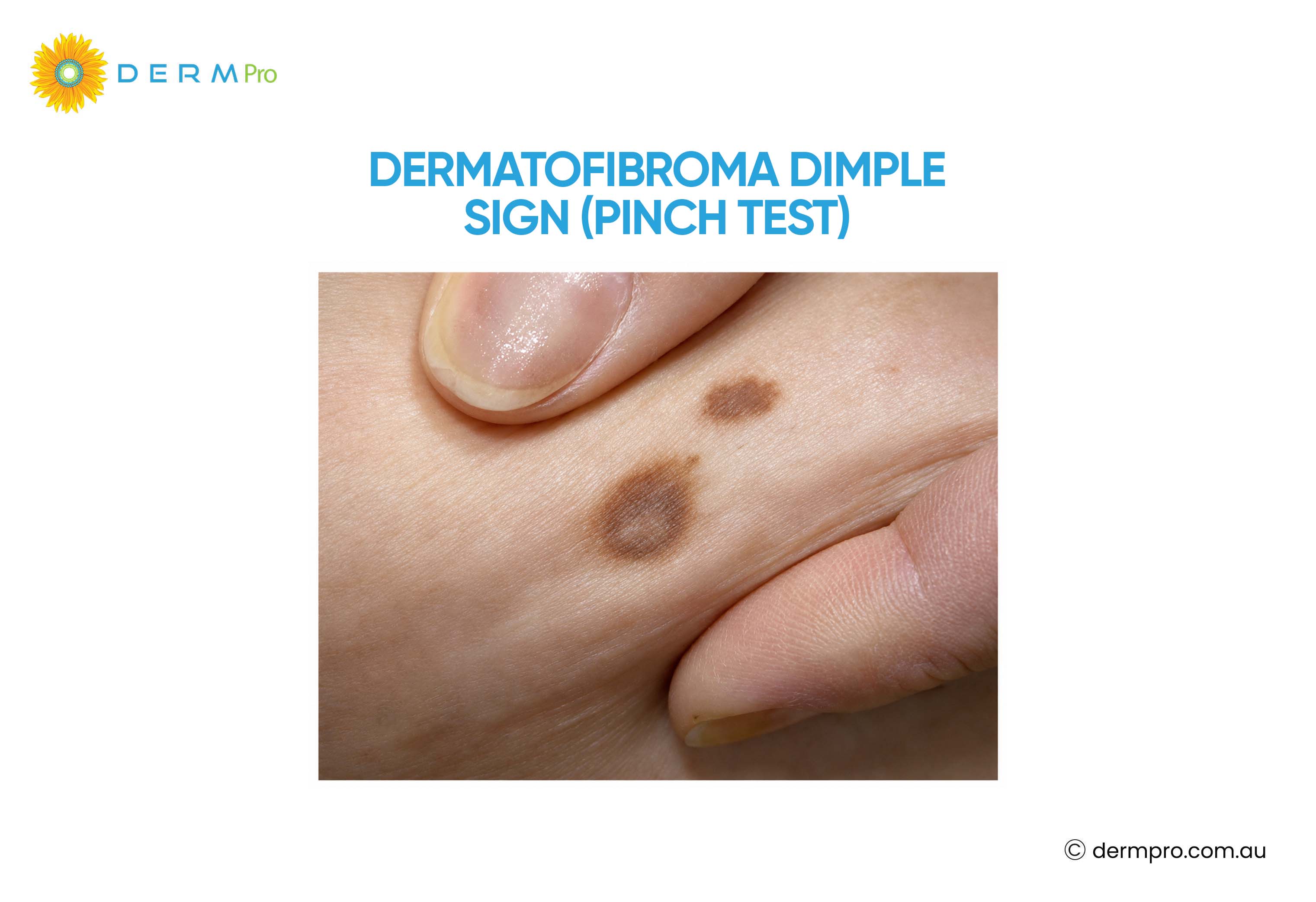
One of the easiest ways doctors identify them is the dermatofibroma dimple sign: gently pinching the sides of the growth causes it to dip inward. It is a kind of reaction that most other skin lesions don't share.
Dermatofibroma Dimple Sign (Pinch Test)
What causes Dermatofibroma?
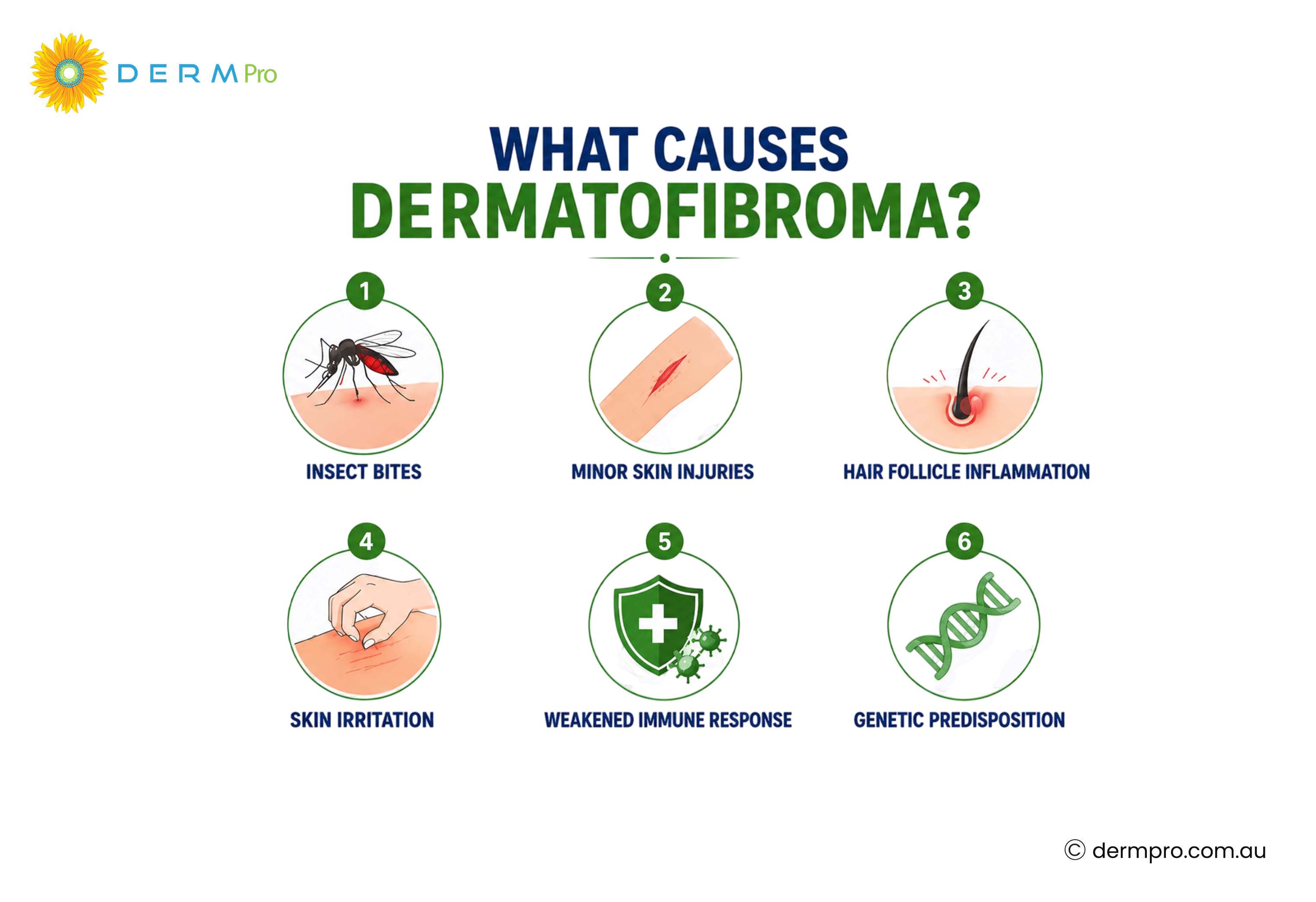
Dermatofibromas often form after a minor injury or trauma to the skin. For example, an insect bite, a splinter, or a small cut, though many people don't recall any specific trigger. They're thought to result from the skin's normal healing response, that produce a small cluster of extra fibrous tissue.
When Is Dermatofibroma Removal Recommended?
Removal is usually recommended when a dermatofibroma is causing a physical problem rather than just being present. Many people live with these growths for years without any issue, and treatment isn't required just because one exists.
Doctors typically consider removing a dermatofibroma when it:
- Becomes painful or tender to the touch
- Itches persistently or feels irritated
- Sits in a spot where clothing, shaving, or movement causes repeated friction
- Bleeds after being bumped or scratched
- Causes cosmetic concern, particularly if it's in a visible area like the face
- Has an uncertain diagnosis and needs to be examined more closely
If a dermatofibroma isn't bothering you and your doctor has confirmed the diagnosis, watching and waiting is often the simplest approach, and no treatment is needed.
How Is a Dermatofibroma Removed?
The most reliable dermatofibroma treatment is surgical excision, where the growth is cut out under local anaesthetic, and the skin is closed with stitches. Because dermatofibromas extend below the surface, shaving the top off tends to leave tissue behind, so a full excision gives the best chance of complete removal.
Sometimes cryotherapy for dermatofibroma (freezing the growth with liquid nitrogen) is used. But it has limitations. It works best for smaller yet more superficial lesions that carry a higher risk of recurrence compared with excision. It may also cause changes in skin colour at the treatment site.
Home removal is never recommended. Because attempting to cut, freeze, or otherwise remove a dermatofibroma yourself will increase the risk of infection, scarring, and incomplete removal. Also, home removal means skipping the diagnostic check a doctor provides to confirm the growth isn't something else. The right treatment approach depends on the size, depth, and location of the lesion, which is best assessed in person.
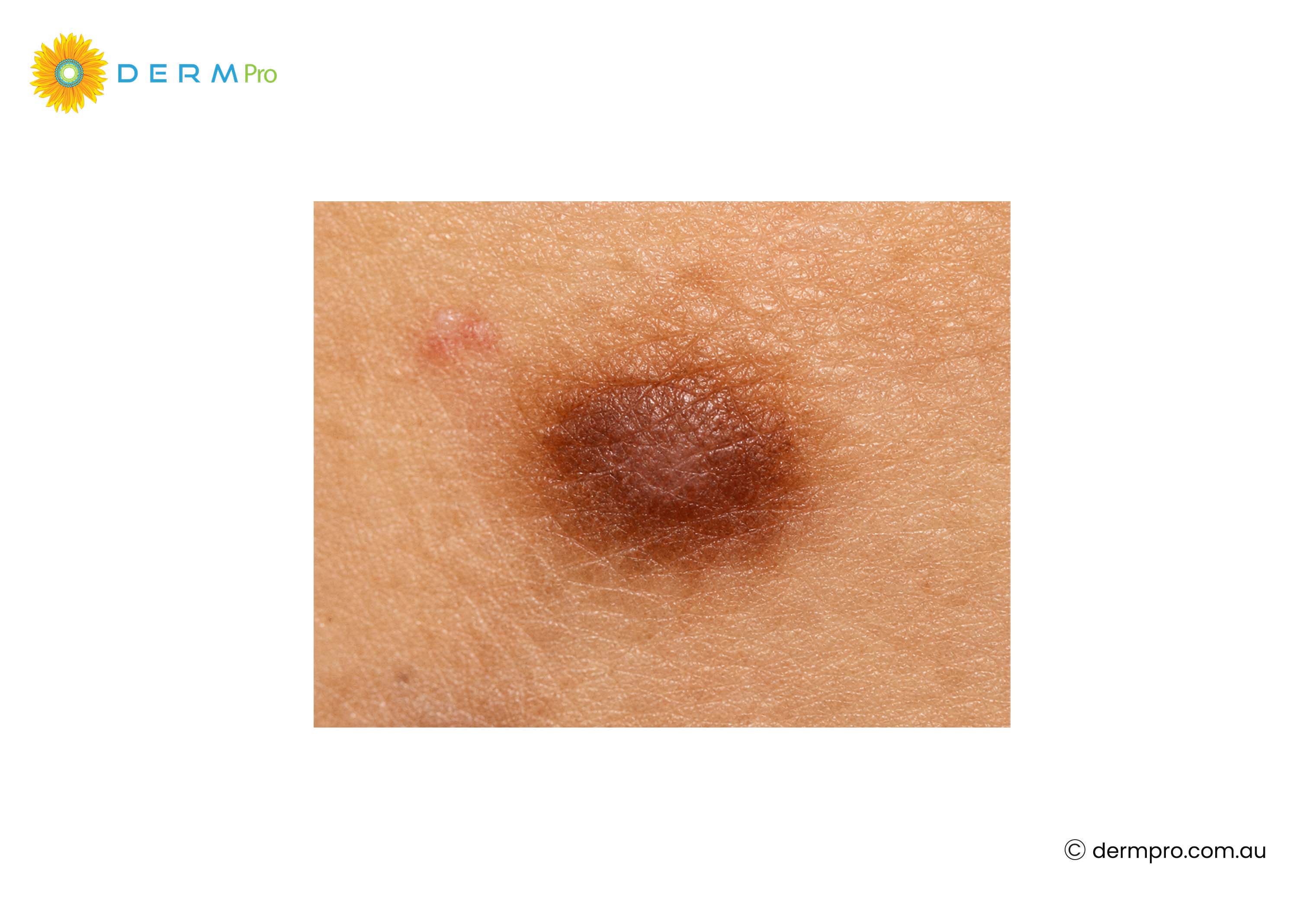
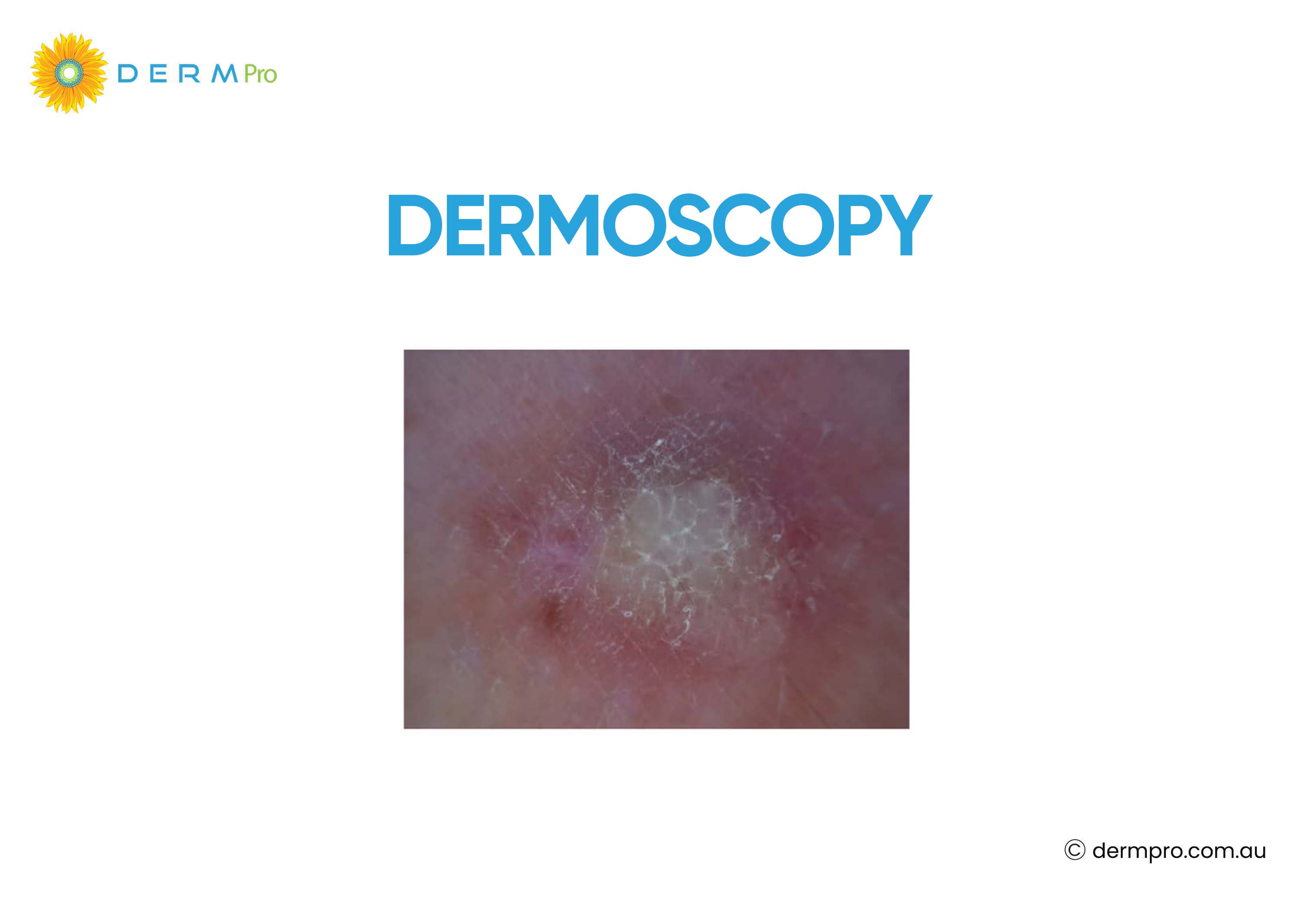
Dermoscopy image of Dermatofibroma
What to Expect During Recovery?
Dermatofibroma removal is a quick, well-tolerated procedure done under local anaesthetic. During the process, you'll be numb but awake and shouldn't feel pain during the excision itself.
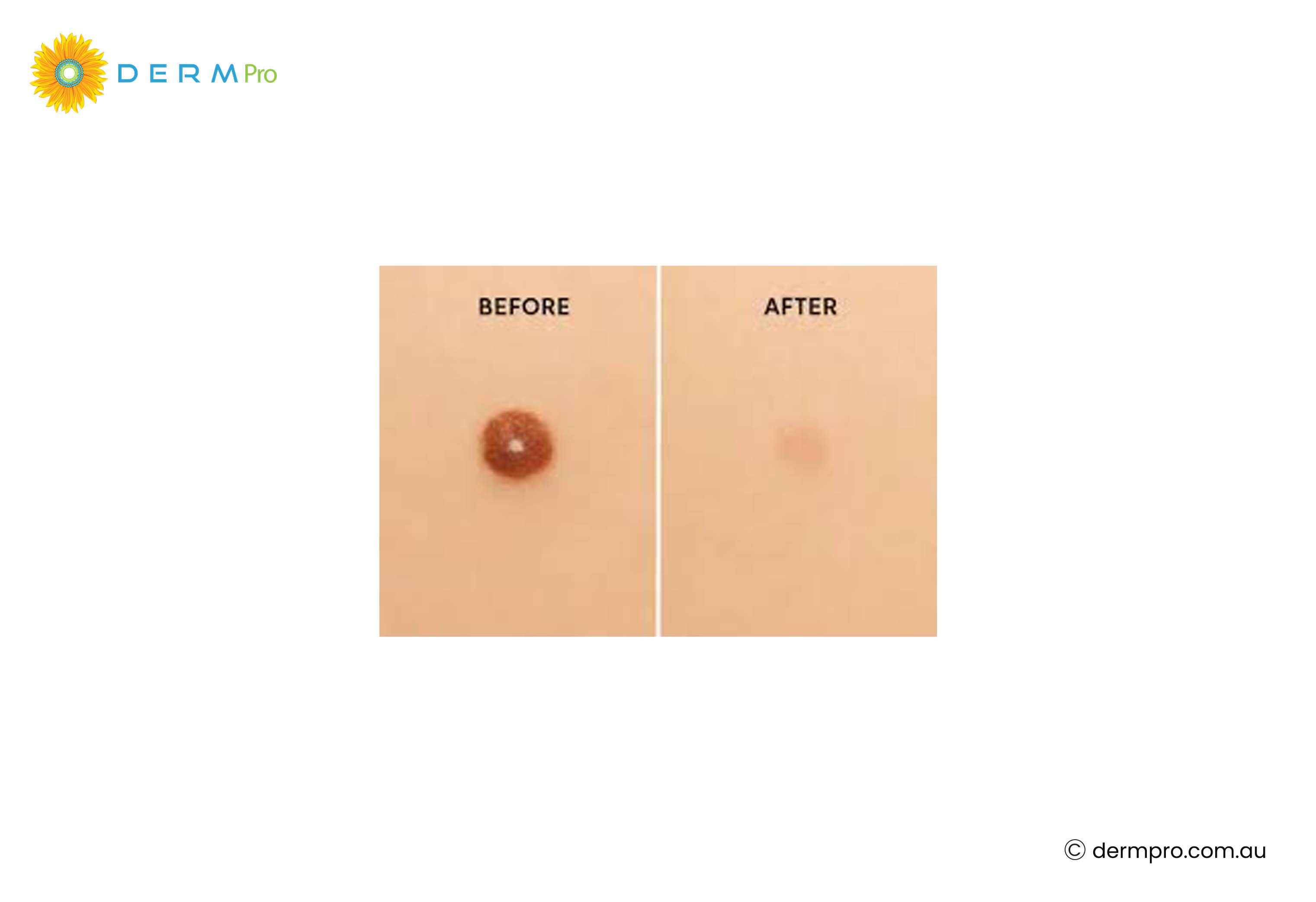
Afterwards, mild soreness or tenderness for a few days is normal and usually manageable with over-the-counter pain relief. You'll be given wound care instructions, typically keeping the area clean, dry, and covered until the stitches are removed, usually within 1 to 2 weeks, depending on the location.
Full healing takes several weeks, and it's realistic to expect a small scar once the wound closes. Scar visibility varies based on the removal site, your skin type, and how well you follow aftercare instructions, but most scars fade noticeably over time.
Dermatofibroma vs Melanoma
A key difference between dermatofibroma and melanoma is texture and behaviour:
Dermatofibromas are firm, stable, and dimple inward when pinched, while melanoma often appears as a flat or slightly raised spot with irregular colour, uneven borders, or a shape that changes over time.
Because some pigmented skin lesions can visually resemble one another, especially darker-colored dermatofibromas, a professional evaluation is the only reliable way to tell them apart. Dermatologists may use a handheld magnifying tool called a dermatoscope to examine the lesion more closely, and in uncertain cases, a small sample may be taken for testing.
This isn't meant to cause alarm. The vast majority of firm, stable bumps like these are simply dermatofibromas. But any lesion that changes size, shape, or colour, becomes asymmetrical, or develops new symptoms should be checked by a healthcare professional promptly.
Key Takeaways
- Dermatofibromas are common and benign skin growths that usually don't require treatment.
- The dimple sign, where the skin pulls inward when pinched, is a hallmark feature of a dermatofibroma.
- Consider removing a dermatofibroma if it causes pain, itching, repeated irritation, or bleeding. Cosmetic concerns may also be a valid reason for removal.
- Surgical excision is the most effective treatment; cryotherapy is an option for select cases but has a higher recurrence rate.
- Recovery involves mild soreness and a healing period of several weeks, often with a small resulting scar.
- If a skin lesion changes in appearance or doesn't match the typical pattern of a dermatofibroma, consult a doctor to identify the cause and rule out other conditions.
If you're unsure whether a skin growth is a dermatofibroma or something that needs closer attention, visit a GP or dermatologist to get a clear diagnosis. Also, download the DermPro app to monitor your skin regularly and take action early.
This article is for educational purposes only and is not a substitute for professional medical advice. If you have a new, changing, painful, or concerning skin lesion, consult a qualified healthcare professional.
Reference
- DermNet. Dermatofibroma.
- American Academy of Dermatology. Dermatofibroma: Diagnosis and treatment.
- Cleveland Clinic. Dermatofibroma: Symptoms, Causes & Treatment.
Was this article helpful?
Your feedback helps us create better content for everyone.