Skin Cancer on the Nose: Signs, Risk Factors & Treatments

The nose is one of the most sun-exposed parts of your face, and that makes it one of the most vulnerable spots for skin cancer. Whether you've noticed a red spot on your nose that won't go away, a bump that keeps coming back, or a scab that just won't heal, it's natural to feel concerned. Read this blog till the end to learn everything about skin cancer on nose.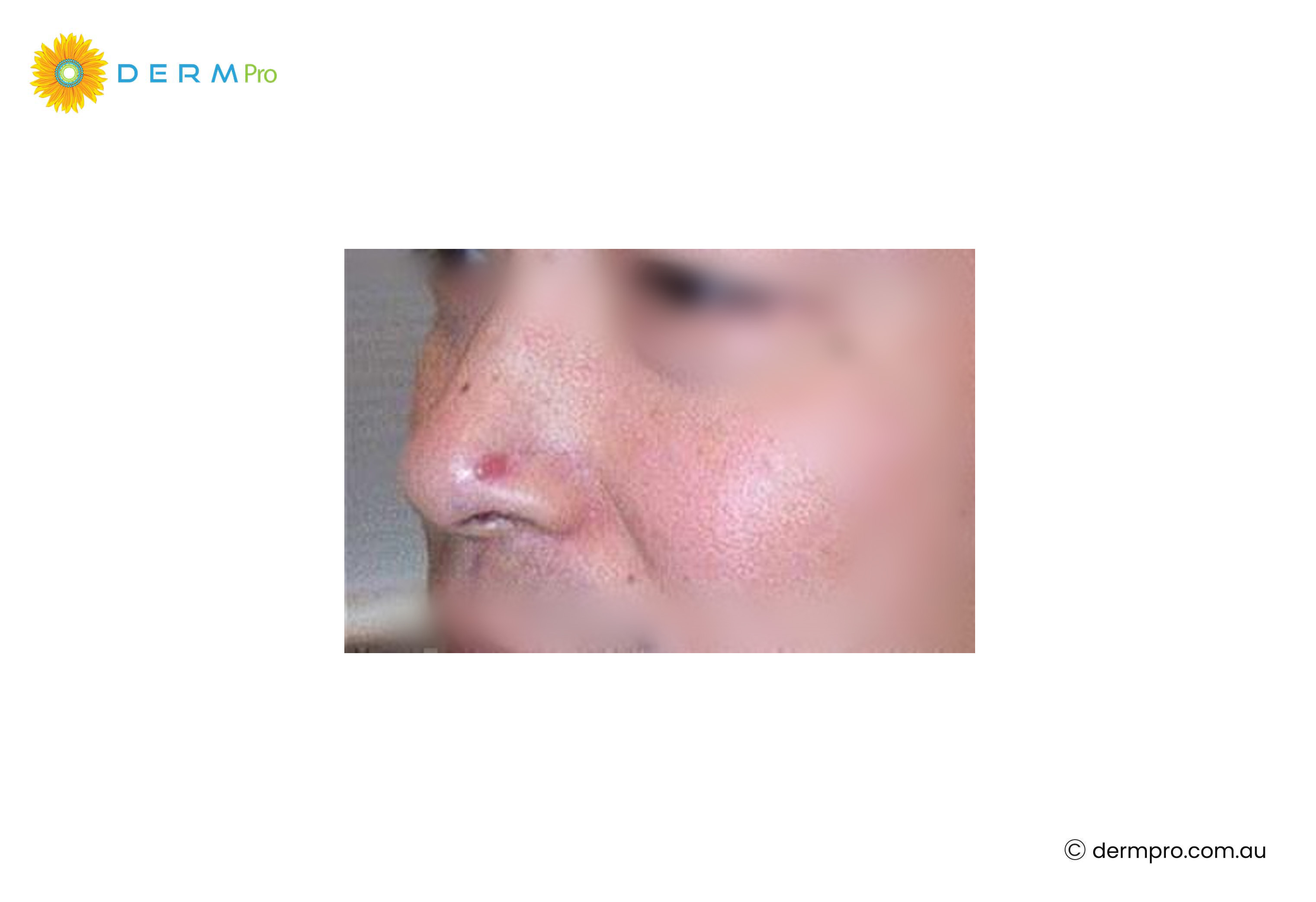
Why the Nose Is a High-Risk Area?
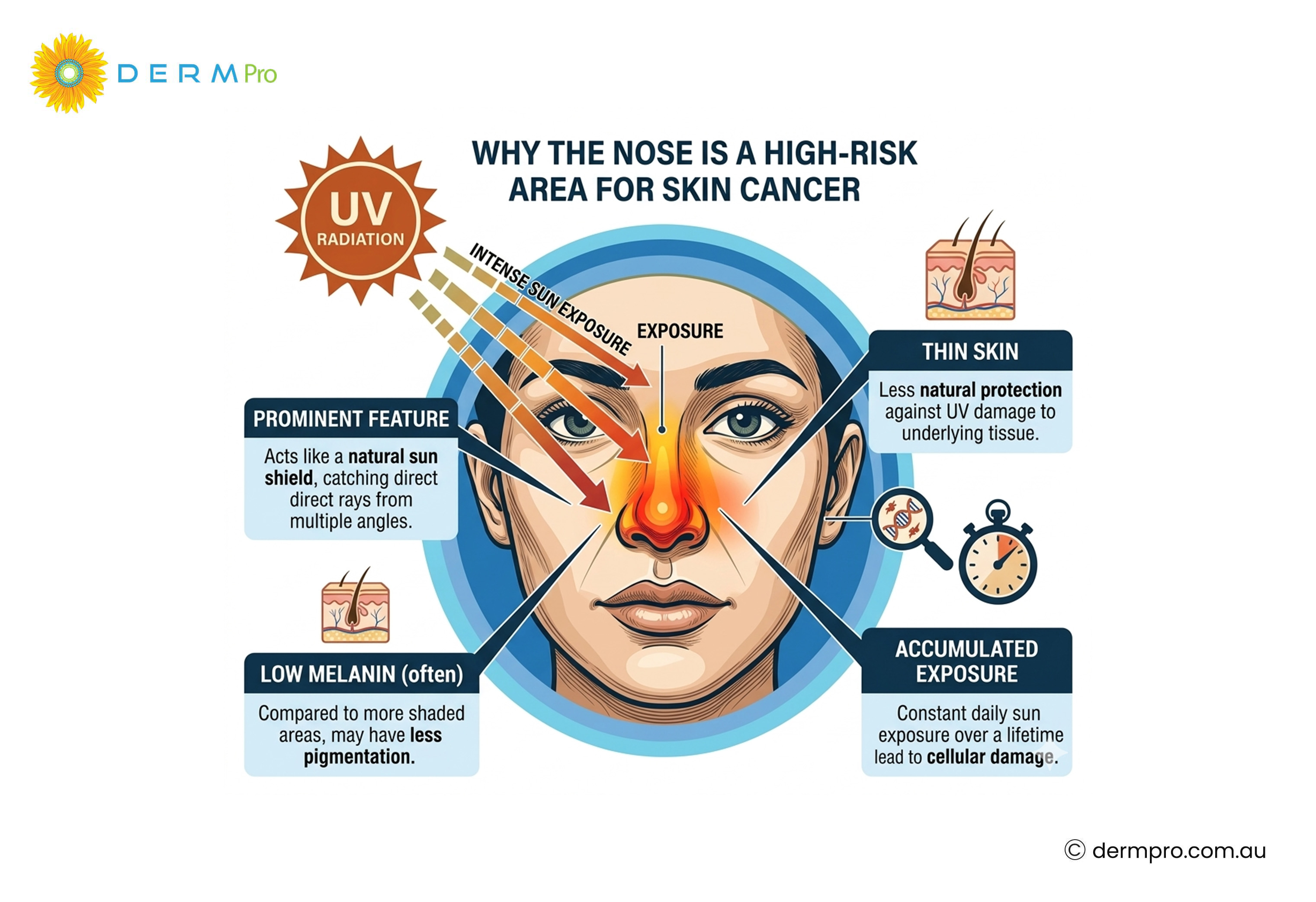
Your nose sits right in the centre of your face, that remain directly in sunlight outward and inward. Unlike other areas of your body that are often covered by clothing, the nose is almost always exposed. This means it absorbs years of UV radiation from the sun, which is the leading cause of most skin cancers.
People who spend a lot of time outdoors, whether for work or recreation, are especially at risk. But even everyday activities like driving or walking outside can add up over decades.
Early Signs and Symptoms of Skin Cancer on the Nose
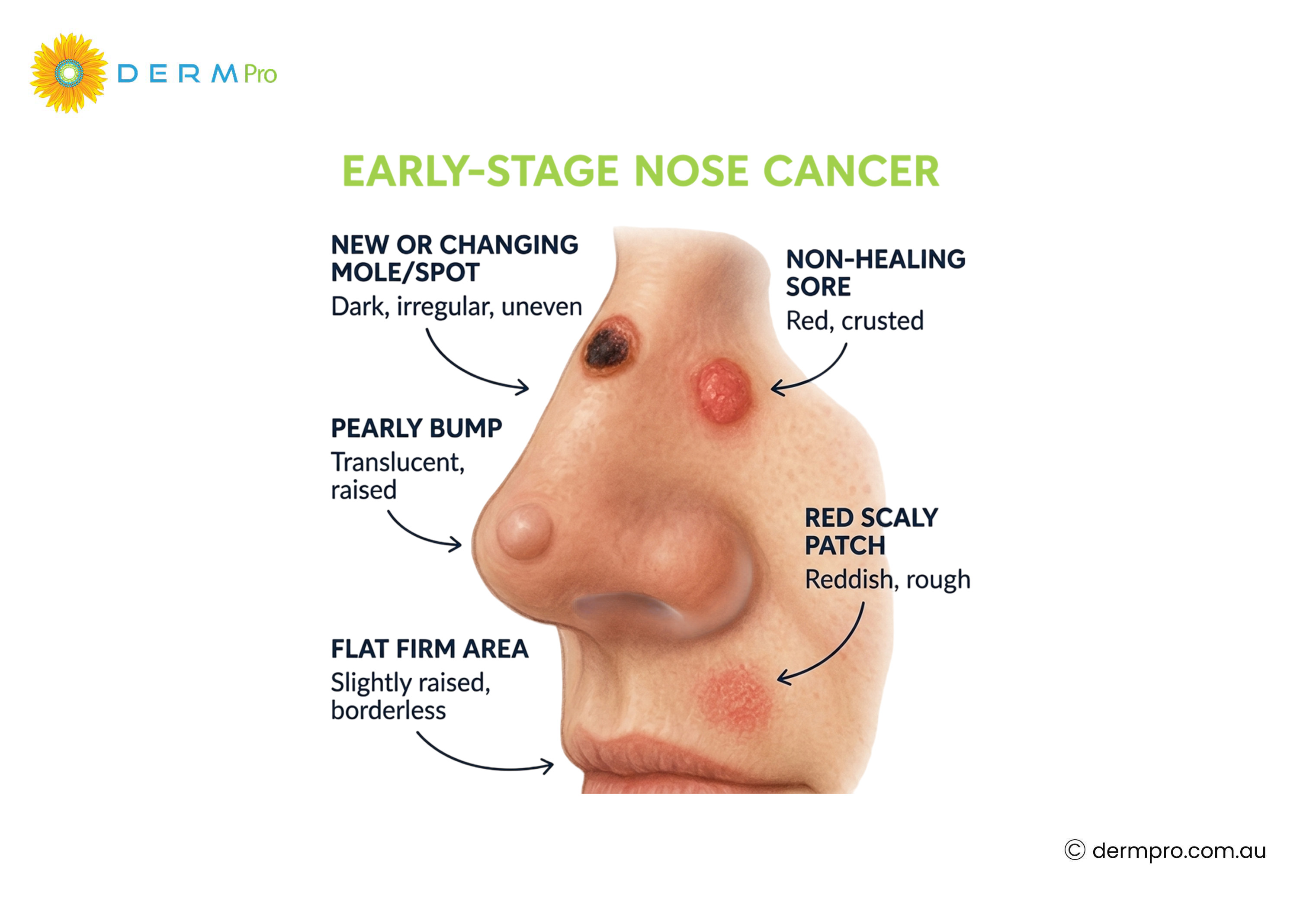
Knowing what to look for is the first step toward protecting y/ourself. The early signs of skin cancer on the nose can be subtle, and many people mistake them for pimples, bug bites, or minor skin irritations.
Here are some warning signs to watch for:
- A red spot on the nose that doesn't go away after a few weeks
- A red dot on the nose or a small red bump that bleeds easily when touched
- A bump on the side of the nose or on the tip that slowly grows over time
- A scab in the nose that won't heal, or one that heals and then returns repeatedly
- Nose scabs that appear without injury and persist longer than expected
- A shiny or pearly bump that may have tiny blood vessels visible on its surface
- A flat, flesh-colored or brown scar-like patch that seems to grow slowly
- Cancerous spots on the nose that may itch, crust, or ooze
A good rule of thumb:
If any sore, spot, or bump on your nose hasn't healed within four weeks, it's worth getting checked by a doctor.
Common Types of Skin Cancer Found on the Nose
Basal Cell Skin Cancer on the Nose
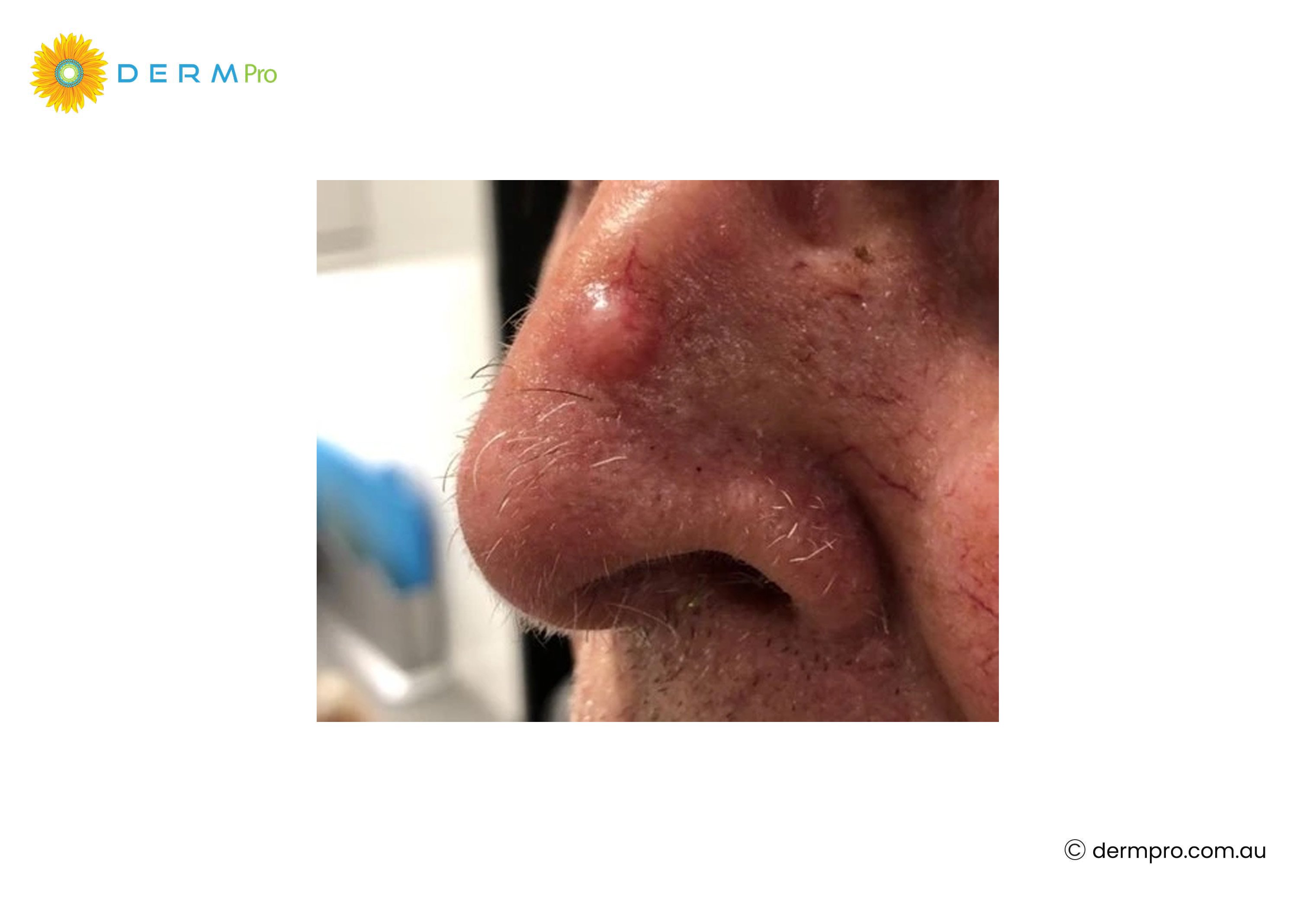
This is the most common type of skin cancer on the nose. Basal cell carcinoma usually looks like a small, shiny bump or a pink patch of skin. It grows slowly and rarely spreads to other parts of the body. When left untreated, it can result in damage to the surrounding skin and underlying tissue.
The bridge of the nose and the sides of the nose are frequent locations.
Squamous Cell Skin Cancer on the Nose
Squamous cell carcinoma is the second most common form of skin cancer. It often appears as a firm red bump, a scaly patch, or an open sore that crusts and bleeds. Squamous cell skin cancer on the nose can grow faster than basal cell cancer and has a higher chance of spreading if not caught early.
Melanoma on Nose
Melanoma is less common but more serious. It can look like a dark brown or black spot, or sometimes a red or pink growth with uneven borders. Stage 1 melanoma on the nose is highly treatable when caught early, which is why early detection truly matters. Melanoma can also develop inside the nose, making it harder to spot.
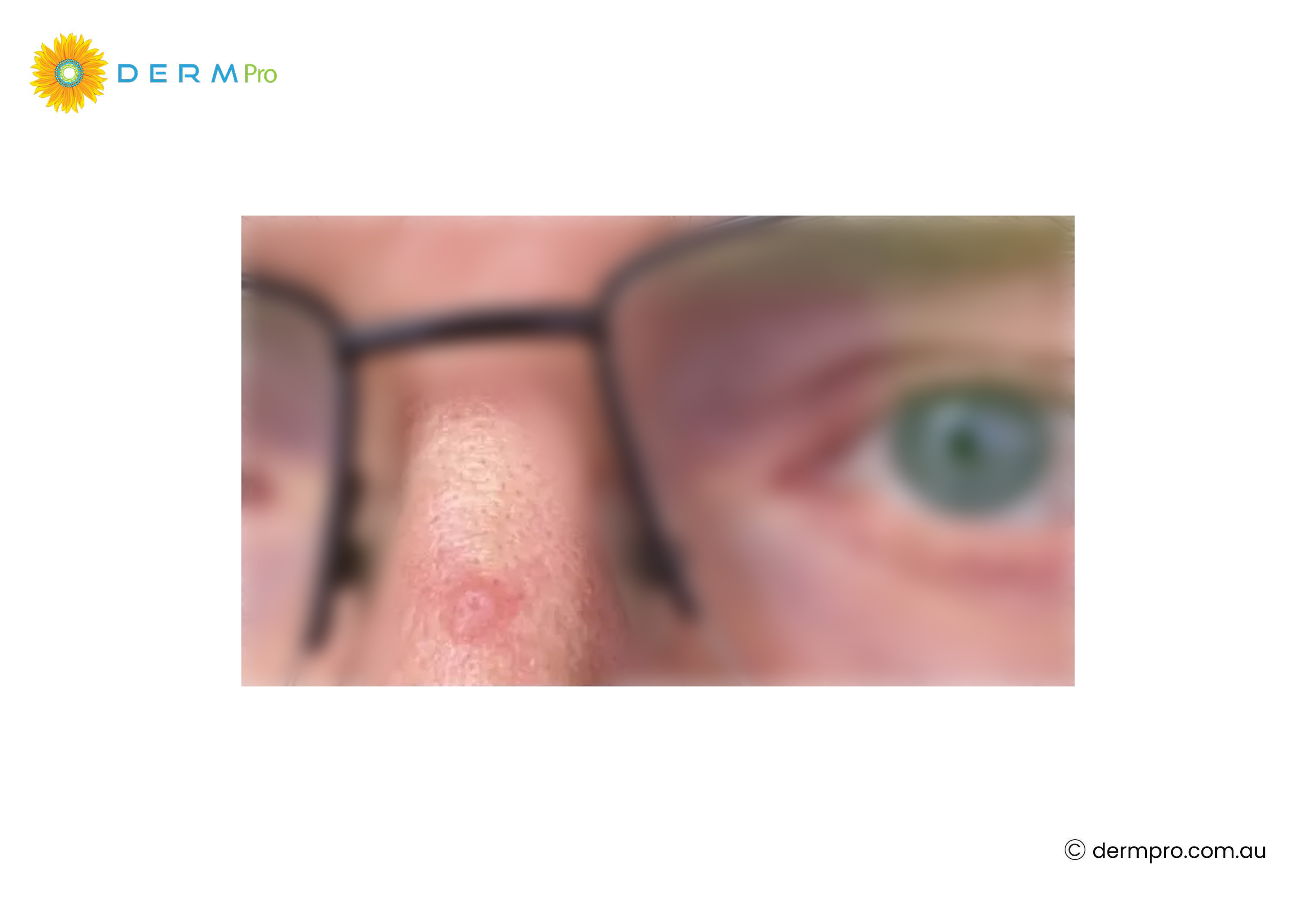
Skin Cancer on the Bridge of the Nose and Inside the Nose
Skin cancer on the bridge of the nose is fairly common because of sun exposure to that area. Skin cancer inside the nose is rarer but can occur. Symptoms may include a persistent blockage, bleeding from one nostril, or a lump you can feel inside.
Risk Factors
Certain factors increase the chances of developing nose skin cancer:
- Sun exposure and UV damage are the number one cause, as years of unprotected sun exposure add up
- Fair skin, freckles, and nose freckles. People with lighter skin tones and freckles have less natural UV protection
- History of sunburns, especially severe or blistering sunburns, earlier in life
- Weakened immune system due to illness, organ transplants, or certain medications
- Older age is a risk factor, but skin cancer can still occur in younger people
- Family history of skin cancer
How Skin Cancer on the Nose Is Diagnosed?
When to See a Doctor?
See a doctor if you notice any spot, bump, or sore on your nose that:
- Doesn't heal within 4 weeks
- Bleeds without reason
- Changes in size, shape, or colour
- Looks different from other spots on your skin
The Biopsy Process
A doctor will usually examine the area first. They will perform a biopsy if they find it concerning. A biopsy is a simple procedure where a tiny piece of skin is removed and sent to a lab. Results typically come back within a week and confirm whether the growth is cancerous. It's quick, done under local anesthesia, and the most reliable way to get answers.
Searching for nasal skin cancer pictures online can give you a general visual reference, but keep in mind that skin cancer looks different from person to person. Always rely on a medical professional for diagnosis.
Treatment Options for Skin Cancer on the Nose
The choice of treatment depends on the type, size, and location of the cancer. The good news is that most nose skin cancers are highly treatable, especially when caught early.
- Surgical removal: The most common option; the cancerous tissue is cut out under local anesthesia
- Mohs surgery: A specialised technique ideal for the nose, where the surgeon removes one thin layer at a time and checks each layer under a microscope until no cancer cells remain. It has the highest cure rate and preserves the most healthy tissue
- Cryotherapy: Freezing the cancer cells with liquid nitrogen; used for small, early-stage growths
- Radiation therapy: Used when surgery isn't suitable; targets cancer cells with X-rays
- Topical treatments: Medicated creams applied directly to the skin for very early or superficial cancers
Common Concerns and Misunderstandings
Is a Constant Runny Nose a Sign of Cancer?
Allergies, a cold, or dry air almost always cause a runny nose. It means it is not a symptom of cancer. However, if one nostril is persistently blocked, bleeds frequently, or you notice unusual lumps inside the nose, it's worth mentioning to a doctor.
Harmless Bump vs. Cancerous Growth
Not every nose bump is dangerous. Pimples, cysts, and benign (non-cancerous) growths are very common. The difference is usually time and behaviour. A pimple resolves in days; a cancerous growth tends to persist, grow, or bleed without healing.
Prevention Tips
- Wear sunscreen daily: SPF 30 or higher, applied to your nose every morning
- Reapply every two hours when outdoors
- Wear a wide-brimmed hat to shade your face
- Avoid peak sun hours between 10 a.m. and 4 p.m. when UV rays are strongest
- Check your skin monthly: Get to know what's normal for your nose so you notice changes quickly
- See a dermatologist annually or download DermPro for a full-body skin check
Early Detection Saves Lives
Skin cancer on the nose is common. But it is also one of the most treatable cancers when caught early. Whether you've noticed a red bump on your nose, a scab that won't heal, or a new spot that's been there for weeks, don't brush it off. These small signs can be your body's way of asking for attention.
You don't need to panic, but you do need to act. If you are unsure whether a spot looks concerning, tools like the DermPro App can help you track changes over time. A simple check-up could make all the difference. When it comes to skin cancer, catching it early is everything.
Download the DermPro App for quick and easy skin health checks.
This blog is for educational purposes only and does not replace professional medical advice. Always consult a qualified healthcare provider for any concerns about your skin health.
Was this article helpful?
Your feedback helps us create better content for everyone.