Hyperpigmentation: Causes, Dark Spots & Effective Treatments

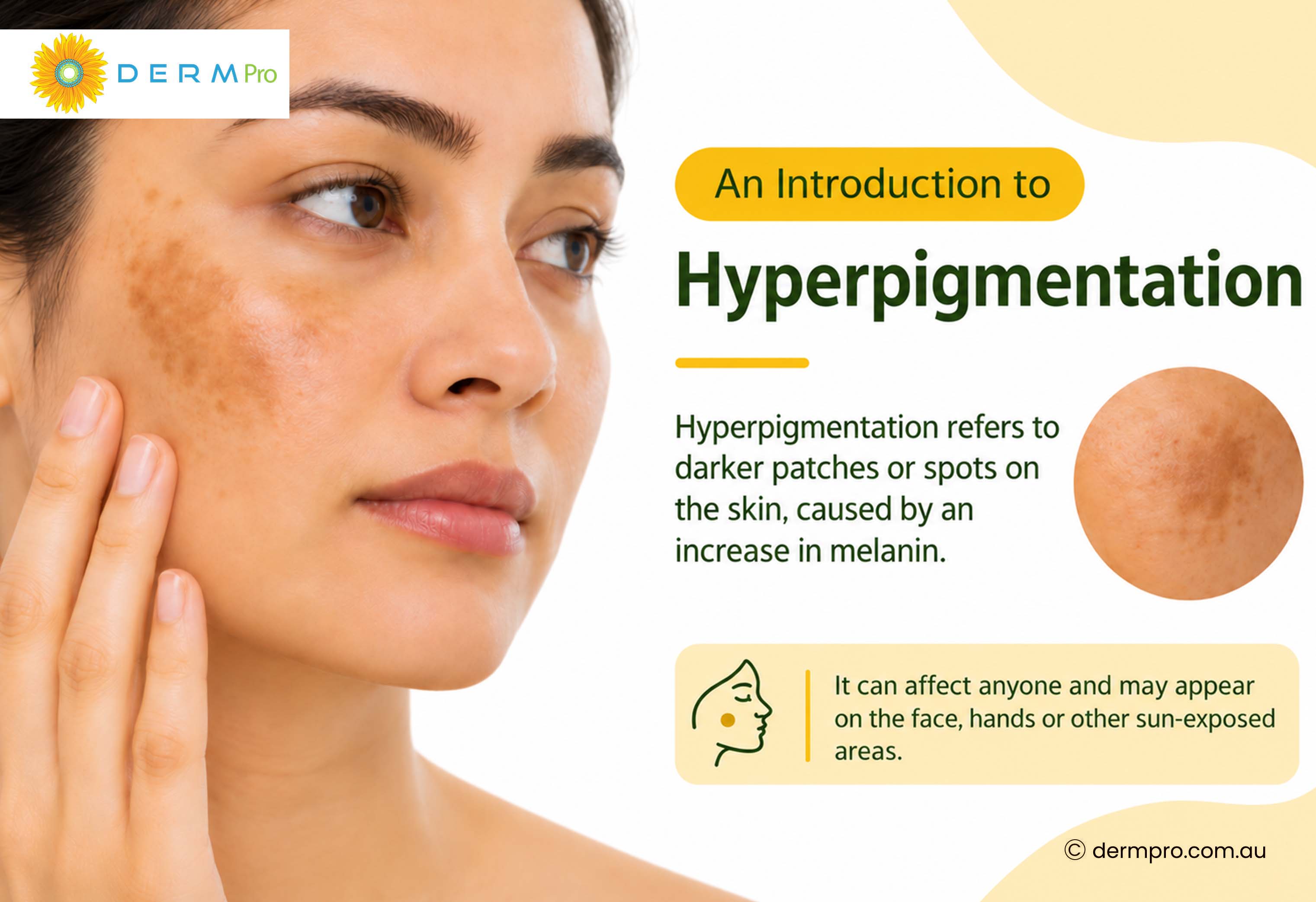
Hyperpigmentation simply means that some skin looks darker than the skin next to it. It includes dark spots, uneven tone or patches. It is a common concern because a mark left by acne needs a different plan from a patch caused by hormones.
What Is Hyperpigmentation?
Your skin gets its colour (shade) from melanin. Melanin is the pigment that gives skin its colour and is produced by specialised cells known as melanocytes. Our skin uses melanin to shield itself from sunlight.
When melanocytes make too much colour in one place, that spot turns darker. The result is hyperpigmentation that appears as a spot, a patch or a speckled area. It can show up on the face, hands, arms, chest or anywhere else.
In most cases, it is harmless and affects appearance only. However, a few dark marks need a medical check.
Important Point: Do not mix hyperpigmentation with hypopigmentation. That term means skin that is lighter than usual because it has less melanin.
What Causes Hyperpigmentation?
12 Common and Less-Recognised Triggers
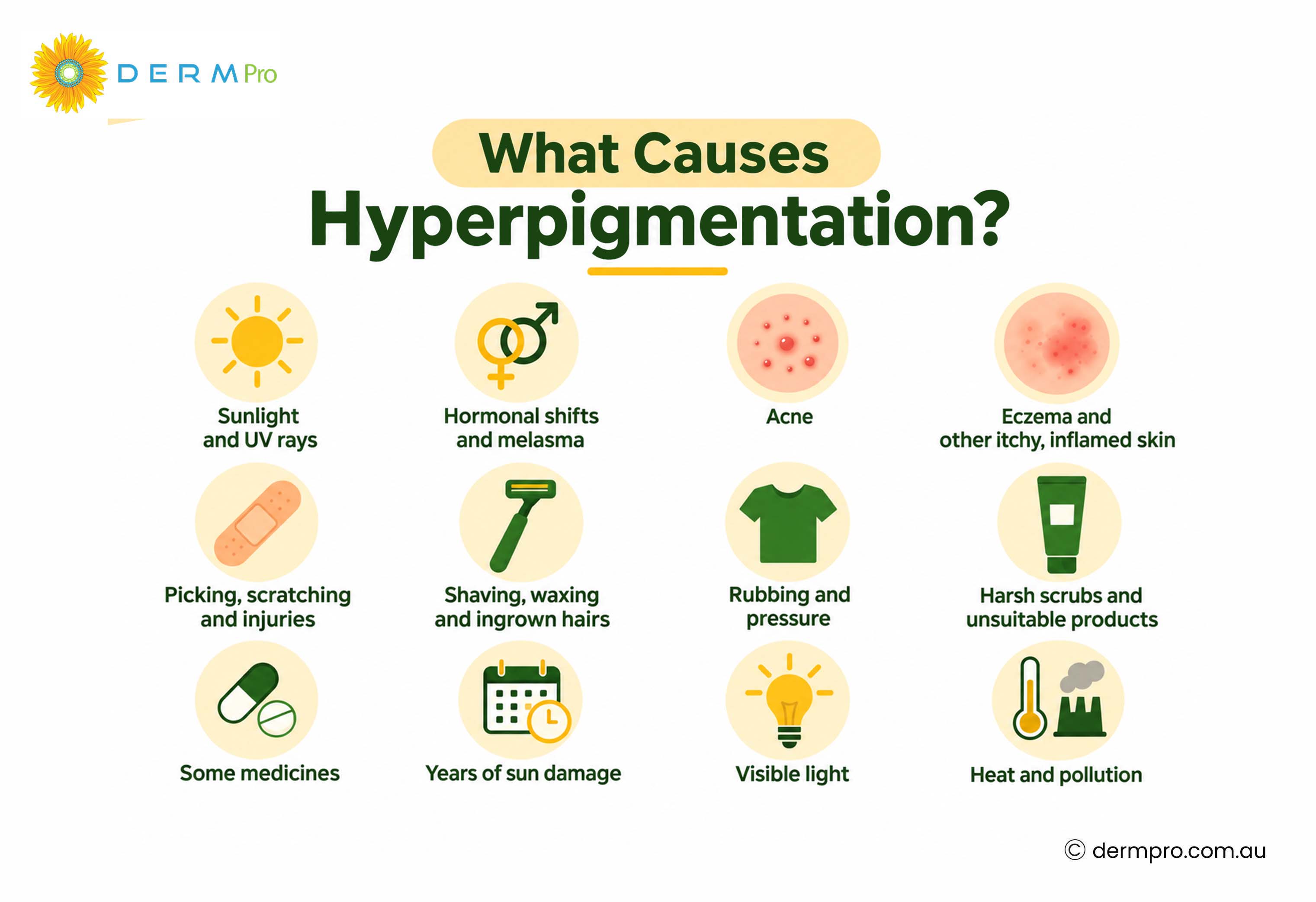
Melanocytes produce more pigment when triggered by sunlight, hormones or inflammation. However, some triggers are evidence-based, and some are not.
Evidence-Based Triggers
1. Sunlight and UV rays. UV exposure is the number one cause of hyperpigmentation. It tells melanocytes to make more colour, and it deepens marks you already have. Keep your skin safe from sunlight and UV rays by seeking shade and wearing proper clothing and sunscreen.
2. Hormonal shifts and melasma. Melasma appears as light brown or grey-brown patches, usually on both cheeks, forehead or upper lip. Pregnancy, hormone medicines and genes contribute to it. However, sun can make it worse.
3. Acne. After a breakout heals, the skin can leave behind a flat dark mark. Doctors call this post-inflammatory hyperpigmentation, or PIH. However, treating acne early cuts the number of marks that form.
4. Eczema and other itchy, inflamed skin. Skin that stays red and irritated can darken as it heals. Well, the first step is to keep the condition under control.
5. Picking, scratching and injuries. Cuts, burns, bites and squeezed spots can all end up as PIH. Always avoid picking and touching scabs and pimples.
6. Shaving, waxing and ingrown hairs. Hair removal can irritate skin and leave dark dots or patches, often on legs, underarms and the bikini line. Always use a sharp, clean razor gently.
7. Rubbing and pressure. Tight straps, waistbands and constant friction can slowly darken the skin underneath. Using softer fabrics and looser fits reduces the problem.
8. Harsh scrubs and unsuitable products. Too many acids, strong scrubs or the wrong cream can inflame skin. Inflamed skin may turn darker. Try to use fewer skin products if your face stings or feels raw.
9. Some medicines. Certain antibiotics, heart medicines, chemotherapy drugs and hormone treatments can darken skin in some people. Never stop a prescribed medicine on your own. Always talk to your doctor first.
10. Years of sun damage. Sunspots, also called age spots or solar lentigines, can build up over time on areas that get the most light.
Triggers that are still being studied
11. Visible light. This is the light your eyes can see, and it may deepen melasma and other dark marks, especially in medium to deeper skin tones. The research is growing but not final. Tinted sunscreen with iron oxides is the best approach to protect your skin.
12. Heat and pollution. Heat may make melasma flare for some people, and air pollution may play a part too. The evidence is limited, so treat these as possible helpers, not main causes.
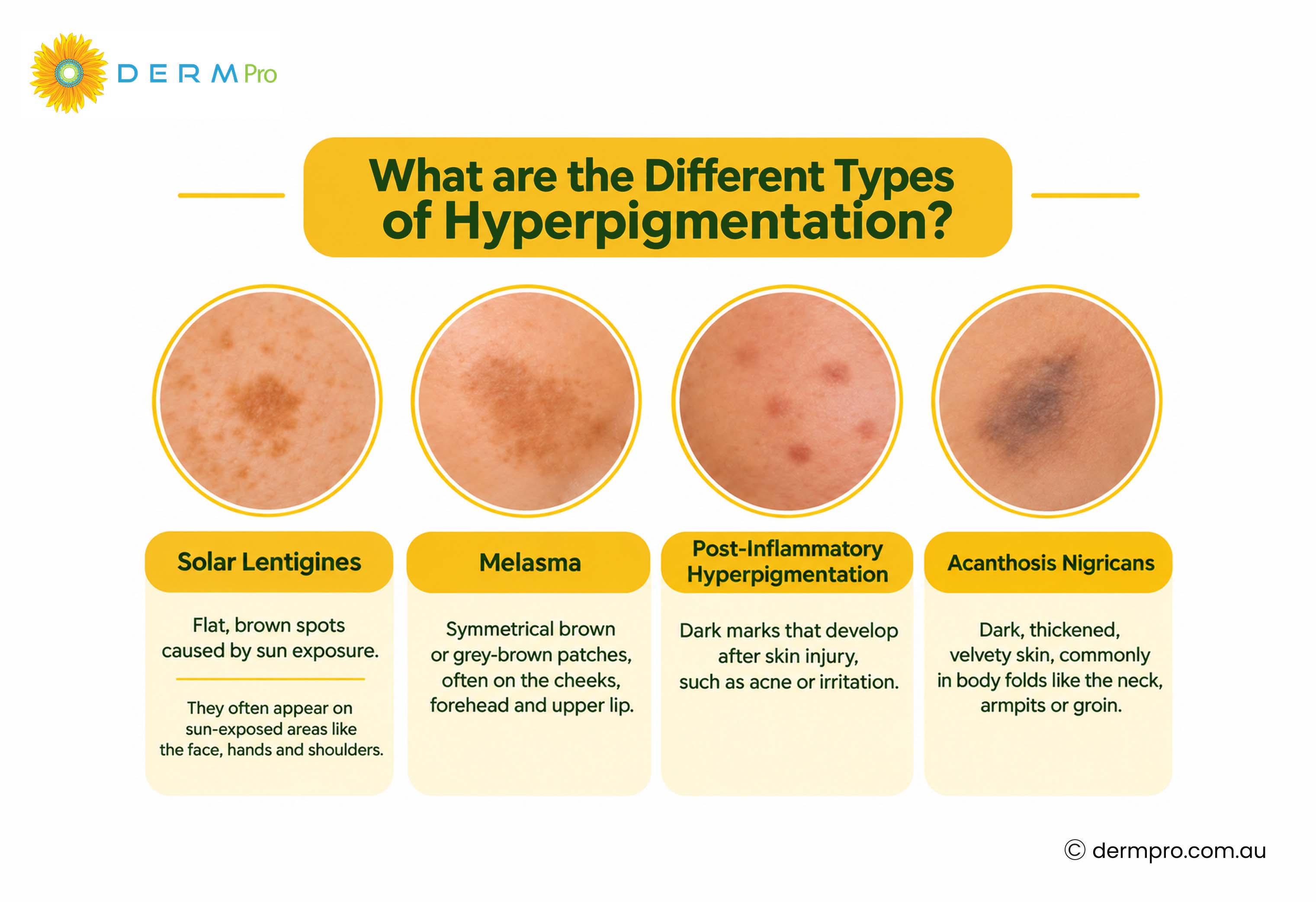
What Are the Different Types of Hyperpigmentation?
Why does hyperpigmentation occur in so many different shapes? Because the trigger changes the look. Still, you cannot reliably name your type by eye. Different types can look alike, and many people have two at once. A dermatologist can examine your skin, identify the cause and recommend the right treatment.
|
Type |
Appearance |
Common Causes |
Common Locations |
General Treatment Approach |
|
Post-inflammatory hyperpigmentation (PIH) |
Flat tan, brown or dark marks in the exact spot of an earlier spot or injury |
Acne, eczema, burns, cuts, irritation |
Anywhere the skin was inflamed |
Calm the skin, protect from the sun, add gentle brightening ingredients |
|
Melasma |
Larger, soft-edged brown or grey-brown |
Hormones, Sun, possibly visible light, genes |
Cheeks, forehead, upper lips |
Strict Sun and Light protection, Medical Treatment and long-term care |
|
Solar Lentigines (Sunspot) |
Flat, clearly outlined brown spots |
Years of UV exposure |
Face, hands, arms, chest |
Sun protection, retinoids, in-clinic procedure |
|
Freckles |
Small light brown dots, even darker in summer |
Genes plus sun |
Face, shoulders, arms |
Often none needed, sun protection |
|
Medication-related Pigmentation |
Brown, grey and blue-grey areas |
Certain medicines |
Depends on the medicine |
Doctor reviews the medicine; treatment varies |
Post-Inflammatory Hyperpigmentation
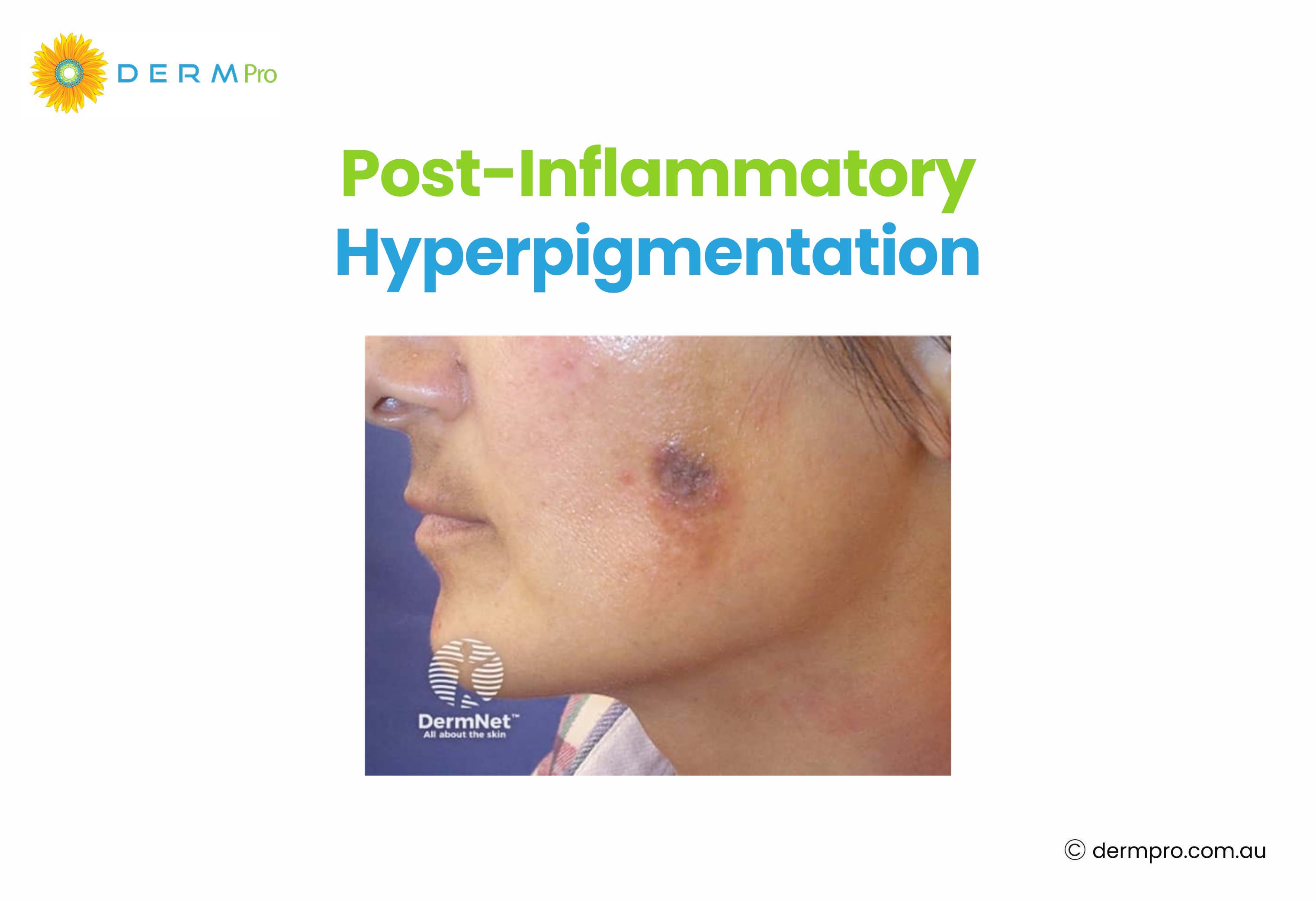
Image Source: DermNet
Solar Lentigo Image
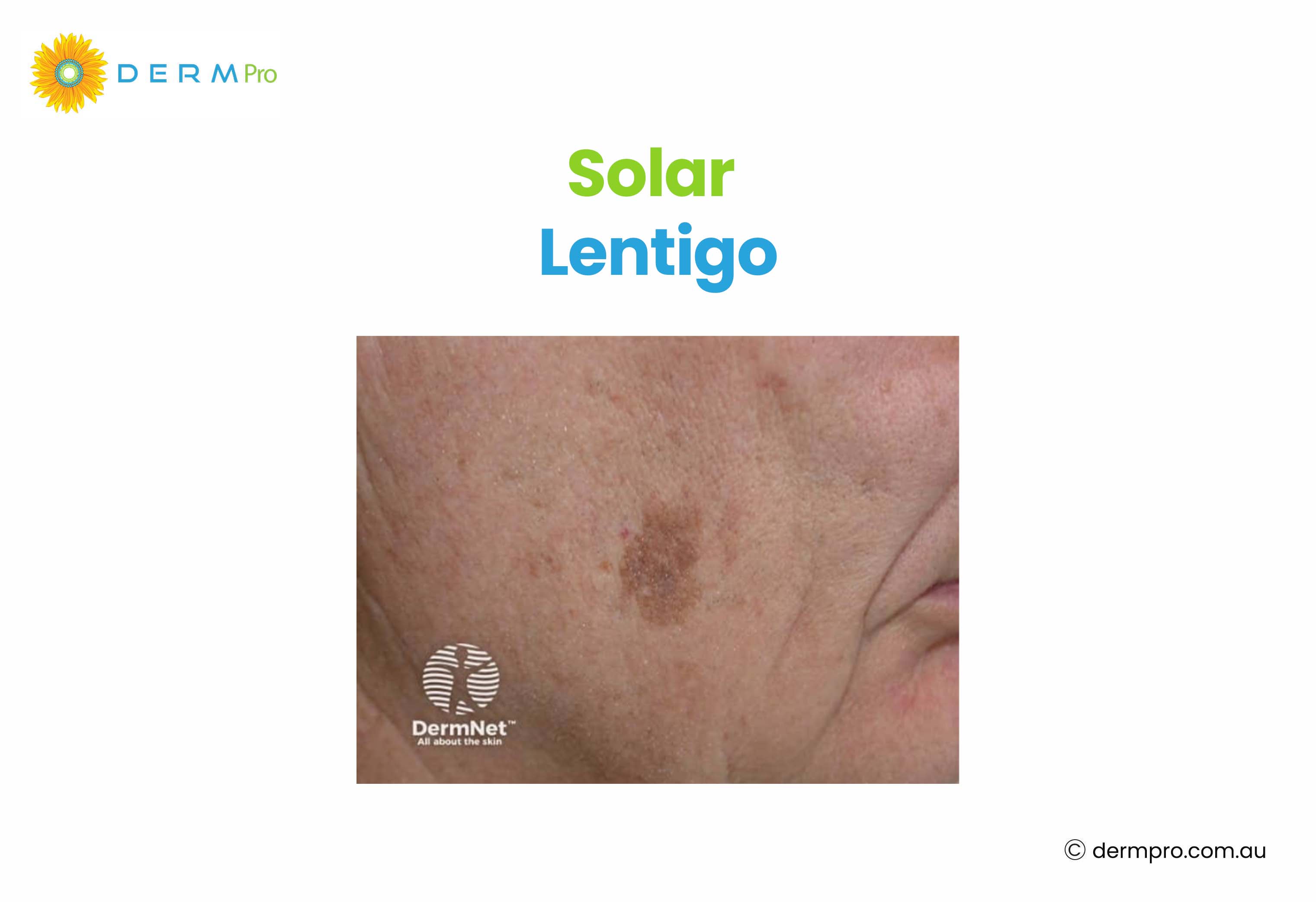
Image Source: DermNet
Hyperpigmentation on the Face, Hands and Arms: Why Does It Occur?
The causes are the same everywhere, but each area has its own habits. Face and hands live in the light, while arms and legs catch knocks and friction.
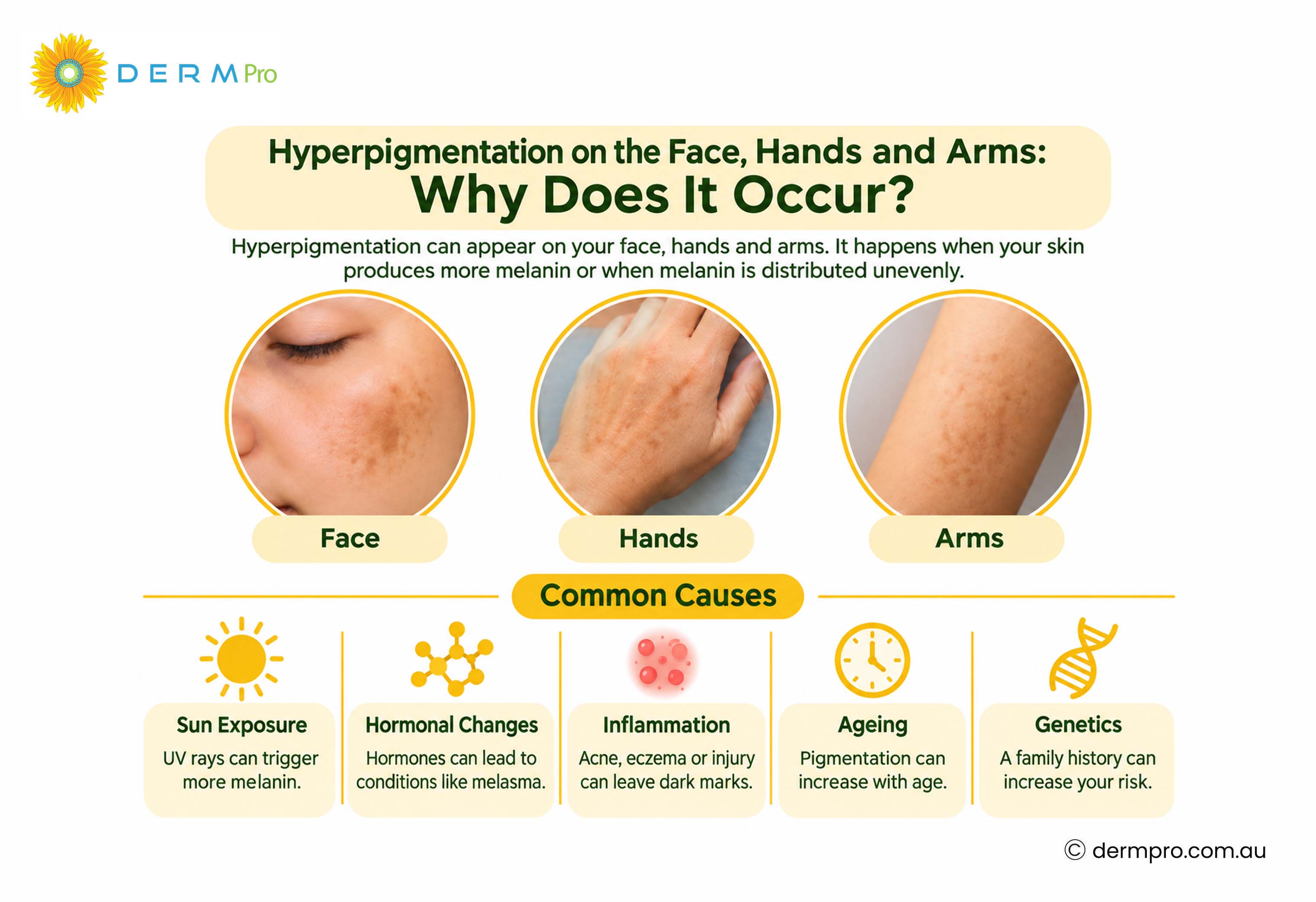
Hyperpigmentation on the Face
Hyperpigmentation on the face is the most common. However, common reasons include:
-
Acne marks: They sit where spots used to be and can take months to fade.
-
Melasma: Look for matching patches on both cheeks or above the lip.
-
Sun damage: Sunspots collect on cheeks, nose and temples.
-
Irritation: Strong scrubs and unsuitable products can leave a hyperpigmented face with blotchy dark areas, because inflamed skin often darkens.
Hyperpigmentation on Hands
Your hands get light every time you drive, walk or hold a phone outside, yet they rarely get sunscreen. That is why hyperpigmentation on hands is so often a sign of years of sun exposure, usually as sunspots.
Other possible reasons include old injuries, eczema, and some medicines. Apply sunscreen to the backs of your hands and reapply after washing.
Hyperpigmentation on Arms
Hyperpigmentation on arm skin often comes from the sun, especially on the forearms. Old insect bites, scratches, burns or eczema can also leave dark marks. Rubbing from bag straps or tight sleeves can add to it.
Cover up your arms in the strong sun and apply the same sunscreen as your face.
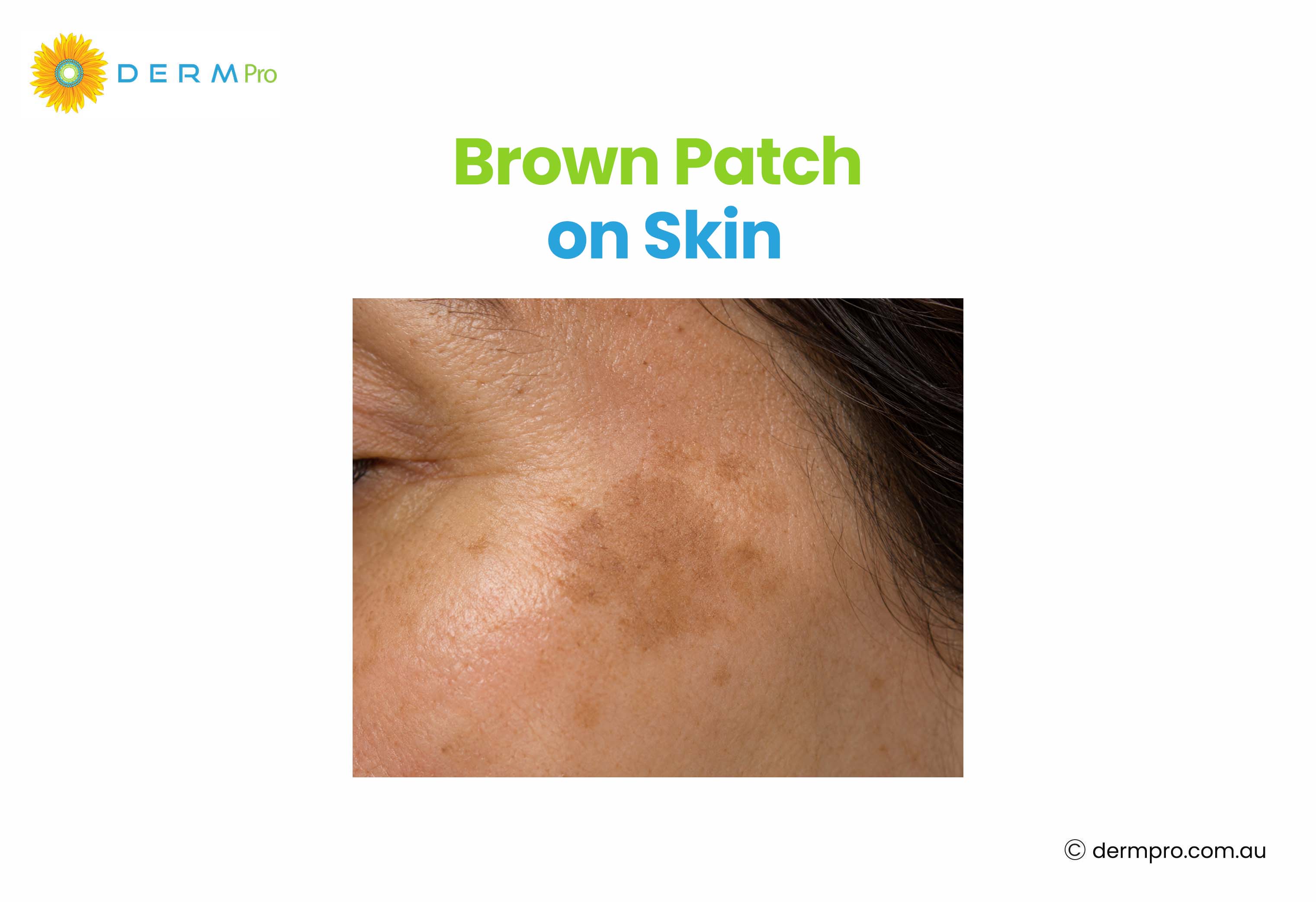
What Does a Patch of Brown Skin Mean?
A patch of brown skin has many possible explanations. Pigment-related ones include PIH, melasma, sunspots and freckles. Some people are also born with brown patches.
However, a new, changing or odd-looking patch should not be treated as cosmetic. Have it checked before you try fading creams on it.
Image of Brown Patch on Skin
How to Get Rid of Hyperpigmentation: Effective Treatment Options
How to get rid of hyperpigmentation depends on three things:
-
the cause
-
the type
-
And how deep the pigment sits.
There is no one fix for everyone. Most plans mix sun protection, patient use of the right ingredients and, for some people, help from a professional. Pigmentation removal is a slow process, so be patient and expect the gradual result over several months.
1. Daily Sunscreen
Sunlight darkens marks that are already there and can create new ones; sunscreen helps other treatments work more effectively.
-
Pick a broad-spectrum sunscreen, SPF 30 or higher.
-
Apply it every morning, even on grey days.
-
Reapply about every two hours outdoors, and after sweating or swimming.
-
If you have melasma, ask about a tinted product with iron oxides. These help block visible light, which most clear sunscreens do not.
2. Skin-Brightening Ingredients
No ingredient suits every type of pigment. That's why first start with one product, patch test it on a small area such as the inner arm, and stop if burning or redness lingers.
-
Vitamin C is an antioxidant that may brighten skin, add some protection from sun damage, and help fade dark spots with consistent use. Use it in the morning and start with a low strength to avoid irritation.
-
Niacinamide is a form of vitamin B3 that may slow pigment moving into skin cells and can soothe skin. Most people tolerate it well.
-
Azelaic acid is useful for acne and the dark marks left behind by it, and it has also been studied for treating melasma. Lower strengths are available over the counter in many countries, while stronger formulations require a prescription. Mild tingling or itching is common when you first start using it. Always ask your doctor before using it during pregnancy or while breastfeeding.
-
Alpha arbutin is a gentle ingredient that inhibits the enzyme that builds pigment. Human studies are limited, so see it as a supporting player.
-
Tranexamic acid. Creams with it may help some people with melasma. Tablets are different. They are prescription medicine that needs a doctor's review because of a clot risk in some people, so they are never a do-it-yourself option.
-
Retinoids are Vitamin A products that help your skin renew faster. They treat acne and dark spots, but can cause dryness and peeling. Start 2 or 3 nights a week and wear sunscreen daily. Do not use them if you are pregnant or trying to get pregnant, and ask your doctor before using them while breastfeeding.
-
AHAs (like glycolic or lactic acid): These acids gently remove dead skin cells on the surface to make your skin look brighter and fade light dark spots. Using too much can irritate your skin and actually cause new dark spots. Start with a mild product once a week, and always wear sunscreen every day because AHAs make your skin sensitive to the sun.
-
Hydroquinone is a strong lightening agent with a long research history, mainly for melasma and stubborn marks. It can irritate, and long unsupervised use can cause rare but serious darkening called ochronosis. However, its usage rules differ by country. Use it only with medical guidance.
Dark spots deserve attention, not assumptions. Track changes and start monitoring in your skin with DermPro App
3. Professional Treatment Options
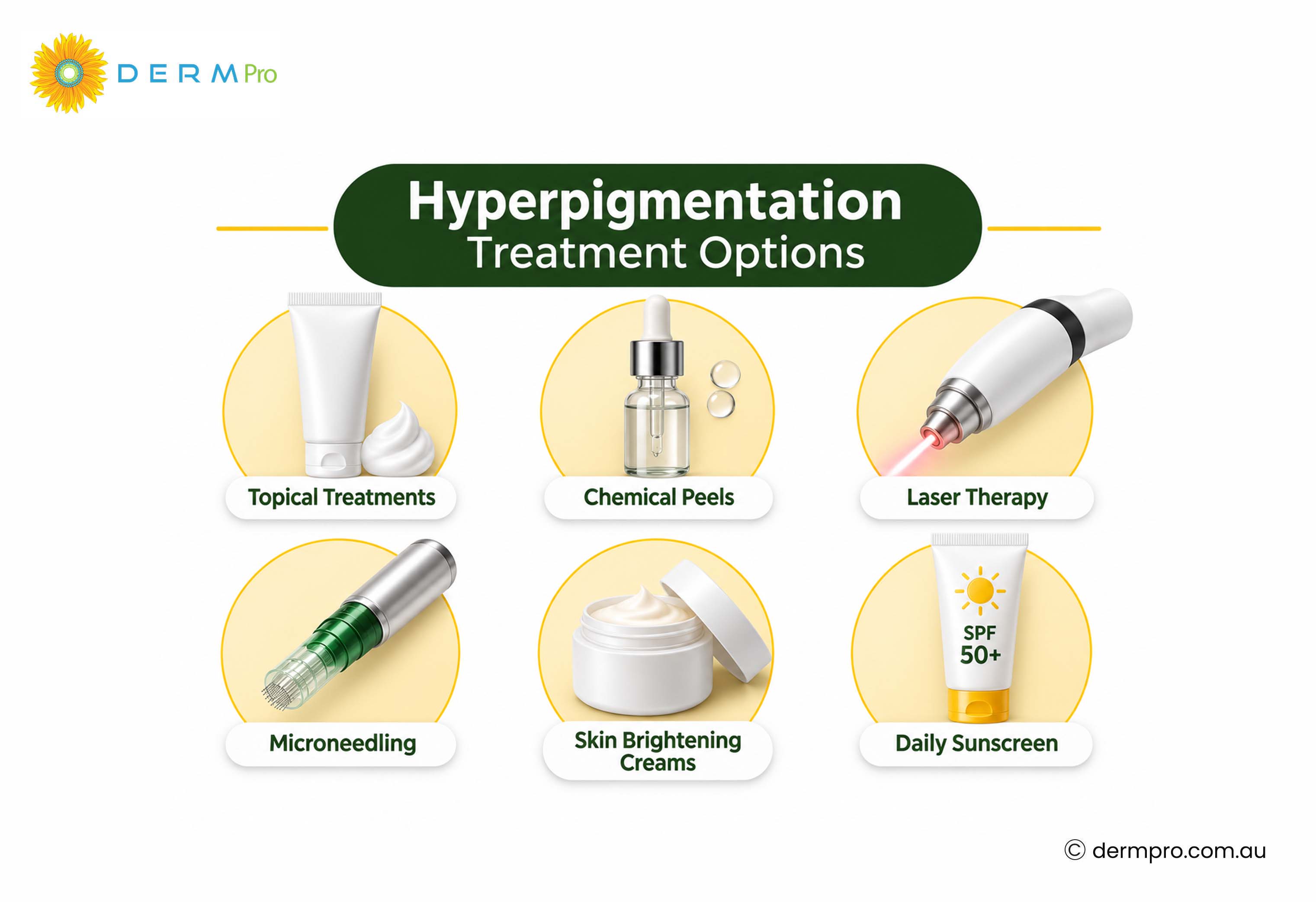
Book a dermatologist visit if months of careful home care are not working, or if pigment is widespread or stubborn. However, treatment options include:
-
Prescription creams contain stronger ingredients, such as hydroquinone and retinoids, or a combination of both, and require regular medical follow-ups.
-
Chemical peels are gentle; doctor-led peels can help some types of marks.
-
Microneedling may help some people, but it makes tiny injuries that can trigger pigment in others.
-
Lasers and light devices can clear sunspots, but they may also darken skin, and melasma often comes back.
Have your skin checked by a professional before any treatment. Strong or poorly chosen treatments can make pigmentation worse, and the risk is higher in darker skin tones. Look for a clinician with experience in your skin type.
How to Get Rid of Pigmentation From Sunbed Use?
A sunbed gives off UV rays, the same kind of light that harms skin outdoors. Regular sessions can cause freckling, sunspots, and uneven tone, and they increase the risk of skin cancer.
The first step is to stop. Tanning more will not even out your skin.
-
Stop all sunbed use. There is no safe way to tan indoors.
-
Wear SPF 30 or higher daily, and reapply when you are outside.
-
Keep skin care gentle. Add suitable brightening ingredients slowly.
-
See a dermatologist if marks are dark, numerous or changing. They can also check your skin for sun damage.
Best Skincare Routine for Hyperpigmentation
A simple routine you can keep up beats a long one that irritates your skin.
Morning
-
Gentle cleanser.
-
A brightening product, such as vitamin C or niacinamide, if your skin handles it.
-
Moisturiser.
-
Broad-spectrum SPF 30 or higher.
Evening
-
Gentle cleanser.
-
One targeted treatment, such as azelaic acid or a retinoid.
-
Moisturiser.
Keep these rules in mind:
-
Add one new active at a time. Wait a few weeks before adding another so you can spot what bothers your skin.
-
Do not pile on actives. Acids, retinoids and scrubs together can inflame skin and worsen marks.
-
Sensitive skin? Use actives less often, pick lower strengths and moisturise well.
-
Never skip sunscreen. Treatments can make skin more sun-sensitive, and sun can undo your progress.
This routine is a starting point, not a rule for everyone. If you are pregnant, have a skin condition or take medicines, check with a professional first.
How Long Does Hyperpigmentation Take to Fade?
It varies. Depth, age of the mark and how steady your routine is all matter. Nobody can promise a set number of weeks.
|
Timeframe |
Possible Changes |
Important Considerations |
|
First 2 to 4 weeks |
Skin adjusts; mild irritation can appear |
Too early for visible fading. Stop products that burn. |
|
1 to 3 months |
Some people see early lightening or smoother tone |
Keep up daily sunscreen |
|
3 to 6 months or longer |
Gradual fading of many marks |
Deeper marks take longer |
|
Long Term |
Some marks linger or return |
Melasma often needs ongoing care and can flare again |
PIH often fades on its own over months to years. However, sunspots rarely vanish without treatment.
Common Mistakes That Can Make Hyperpigmentation Worse
|
Mistake |
Safer Move |
|
Skipping sunscreen |
Apply SPF 30 or higher every morning |
|
Picking or squeezing spots |
Use a pimple patch or treat acne properly |
|
Over-exfoliating |
Use a gentle exfoliant no more than twice a week. |
|
Using too many actives |
Add one product at a time |
|
Dabbing on lemon juice or baking soda |
Choose tested products; these can burn and inflame skin |
|
Buying Unregulated Brightening creams |
Buy from reputable sellers; some contain harmful ingredients |
|
Rushing into strong treatment |
Get a professional assessment first |
|
Staying in UV light |
Avoid sunbeds, seek shade and wear sunscreen |
|
Expecting quick results |
Plan for months, not days |
Hyperpigmentation in Different Skin Tones
Anyone can develop dark spots on skin, but PIH often looks stronger and lasts longer in darker skin tones. Pigment cells in deeper tones tend to react more strongly to inflammation. Even a minor pimple or rough scrubbing can leave dark marks on your skin.
For that reason, gentle care is key. Peels and lasers need extra caution too, because the wrong strength or setting can create new dark areas. Ask for a clinician who treats your skin tone often.
Visible light may also feed melasma in medium to deeper skin tones, so tinted sunscreen can be worth considering. Skin tone alone never predicts how your skin will behave, so treat each person as an individual.
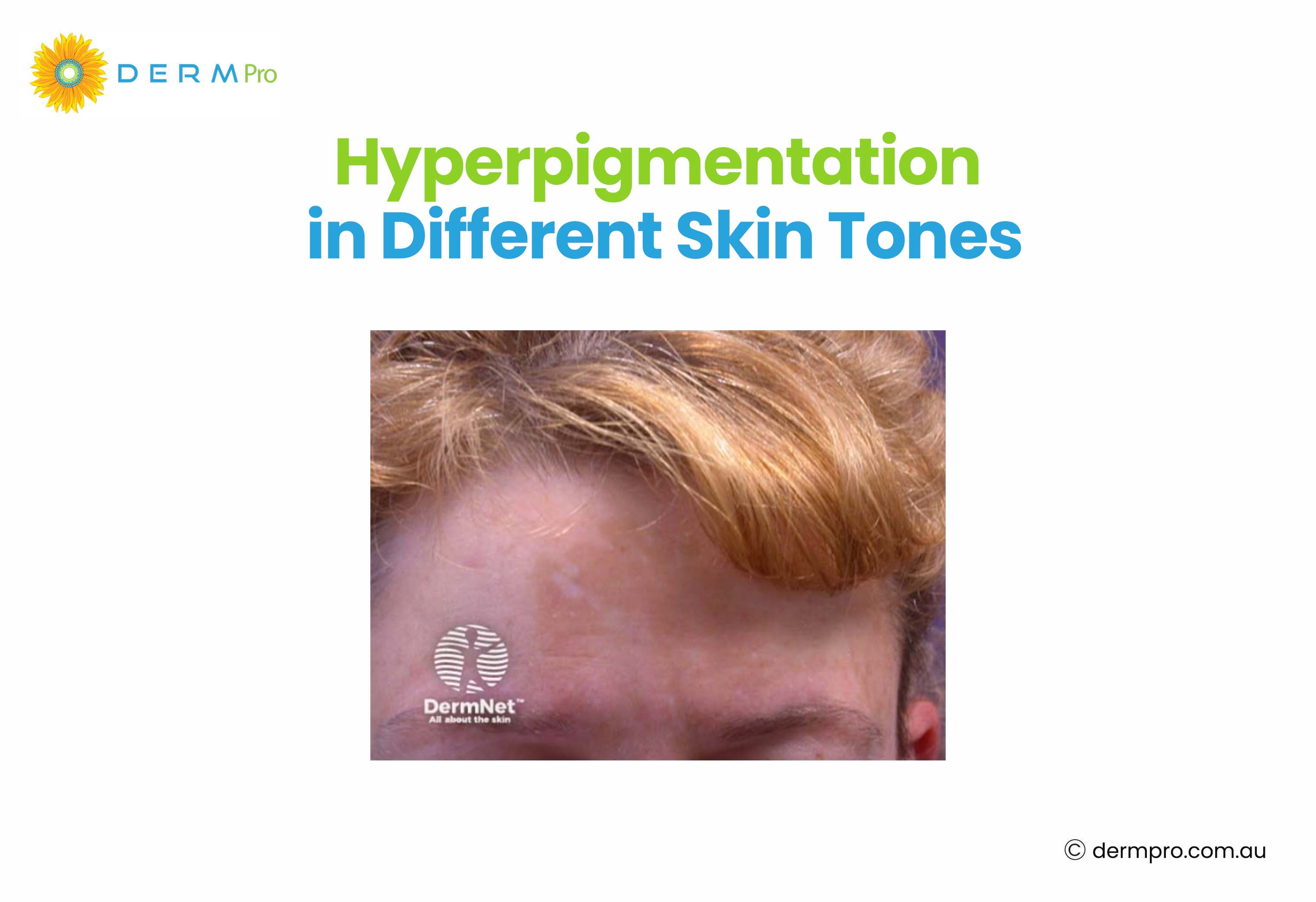
Image Source: DermNet
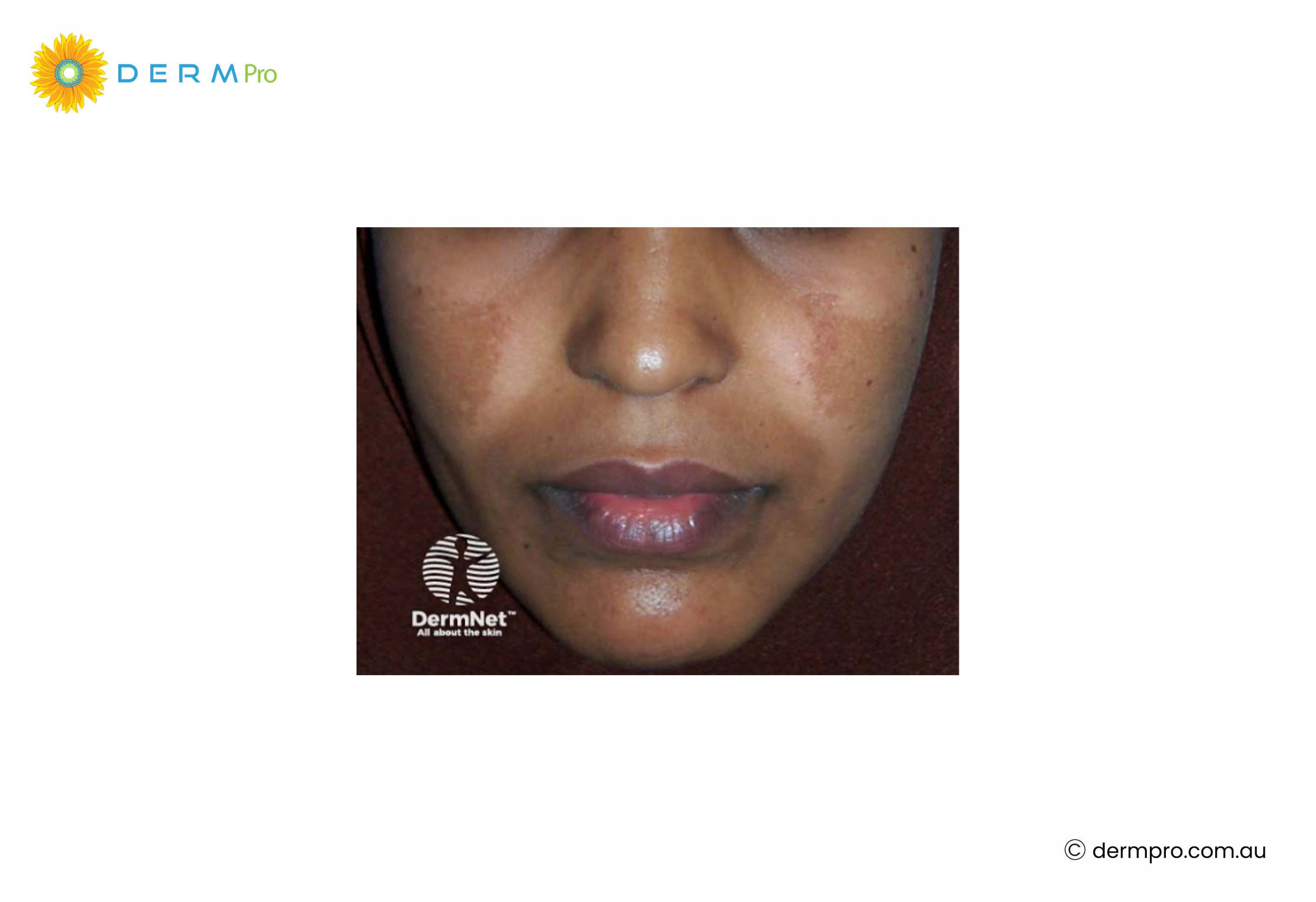
Image Source: DermNet
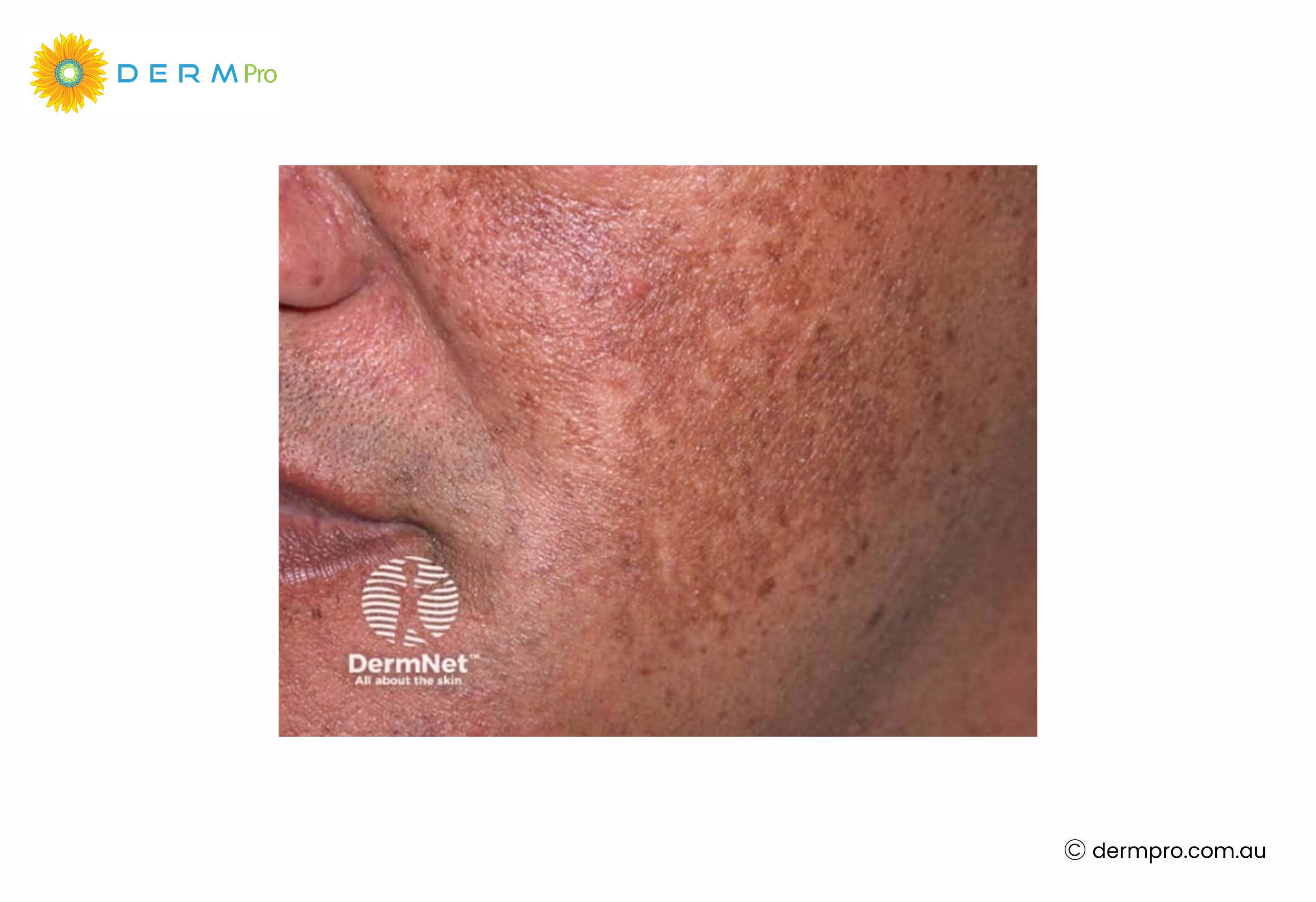
Image Source: DermNet
When Should You See a Dermatologist?
Most dark spots are harmless, but book a visit if you notice:
-
A new or changing dark spot.
-
A spot with an uneven shape or edge.
-
A spot that grows, bleeds, itches or hurts.
-
Sudden or widespread darkening of skin.
-
Darkening after starting a new medicine.
-
A mark that is unclear or not improving.
-
A mark that could be a mole or another skin growth.
A suspicious spot needs to be examined, not faded. No cosmetic product can confirm or rule out skin cancer.
Monitor Your Skin Health with DermPro
Hyperpigmentation starts with understanding your skin and tracking changes over time. DermPro helps you monitor your skin concerns, keep track of visible changes and stay informed about your skincare journey. Whether you're dealing with acne-related dark spots, melasma or uneven skin tone, consistent monitoring can help you better understand your skin. This article has been medically reviewed by Dr. Safwan Sayyal to support accurate, reliable and medically informed skincare education.
Frequently Asked Questions
How can I get rid of hyperpigmentation naturally?
Sun protection is the most useful natural step. Avoid picking and kitchen remedies like lemon juice. Gentle care and time fade many marks, though slowly.
Can hyperpigmentation go away on its own?
Sometimes, it can go away on its own. But PIH (post-inflammatory hyperpigmentation) often fades over months to years. Sunspots and melasma usually need treatment and steady sun protection.
What is the best treatment for dark marks on the face?
There is no single best option. Using daily sunscreen comes first. Azelaic acid, niacinamide, vitamin C or a retinoid may suit some people, and a dermatologist can match treatment for dark marks on the face to your type.
Does vitamin C help with hyperpigmentation?
It may brighten skin and work as an antioxidant. But the evidence for fading is limited, and it works best alongside sunscreen.
Can sunscreen prevent dark spots?
It helps stop new spots and keeps existing ones from darkening. However, it does not erase marks already there.
How long does hyperpigmentation take to fade?
It usually takes months to fade. But deeper or older marks take longer, and melasma may need long-term care.
Can sunbeds cause hyperpigmentation?
Yes, sunbeds cause hyperpigmentation. Because sunbeds give off UV rays that can cause sunspots and uneven tone, and they raise skin cancer risk.
Why do I have dark spots on my hands and arms?
Often, it is years of sun exposure. Moreover, old injuries, eczema, rubbing and some medicines can also play a part.
Is pigmentation removal permanent?
No, it is not always removed permanently. This is because treated spots can return with more sun, and melasma often comes back, so ongoing care is usual.
Can over-exfoliating cause hyperpigmentation?
Yes, over-exfoliating can cause hyperpigmentation. Because too many scrubs or acids can inflame the skin, and inflammation can leave dark marks.
When should I see a dermatologist about a brown patch on my skin?
When it is new, changing, growing, uneven, bleeding, itchy or painful, or when you are not sure what it is.
Conclusion
Hyperpigmentation can develop for different reasons, so identifying the cause is the first step towards choosing the right treatment. Daily sunscreen use and a gentle skincare routine are important for managing dark spots. Introduce active ingredients gradually and remember that visible results can take several months.
If your dark spots do not improve, start spreading or look unusual, consult a dermatologist. They can assess your skin and recommend suitable treatment options.
References
-
Cleveland Clinic. Hyperpigmentation.
-
American Academy of Dermatology Association. Skin care secrets (find the current page on dark spots).
-
DermNet New Zealand. Melasma. https://dermnetnz.org/topics/melasma
-
DermNet New Zealand. Post-inflammatory hyperpigmentation.
-
DermNet New Zealand. Solar lentigo.
-
Mayo Clinic. Melasma.
-
Davis EC, Callender VD. Postinflammatory hyperpigmentation: a review. J Clin Aesthet Dermatol.
-
Mahmoud BH, et al. Impact of long-wavelength UVA and visible light on melanocompetent skin. J Invest Dermatol. Lyons AB, et al. Photoprotection beyond ultraviolet radiation. J Am Acad Dermatol.
-
American Academy of Dermatology Association. Indoor tanning and skin cancer.
-
Medical News Today. Hyperpigmentation overview.
Disclaimer
This blog is for general educational purposes only and is not a substitute for professional medical advice, diagnosis or treatment. The content may be AI-assisted, and some images may be AI-generated for illustration. Although we aim for accuracy, errors or outdated information may occur. Always consult a qualified healthcare professional about your hyperpigmentation or skin concerns.
Was this article helpful?
Your feedback helps us create better content for everyone.